Video Tutorial: Transmission Media
- 1Transmission Media BasicWhat is Transmission Media?Transmission Media refers to the communication pathway or medium through which data travels from a sender device to a receiver device in a computer network. It can be either a physical cable or a wireless medium through which electrical, optical, or electromagnetic signals are transmitted.
For example, when one computer sends data to another computer, the data must travel through some medium. Ethernet cable, fiber-optic cable, radio waves, microwaves, and infrared are examples of transmission media.
The selection of transmission media depends on several factors, such as:- Required transmission speed
- Distance between communicating devices
- Cost
- Security requirements
- Installation and maintenance requirements
- Environmental conditions
- Required bandwidth
Transmission Media বলতে সেই যোগাযোগের পথ বা মাধ্যমকে বোঝায়, যার মাধ্যমে একটি কম্পিউটার নেটওয়ার্কে প্রেরক (sender) ডিভাইস থেকে গ্রাহক (receiver) ডিভাইসে ডেটা যায়। এটি একটি Physical Cable অথবা Wireless Medium হতে পারে, যার মাধ্যমে Electrical, Optical অথবা Electromagnetic Signal প্রেরিত হয়।
উদাহরণস্বরূপ, একটি কম্পিউটার যখন অন্য একটি কম্পিউটারে ডেটা পাঠায়, তখন সেই ডেটাকে কোনো না কোনো মাধ্যমের মধ্য দিয়ে যেতে হয়। Ethernet Cable, Fiber-Optic Cable, Radio Waves, Microwaves এবং Infrared হলো Transmission Media-এর উদাহরণ।
Transmission Media নির্বাচন করার ক্ষেত্রে কয়েকটি বিষয় বিবেচনা করা হয়, যেমন:- প্রয়োজনীয় Transmission Speed
- যোগাযোগকারী ডিভাইসগুলোর মধ্যকার দূরত্ব
- খরচ
- Security Requirements বা নিরাপত্তার প্রয়োজনীয়তা
- Installation এবং Maintenance-এর প্রয়োজনীয়তা
- পরিবেশগত অবস্থা
- প্রয়োজনীয় Bandwidth
- 2Transmission Media BasicClassification of Transmission MediaTransmission media can be broadly classified into two types:
- Guided Transmission Media — Data travels through a physical path such as a cable.
- Unguided Transmission Media — Data travels through air or space using electromagnetic waves.
- 3Transmission Media Guided Transmission Media1. Guided Transmission MediaGuided transmission media, also called wired transmission media, uses a physical cable or path to carry signals from the sender to the receiver. The signal is guided through the physical medium.
Common examples include:- Twisted Pair Cable
- Coaxial Cable
- Fiber-Optic Cable
- Uses a physical communication path.
- Generally provides better security than wireless communication.
- Usually offers stable and reliable communication.
- Performance can be affected by cable length and physical damage.
- Installation may require physical cabling infrastructure.
Guided Transmission Media-কে Wired Transmission Media-ও বলা হয়। এটি একটি Physical Cable বা নির্দিষ্ট পথ ব্যবহার করে প্রেরক (sender) থেকে গ্রাহক (receiver)-এর কাছে Signal বহন করে। অর্থাৎ, Signal একটি Physical Medium-এর মধ্য দিয়ে পরিচালিত হয়।
এর সাধারণ উদাহরণগুলো হলো:- Twisted Pair Cable
- Coaxial Cable
- Fiber-Optic Cable
- একটি Physical Communication Path ব্যবহার করে।
- সাধারণত Wireless Communication-এর তুলনায় বেশি নিরাপদ।
- সাধারণত স্থিতিশীল ও নির্ভরযোগ্য Communication প্রদান করে।
- Cable-এর দৈর্ঘ্য এবং Physical Damage-এর কারণে Performance প্রভাবিত হতে পারে।
- Installation-এর জন্য Physical Cabling Infrastructure প্রয়োজন হতে পারে।
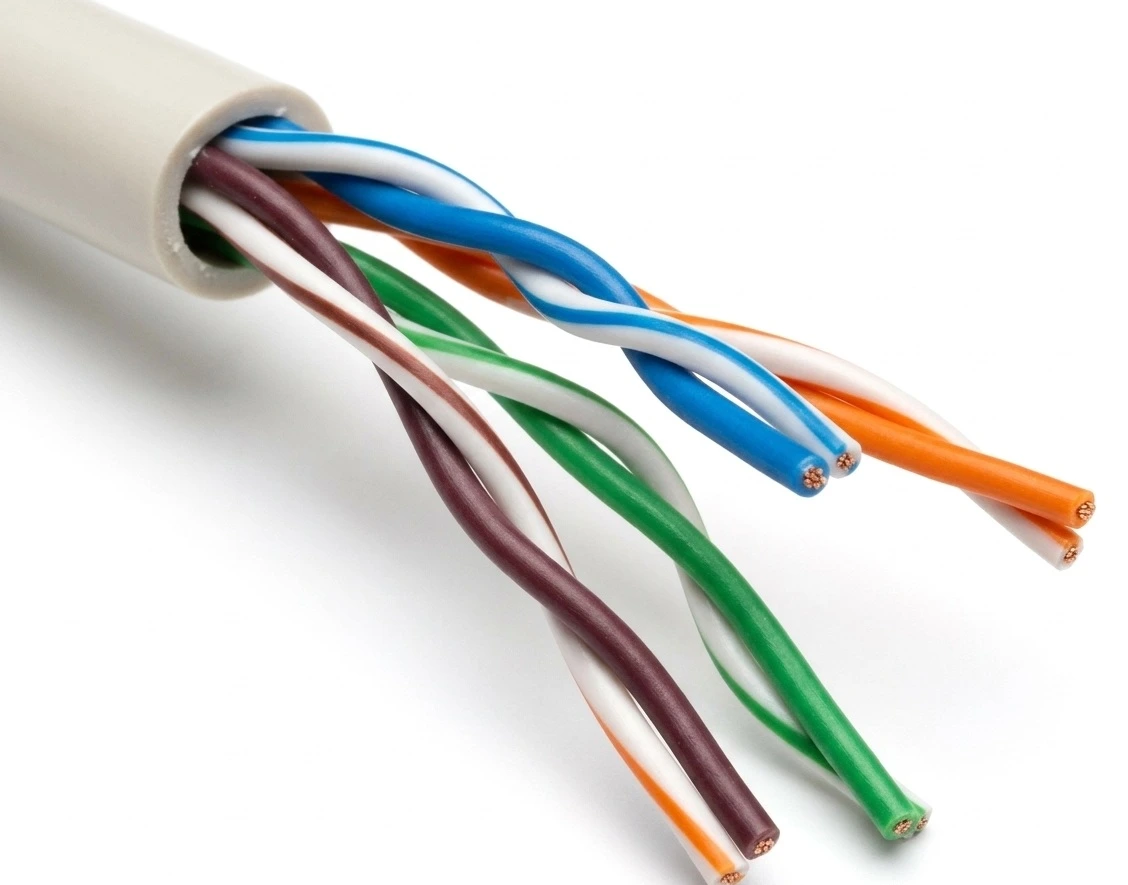
- 4Transmission Media Guided Transmission Media1.1 Twisted Pair CableA twisted pair cable consists of two insulated copper wires twisted around each other. The twisting helps reduce electromagnetic interference and crosstalk between neighboring pairs.
Twisted pair cables are widely used in telephone networks and computer Ethernet networks.
There are two major types of twisted pair cable:- Unshielded Twisted Pair (UTP)
- Shielded Twisted Pair (STP)
Twisted Pair Cable দুটি Insulated Copper Wire নিয়ে গঠিত, যেগুলো একে অপরের চারপাশে পেঁচানো থাকে। এই পেঁচানোর ফলে Electromagnetic Interference এবং পাশাপাশি থাকা Wire Pair-গুলোর মধ্যে Crosstalk কমে যায়।
Twisted Pair Cable Telephone Network এবং Computer Ethernet Network-এ ব্যাপকভাবে ব্যবহৃত হয়।
Twisted Pair Cable প্রধানত দুই ধরনের:- Unshielded Twisted Pair (UTP)
- Shielded Twisted Pair (STP)
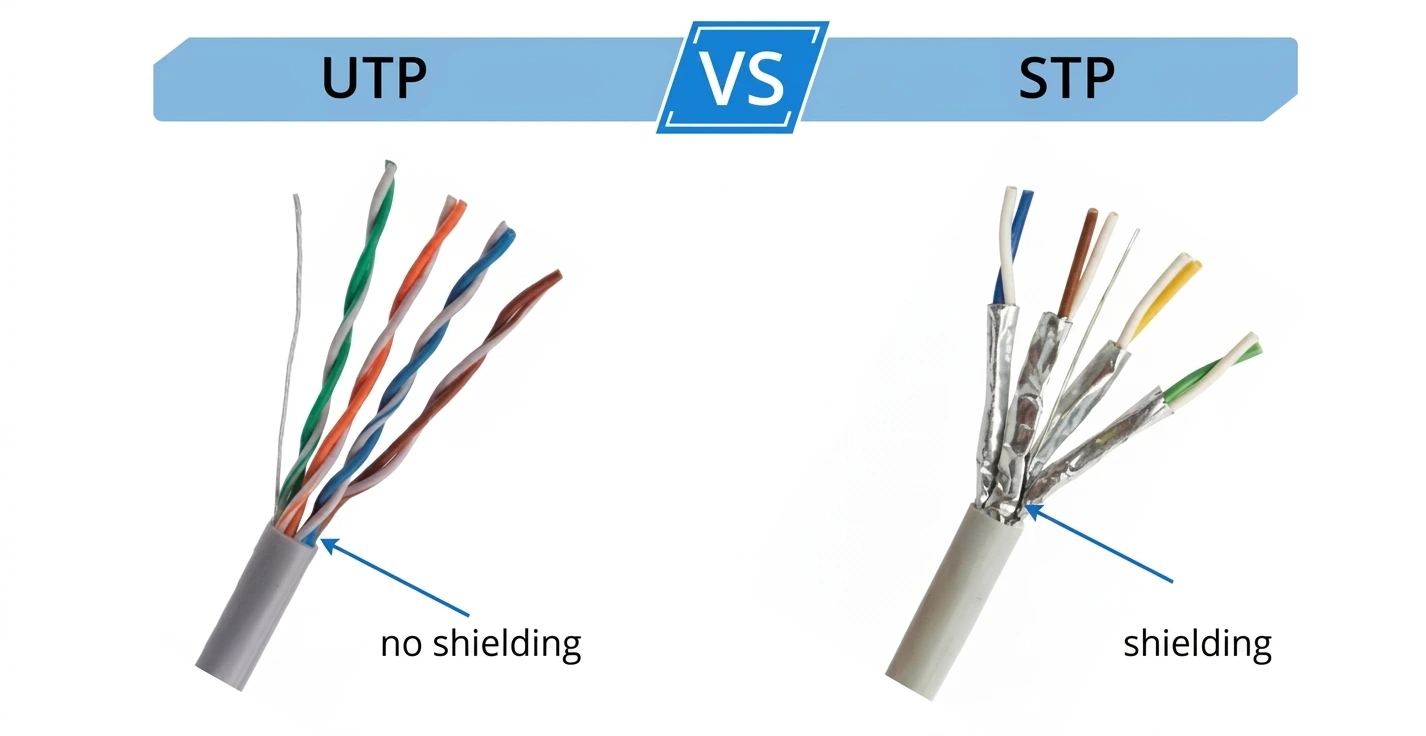
- 5Transmission Media Guided Transmission Media1.1.1 Unshielded Twisted Pair (UTP)UTP is a twisted pair cable without an additional metallic shield around the wire pairs. It is inexpensive, lightweight, flexible, and easy to install.
UTP is widely used in telephone systems and Ethernet networks. Different UTP categories support different levels of bandwidth and data rates.
Advantages of UTP:- Low cost
- Easy to install
- Lightweight and flexible
- Widely available
- Suitable for LANs and telephone networks
- More susceptible to electromagnetic interference than shielded cable.
- Provides less protection against external noise.
- Generally has shorter practical transmission distances than fiber-optic cable.
UTP হলো এমন একটি Twisted Pair Cable, যার Wire Pair-এর চারপাশে অতিরিক্ত Metallic Shield থাকে না। এটি সাশ্রয়ী, হালকা, নমনীয় এবং সহজে Install করা যায়।
UTP Telephone System এবং Ethernet Network-এ ব্যাপকভাবে ব্যবহৃত হয়। বিভিন্ন UTP Category বিভিন্ন মাত্রার Bandwidth এবং Data Rate সমর্থন করে।
UTP-এর সুবিধা:- কম খরচ
- সহজে Install করা যায়
- হালকা ও নমনীয়
- সহজে পাওয়া যায়
- LAN এবং Telephone Network-এর জন্য উপযোগী
- Shielded Cable-এর তুলনায় Electromagnetic Interference-এর প্রতি বেশি সংবেদনশীল।
- External Noise থেকে তুলনামূলকভাবে কম সুরক্ষা প্রদান করে।
- Fiber-Optic Cable-এর তুলনায় সাধারণত কম Practical Transmission Distance প্রদান করে।
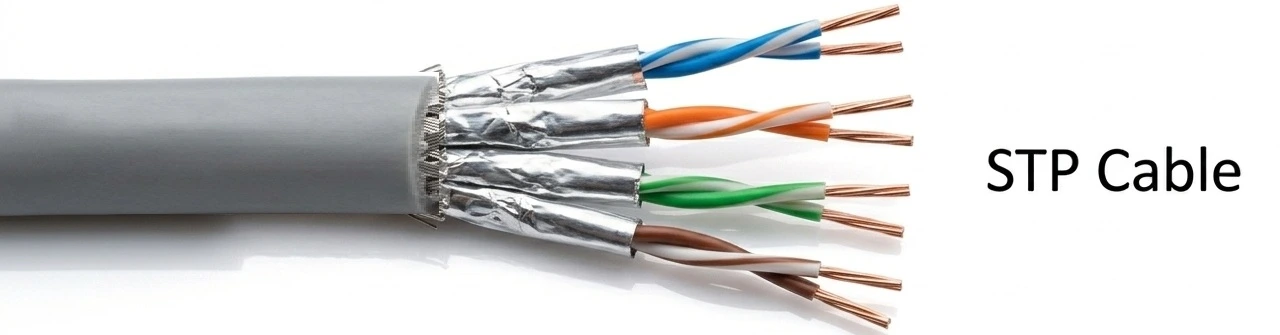
- 6Transmission Media Guided Transmission Media1.1.2 Shielded Twisted Pair (STP)STP is a twisted pair cable that contains additional metallic shielding around the wire pairs. The shielding provides better protection against electromagnetic interference and external noise.
STP can be used in environments with significant electromagnetic interference, such as industrial environments and certain specialized installations.
Advantages of STP:- Better protection against electromagnetic interference.
- Lower susceptibility to external noise.
- Provides better signal quality in electrically noisy environments.
- More expensive than UTP.
- Thicker and less flexible than UTP.
- Installation can be more difficult.
- Proper grounding may be required depending on the installation.
STP হলো এমন একটি Twisted Pair Cable, যার Wire Pair-এর চারপাশে অতিরিক্ত Metallic Shielding থাকে। এই Shielding Electromagnetic Interference এবং External Noise থেকে আরও ভালো সুরক্ষা প্রদান করে।
STP এমন পরিবেশে ব্যবহার করা যেতে পারে যেখানে Electromagnetic Interference-এর পরিমাণ বেশি, যেমন Industrial Environment এবং কিছু বিশেষায়িত Installation।
STP-এর সুবিধা:- Electromagnetic Interference থেকে ভালো সুরক্ষা প্রদান করে।
- External Noise-এর প্রতি তুলনামূলকভাবে কম সংবেদনশীল।
- Electrically Noisy Environment-এ ভালো Signal Quality প্রদান করে।
- UTP-এর তুলনায় বেশি ব্যয়বহুল।
- UTP-এর তুলনায় মোটা এবং কম নমনীয়।
- Installation তুলনামূলকভাবে কঠিন।
- Installation-এর ধরন অনুযায়ী Proper Grounding-এর প্রয়োজন হতে পারে।
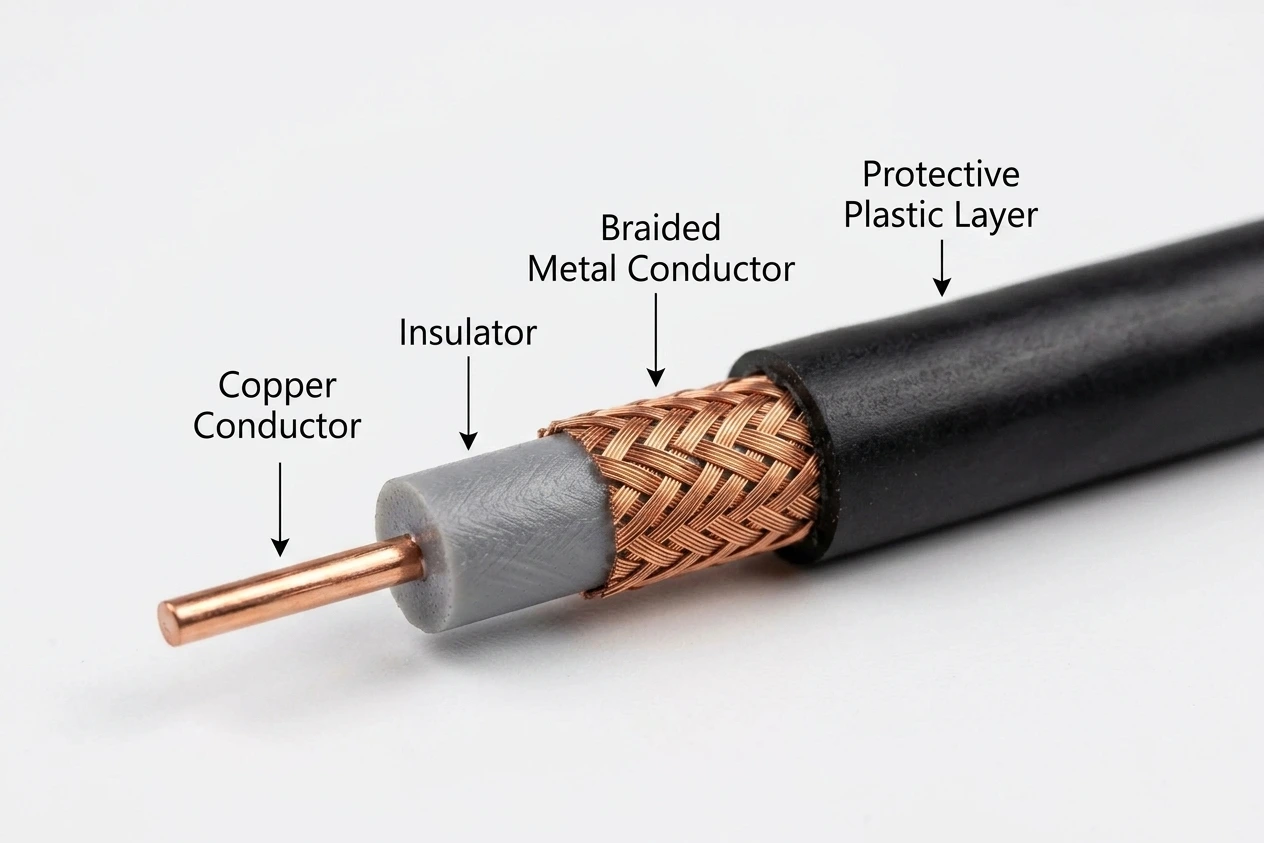
- 7Transmission Media Guided Transmission Media1.2 Coaxial CableA coaxial cable consists of a central conductor surrounded by an insulating layer, a metallic shield or outer conductor, and an outer protective jacket.
The main components of a coaxial cable are:- Inner Conductor — Usually made of copper and carries the signal.
- Insulator/Dielectric — Separates the inner conductor from the outer conductor.
- Outer Conductor/Metallic Shield — Provides shielding and acts as a return path for the signal.
- Outer Jacket — Protects the cable from physical and environmental damage.
Baseband Transmission: In baseband transmission, the entire channel is typically used to carry a single digital signal or a single channel at a time. Traditional Ethernet systems used coaxial cable for baseband transmission.
Broadband Transmission: Broadband transmission divides the available frequency spectrum into multiple channels, allowing multiple signals or services to operate simultaneously. Coaxial cable has historically been widely used in cable television and broadband distribution systems.
Advantages of Coaxial Cable:- Better shielding against electromagnetic interference than ordinary twisted pair.
- Can support relatively high bandwidth.
- More durable than many basic copper cables.
- Suitable for cable television and broadband distribution.
- More expensive and less flexible than UTP.
- Thicker than twisted pair cable.
- Installation can be more difficult.
- Modern high-speed LANs commonly use twisted pair or fiber instead.
Coaxial Cable একটি Central Conductor নিয়ে গঠিত, যার চারপাশে একটি Insulating Layer, একটি Metallic Shield বা Outer Conductor এবং একটি Outer Protective Jacket থাকে।
Coaxial Cable-এর প্রধান অংশগুলো হলো:- Inner Conductor — সাধারণত Copper দিয়ে তৈরি এবং Signal বহন করে।
- Insulator/Dielectric — Inner Conductor এবং Outer Conductor-এর মধ্যে পৃথকীকরণ তৈরি করে।
- Outer Conductor/Metallic Shield — Shielding প্রদান করে এবং Signal-এর Return Path হিসেবে কাজ করে।
- Outer Jacket — Cable-কে Physical এবং Environmental Damage থেকে সুরক্ষা দেয়।
Baseband Transmission: Baseband Transmission-এ সাধারণত সম্পূর্ণ Channel এক সময়ে একটি Digital Signal বা একটি Channel বহন করতে ব্যবহৃত হয়। Traditional Ethernet System-এ Baseband Transmission-এর জন্য Coaxial Cable ব্যবহার করা হতো।
Broadband Transmission: Broadband Transmission-এ Available Frequency Spectrum-কে একাধিক Channel-এ ভাগ করা হয়। এর ফলে একসাথে একাধিক Signal বা Service পরিচালনা করা সম্ভব হয়। অতীতে Cable Television এবং Broadband Distribution System-এ Coaxial Cable ব্যাপকভাবে ব্যবহৃত হয়েছে।
Coaxial Cable-এর সুবিধা:- সাধারণ Twisted Pair-এর তুলনায় Electromagnetic Interference-এর বিরুদ্ধে ভালো Shielding প্রদান করে।
- তুলনামূলকভাবে উচ্চ Bandwidth সমর্থন করতে পারে।
- অনেক সাধারণ Copper Cable-এর তুলনায় বেশি Durable।
- Cable Television এবং Broadband Distribution-এর জন্য উপযোগী।
- UTP-এর তুলনায় বেশি ব্যয়বহুল এবং কম Flexible।
- Twisted Pair Cable-এর তুলনায় বেশি মোটা।
- Installation তুলনামূলকভাবে কঠিন হতে পারে।
- আধুনিক High-Speed LAN-এ সাধারণত Twisted Pair অথবা Fiber ব্যবহার করা হয়।
- 8Transmission Media Guided Transmission Media1.3 Fiber-Optic CableFiber-optic cable is a high-speed transmission medium that carries data in the form of pulses of light through very thin strands of glass or plastic.
Because it uses light instead of electrical signals, fiber-optic cable provides very high bandwidth and is highly resistant to electromagnetic interference.
Fiber-optic cable is widely used in:- Internet backbone networks
- Long-distance communication
- WANs
- Submarine communication cables
- Telecommunication networks
- Data centers
- High-speed enterprise networks
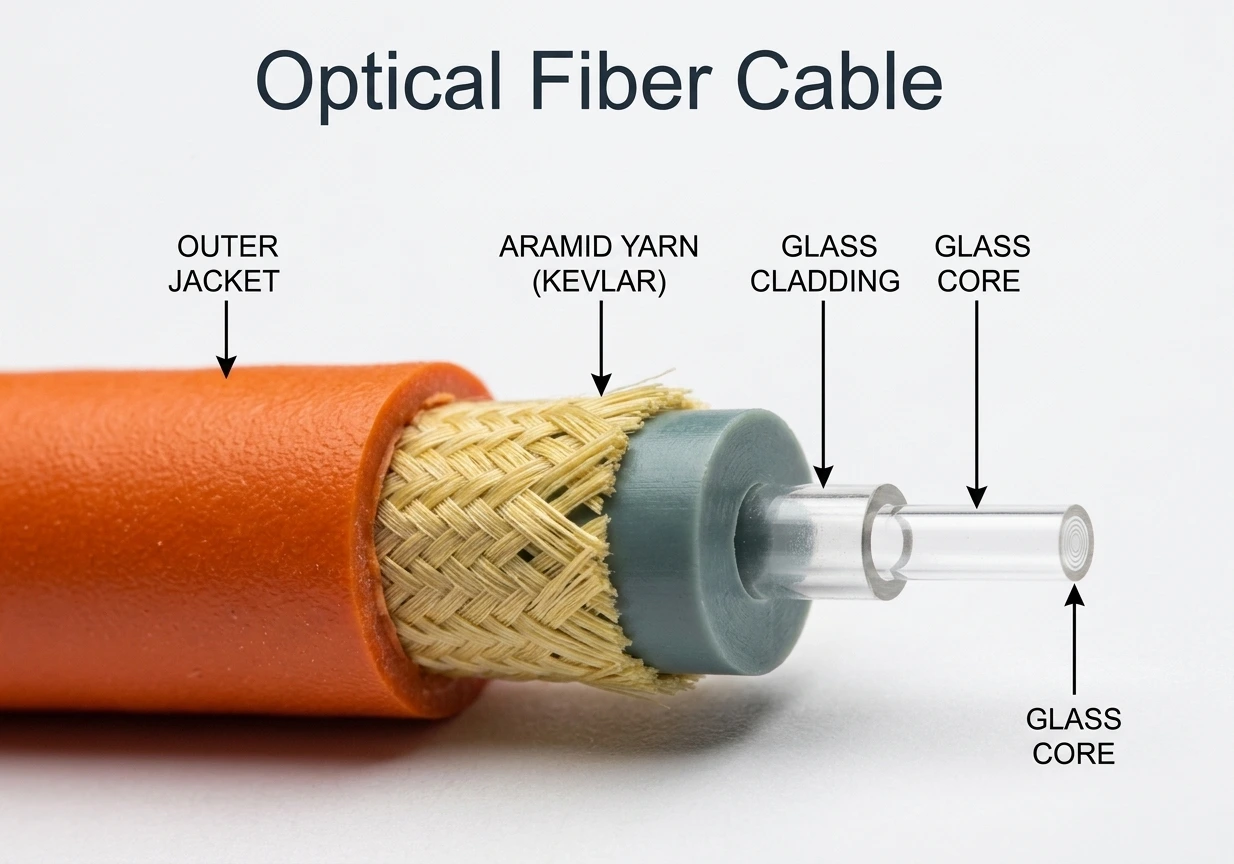
- Core — The central region through which light travels.
- Cladding — Surrounds the core and keeps light confined within the core through the principle of total internal reflection.
- Coating/Buffer — Provides protection to the fiber from moisture and physical damage.
- Strength Member — Provides mechanical strength and protects the fiber during installation and pulling.
- Outer Jacket — Provides overall protection against environmental and physical damage.
- Single-Mode Fiber (SMF) — Uses a very small core and mainly carries one mode of light. It is suitable for very long-distance and high-bandwidth communication.
- Multimode Fiber (MMF) — Has a larger core and allows multiple modes of light to travel through the fiber. It is generally used for shorter distances, such as within buildings and data centers.
- Very high bandwidth.
- Very high transmission speed.
- Suitable for long-distance communication.
- Immune to electromagnetic interference.
- Lower signal loss over long distances compared with many copper media.
- Difficult to tap without specialized equipment, providing strong communication security.
- Lightweight compared with many copper cable systems.
- Higher installation cost in many deployments.
- Splicing and termination require specialized equipment and skills.
- Fiber can be physically fragile if not properly protected.
- Maintenance and repair can be more complex.
Working Principle of Fiber-Optic Cable
Fiber-optic cable works on the principle of Total Internal Reflection (TIR). It transmits data by converting electrical signals into pulses of light and sending those light pulses through the fiber core.- Data Conversion — The electrical data from a computer or communication device is converted into light pulses by an optical transmitter, such as a LED or laser.
- Light Enters the Core — The light pulses enter the core of the optical fiber at a suitable angle.
- Total Internal Reflection — The core has a higher refractive index than the cladding. Therefore, when light reaches the core-cladding boundary at an appropriate angle, it undergoes Total Internal Reflection and remains confined within the core.
- Light Travels Through the Fiber — The light pulses repeatedly reflect inside the core and travel through the fiber over long distances with relatively low signal loss.
- Signal Reception — At the receiving end, an optical receiver detects the light pulses and converts them back into electrical signals.
- Data is Recovered — The receiving device processes the electrical signal and recovers the original transmitted data.
Key Point: The Core carries the light, while the Cladding helps keep the light inside the core through Total Internal Reflection. This is the fundamental working principle that allows fiber-optic cables to transmit data at very high speed over long distances.Fiber-Optic Cable একটি High-Speed Transmission Medium, যা খুব সরু Glass অথবা Plastic Strand-এর মধ্য দিয়ে Light Pulse আকারে Data বহন করে।
এতে Electrical Signal-এর পরিবর্তে Light ব্যবহার করা হয়। তাই Fiber-Optic Cable অত্যন্ত উচ্চ Bandwidth প্রদান করে এবং Electromagnetic Interference-এর প্রতি অত্যন্ত প্রতিরোধী।
Fiber-Optic Cable ব্যাপকভাবে ব্যবহৃত হয়:- Internet Backbone Network
- Long-Distance Communication
- WAN
- Submarine Communication Cable
- Telecommunication Network
- Data Center
- High-Speed Enterprise Network
- Core — Cable-এর কেন্দ্রীয় অংশ, যার মধ্য দিয়ে Light Travel করে।
- Cladding — Core-কে ঘিরে থাকে এবং Total Internal Reflection-এর নীতির মাধ্যমে Light-কে Core-এর মধ্যে সীমাবদ্ধ রাখতে সাহায্য করে।
- Coating/Buffer — Fiber-কে Moisture এবং Physical Damage থেকে সুরক্ষা প্রদান করে।
- Strength Member — Mechanical Strength প্রদান করে এবং Installation ও Pulling-এর সময় Fiber-কে সুরক্ষা দেয়।
- Outer Jacket — Environmental এবং Physical Damage থেকে Cable-কে সামগ্রিক সুরক্ষা প্রদান করে।
- Single-Mode Fiber (SMF) — খুব ছোট Core ব্যবহার করে এবং প্রধানত একটি Mode of Light বহন করে। এটি অত্যন্ত দীর্ঘ দূরত্ব এবং High-Bandwidth Communication-এর জন্য উপযোগী।
- Multimode Fiber (MMF) — তুলনামূলকভাবে বড় Core থাকে এবং একাধিক Mode of Light Fiber-এর মধ্য দিয়ে চলাচল করতে পারে। এটি সাধারণত স্বল্প দূরত্বের Communication-এর জন্য ব্যবহৃত হয়, যেমন Building এবং Data Center-এর মধ্যে।
- অত্যন্ত উচ্চ Bandwidth।
- অত্যন্ত উচ্চ Transmission Speed।
- Long-Distance Communication-এর জন্য উপযোগী।
- Electromagnetic Interference-এর প্রভাবমুক্ত।
- অনেক Copper Media-এর তুলনায় Long Distance-এ Signal Loss কম।
- Specialized Equipment ছাড়া Tap করা কঠিন, ফলে Communication Security বেশি।
- অনেক Copper Cable System-এর তুলনায় হালকা।
- অনেক ক্ষেত্রে Installation Cost বেশি।
- Splicing এবং Termination-এর জন্য Specialized Equipment ও দক্ষতার প্রয়োজন হয়।
- সঠিকভাবে সুরক্ষিত না থাকলে Fiber Physicalভাবে Fragile হতে পারে।
- Maintenance এবং Repair তুলনামূলকভাবে জটিল।
Fiber-Optic Cable-এর Working Principle
Fiber-Optic Cable Total Internal Reflection (TIR)-এর নীতিতে কাজ করে। এটি Electrical Signal-কে Light Pulse-এ রূপান্তর করে এবং সেই Light Pulse Fiber Core-এর মধ্য দিয়ে পাঠানোর মাধ্যমে Data Transmission সম্পন্ন করে।- Data Conversion — Computer অথবা Communication Device থেকে আসা Electrical Data একটি Optical Transmitter, যেমন LED অথবা Laser-এর মাধ্যমে Light Pulse-এ রূপান্তরিত হয়।
- Light Enters the Core — Light Pulse উপযুক্ত Angle-এ Optical Fiber-এর Core-এর মধ্যে প্রবেশ করে।
- Total Internal Reflection — Core-এর Refractive Index Cladding-এর তুলনায় বেশি। ফলে Light যখন উপযুক্ত Angle-এ Core এবং Cladding-এর Boundary-তে পৌঁছায়, তখন Total Internal Reflection ঘটে এবং Light Core-এর মধ্যেই সীমাবদ্ধ থাকে।
- Light Travels Through the Fiber — Light Pulse Core-এর ভিতরে বারবার Reflect হয়ে তুলনামূলকভাবে কম Signal Loss-এর মাধ্যমে দীর্ঘ দূরত্ব অতিক্রম করে।
- Signal Reception — Receiving End-এ একটি Optical Receiver Light Pulse শনাক্ত করে এবং সেটিকে আবার Electrical Signal-এ রূপান্তর করে।
- Data is Recovered — Receiving Device Electrical Signal Process করে এবং মূল Transmitted Data পুনরুদ্ধার করে।
মূল বিষয়: Core Light বহন করে, আর Cladding Total Internal Reflection-এর মাধ্যমে Light-কে Core-এর মধ্যে রাখতে সাহায্য করে। এই মূল নীতির কারণেই Fiber-Optic Cable অত্যন্ত উচ্চ গতিতে এবং দীর্ঘ দূরত্বে Data Transmission করতে পারে।
- 9Transmission Media DifferenceUTP vs STP
Feature UTP STP Shielding No additional metallic shielding Has metallic shielding Cost Lower Higher Interference Protection Lower Higher Installation Easier More difficult Flexibility More flexible Less flexible Common Use Ethernet and telephone networks Industrial/noisy environments
- 10Transmission Media DifferenceGuided vs Unguided Transmission Media
Feature Guided Media Unguided Media Physical Path Required Not required Medium Cable Air or space Examples UTP, STP, Coaxial, Fiber Radio, Microwave, Infrared Mobility Limited High Security Generally higher Generally lower Installation Requires physical cabling Often easier where cabling is difficult Interference Depends on cable type More exposed to wireless interference
- 11Transmission Media Unguided Transmission Media2. Unguided Transmission MediaUnguided transmission media, also called wireless transmission media, does not require a physical cable between the sender and receiver. Data is transmitted through air or space using electromagnetic waves.
Common types include:- Radio Waves
- Microwaves
- Infrared
- No physical cable is required.
- Useful for mobile and wireless communication.
- Can cover large geographical areas depending on the technology.
- Generally more susceptible to interference and interception than guided media.
- Installation can be easier where physical cabling is difficult.
Unguided Transmission Media-কে Wireless Transmission Media-ও বলা হয়। এতে Sender এবং Receiver-এর মধ্যে কোনো Physical Cable-এর প্রয়োজন হয় না। Data বায়ু অথবা মহাকাশের মধ্য দিয়ে Electromagnetic Waves ব্যবহার করে Transmission করা হয়।
এর সাধারণ ধরনগুলো হলো:- Radio Waves
- Microwaves
- Infrared
- কোনো Physical Cable-এর প্রয়োজন হয় না।
- Mobile এবং Wireless Communication-এর জন্য উপযোগী।
- Technology-এর উপর নির্ভর করে বৃহৎ Geographical Area কভার করতে পারে।
- Guided Media-এর তুলনায় সাধারণত Interference এবং Interception-এর প্রতি বেশি সংবেদনশীল।
- যেসব স্থানে Physical Cabling করা কঠিন, সেখানে Installation তুলনামূলকভাবে সহজ হতে পারে।
- 12Transmission Media Unguided Transmission Media2.1 Radio WavesRadio waves are electromagnetic waves that can propagate through air and, depending on their frequency and propagation characteristics, can cover relatively large areas.
Radio communication can support applications such as broadcasting and wireless communication. Examples include radio broadcasting, some mobile communication systems, wireless networks, and other radio-based communication systems.
Characteristics of Radio Waves:- Can support wide-area communication.
- Can be used for broadcasting.
- Can travel through air without a physical cable.
- May support one-to-many communication.
- Can be affected by interference, obstacles, and atmospheric conditions depending on frequency.
Radio Waves হলো Electromagnetic Waves, যা বায়ুর মধ্য দিয়ে Propagate করতে পারে এবং Frequency ও Propagation Characteristics-এর উপর নির্ভর করে তুলনামূলকভাবে বড় এলাকা কভার করতে পারে।
Radio Communication Broadcasting এবং Wireless Communication-এর মতো বিভিন্ন কাজে ব্যবহার করা যায়। এর উদাহরণ হলো Radio Broadcasting, কিছু Mobile Communication System, Wireless Network এবং অন্যান্য Radio-Based Communication System।
Radio Waves-এর বৈশিষ্ট্য:- Wide-Area Communication সমর্থন করতে পারে।
- Broadcasting-এর জন্য ব্যবহার করা যায়।
- কোনো Physical Cable ছাড়াই বায়ুর মধ্য দিয়ে চলাচল করতে পারে।
- One-to-Many Communication সমর্থন করতে পারে।
- Frequency-এর উপর নির্ভর করে Interference, Obstacles এবং Atmospheric Conditions দ্বারা প্রভাবিত হতে পারে।
- 13Transmission Media Unguided Transmission Media2.2 MicrowavesMicrowaves are electromagnetic waves generally operating at higher frequencies than traditional radio bands. They are widely used for point-to-point communication and satellite communication.
Terrestrial microwave communication usually requires a clear line-of-sight path between antennas because microwaves are strongly affected by obstacles and the curvature of the Earth.
The distance that can be covered by terrestrial microwave links can be increased by using taller antennas or intermediate repeater stations.
Applications of Microwaves:- Point-to-point communication
- Mobile communication infrastructure
- Television signal distribution
- Satellite communication
- Long-distance wireless links
- High frequency.
- High bandwidth can be available.
- Often uses directional antennas.
- Suitable for long-distance wireless links.
- Requires line-of-sight for many terrestrial applications.
- Can be affected by rain and atmospheric conditions, especially at higher frequencies.
Microwaves হলো এমন এক ধরনের Electromagnetic Waves, যা সাধারণত Traditional Radio Band-এর তুলনায় উচ্চতর Frequency-তে কাজ করে। এগুলো Point-to-Point Communication এবং Satellite Communication-এ ব্যাপকভাবে ব্যবহৃত হয়।
Terrestrial Microwave Communication-এর ক্ষেত্রে সাধারণত Antenna-গুলোর মধ্যে একটি Clear Line-of-Sight Path প্রয়োজন হয়। কারণ Microwave Obstacles এবং পৃথিবীর Curvature দ্বারা উল্লেখযোগ্যভাবে প্রভাবিত হয়।
Taller Antenna অথবা Intermediate Repeater Station ব্যবহার করে Terrestrial Microwave Link-এর মাধ্যমে Cover করা Distance বৃদ্ধি করা যায়।
Microwave-এর ব্যবহার:- Point-to-Point Communication
- Mobile Communication Infrastructure
- Television Signal Distribution
- Satellite Communication
- Long-Distance Wireless Link
- উচ্চ Frequency।
- উচ্চ Bandwidth পাওয়া যেতে পারে।
- সাধারণত Directional Antenna ব্যবহার করে।
- Long-Distance Wireless Link-এর জন্য উপযোগী।
- অনেক Terrestrial Application-এর ক্ষেত্রে Line-of-Sight প্রয়োজন হয়।
- বিশেষ করে উচ্চ Frequency-তে Rain এবং Atmospheric Conditions দ্বারা প্রভাবিত হতে পারে।
- 14Transmission Media Unguided Transmission Media2.3 InfraredInfrared is a form of electromagnetic radiation that has a frequency higher than microwaves and lower than visible light. Infrared communication is generally suitable for short-range communication.
A common example is an infrared TV remote control. The remote sends infrared signals to the television's receiver.
Infrared communication generally requires a short unobstructed path between the transmitter and receiver. It does not normally pass through walls, which can provide a degree of spatial security.
Applications of Infrared:- TV remote controls
- Short-range device communication
- Some sensors and control systems
- Short-range infrared data communication
Infrared হলো এক ধরনের Electromagnetic Radiation, যার Frequency Microwaves-এর তুলনায় বেশি এবং Visible Light-এর তুলনায় কম। Infrared Communication সাধারণত Short-Range Communication-এর জন্য উপযোগী।
এর একটি সাধারণ উদাহরণ হলো Infrared TV Remote Control। Remote Control Television-এর Receiver-এর কাছে Infrared Signal পাঠায়।
Infrared Communication-এর ক্ষেত্রে সাধারণত Transmitter এবং Receiver-এর মধ্যে একটি Short এবং Unobstructed Path প্রয়োজন হয়। এটি সাধারণত দেয়ালের মধ্য দিয়ে যেতে পারে না, যা একটি নির্দিষ্ট মাত্রার Spatial Security প্রদান করতে পারে।
Infrared-এর ব্যবহার:- TV Remote Control
- Short-Range Device Communication
- কিছু Sensor এবং Control System
- Short-Range Infrared Data Communication
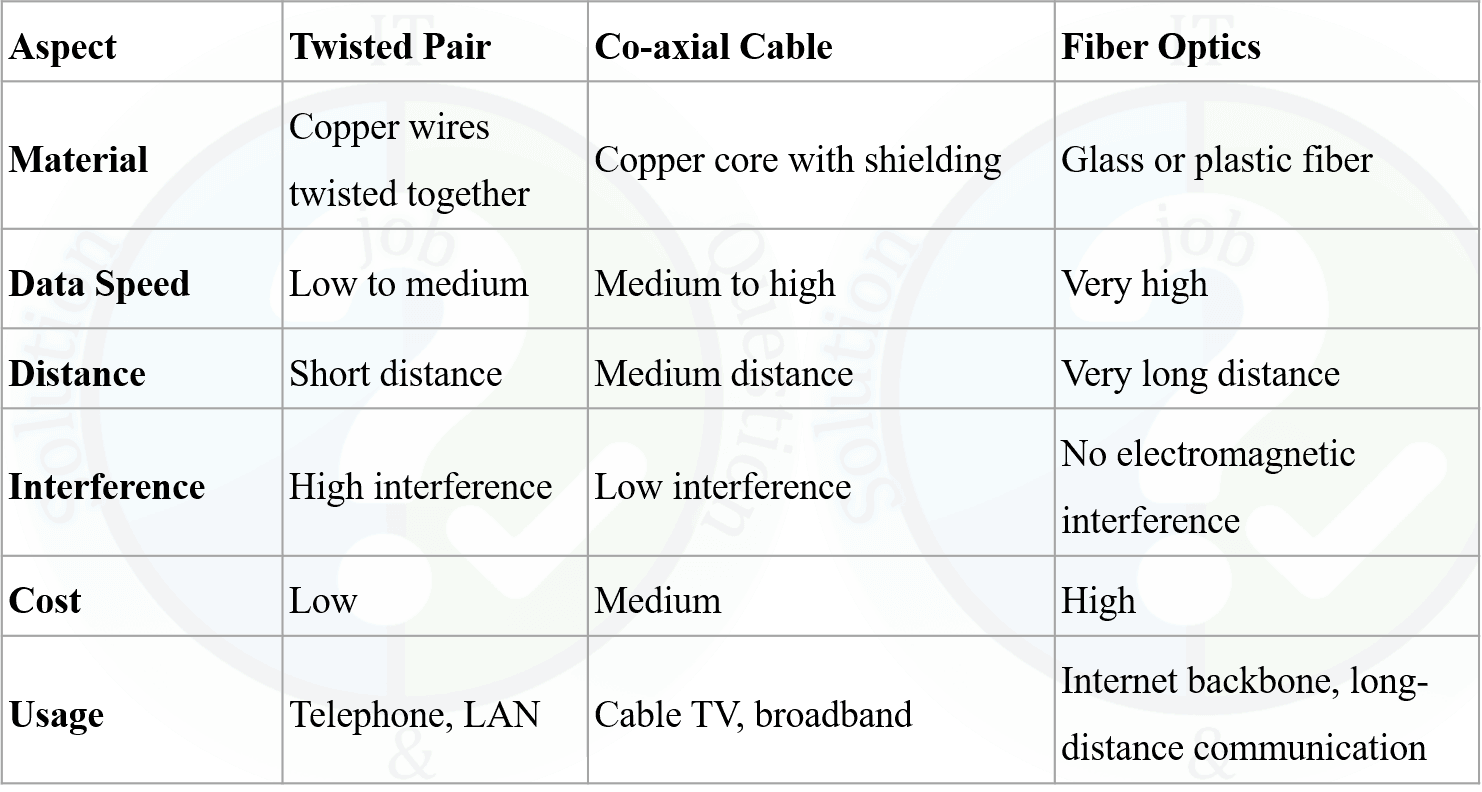
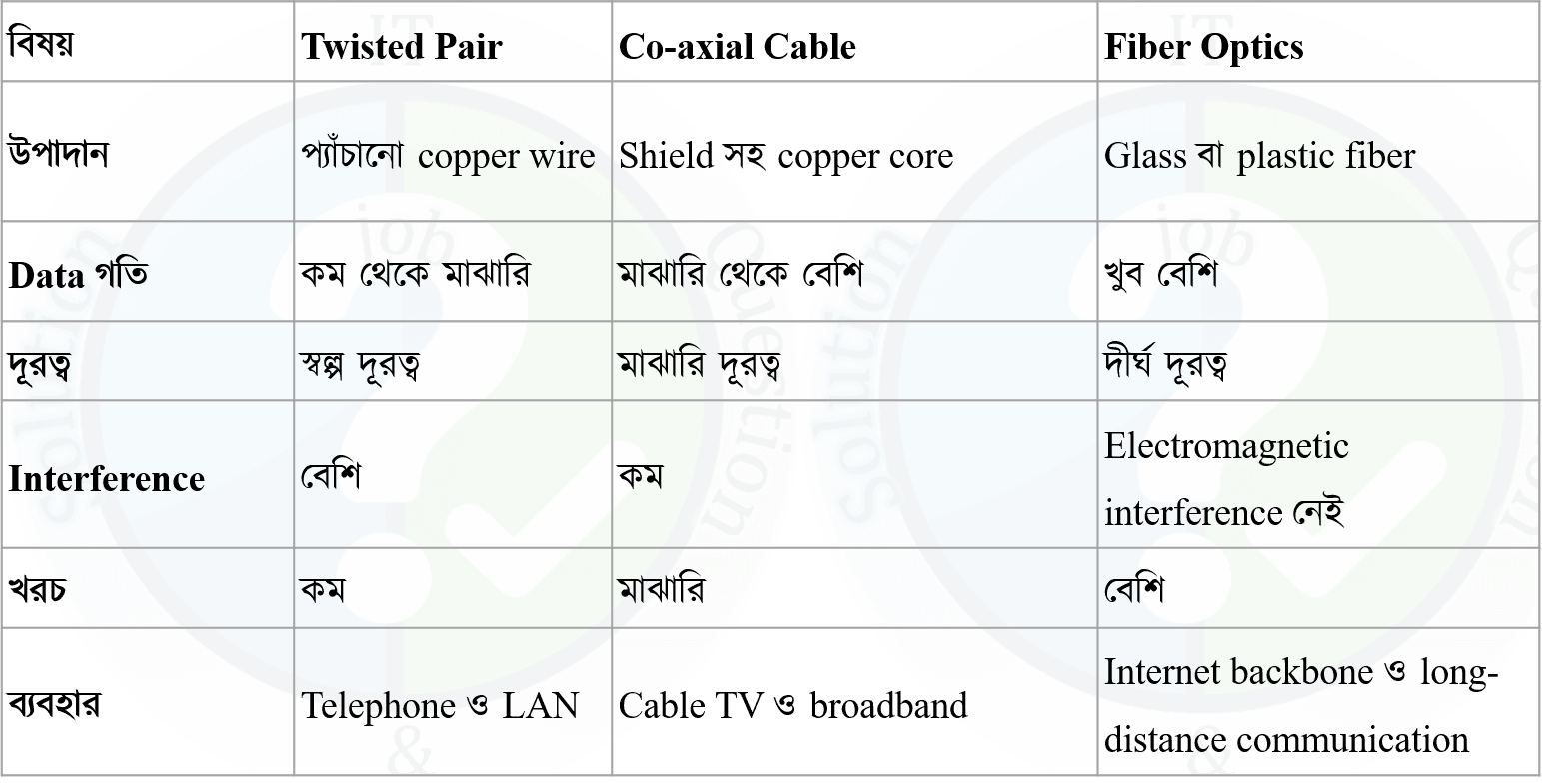
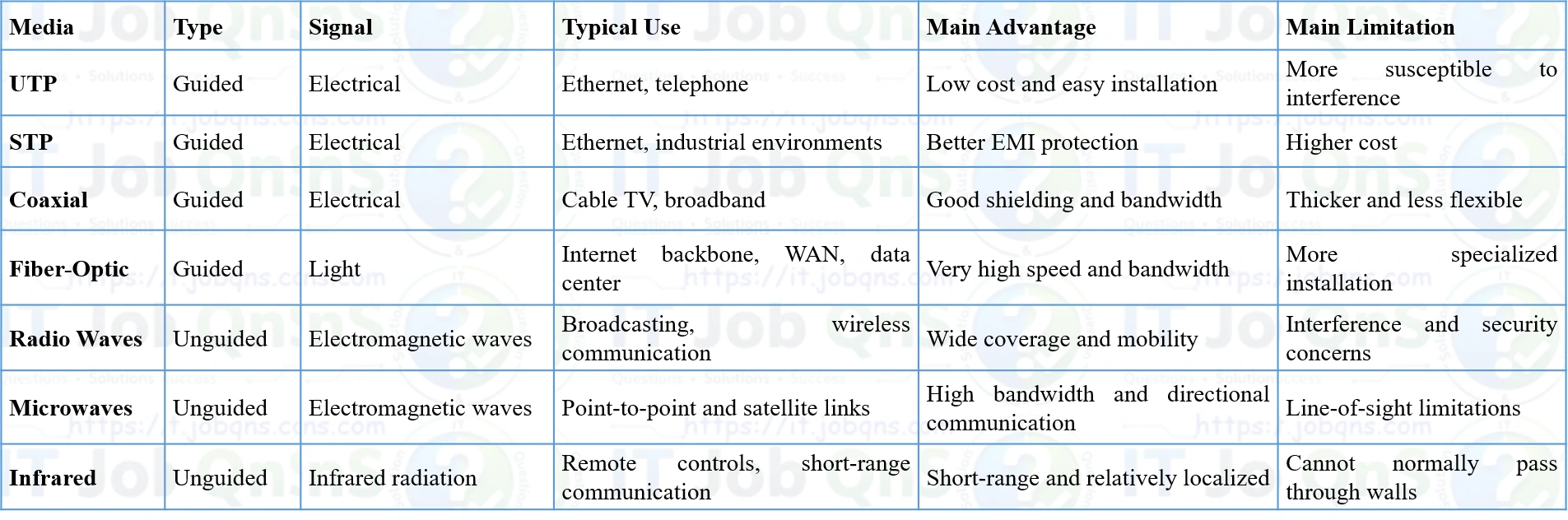
- 15Transmission Media ComparisionComparison of Transmission Media
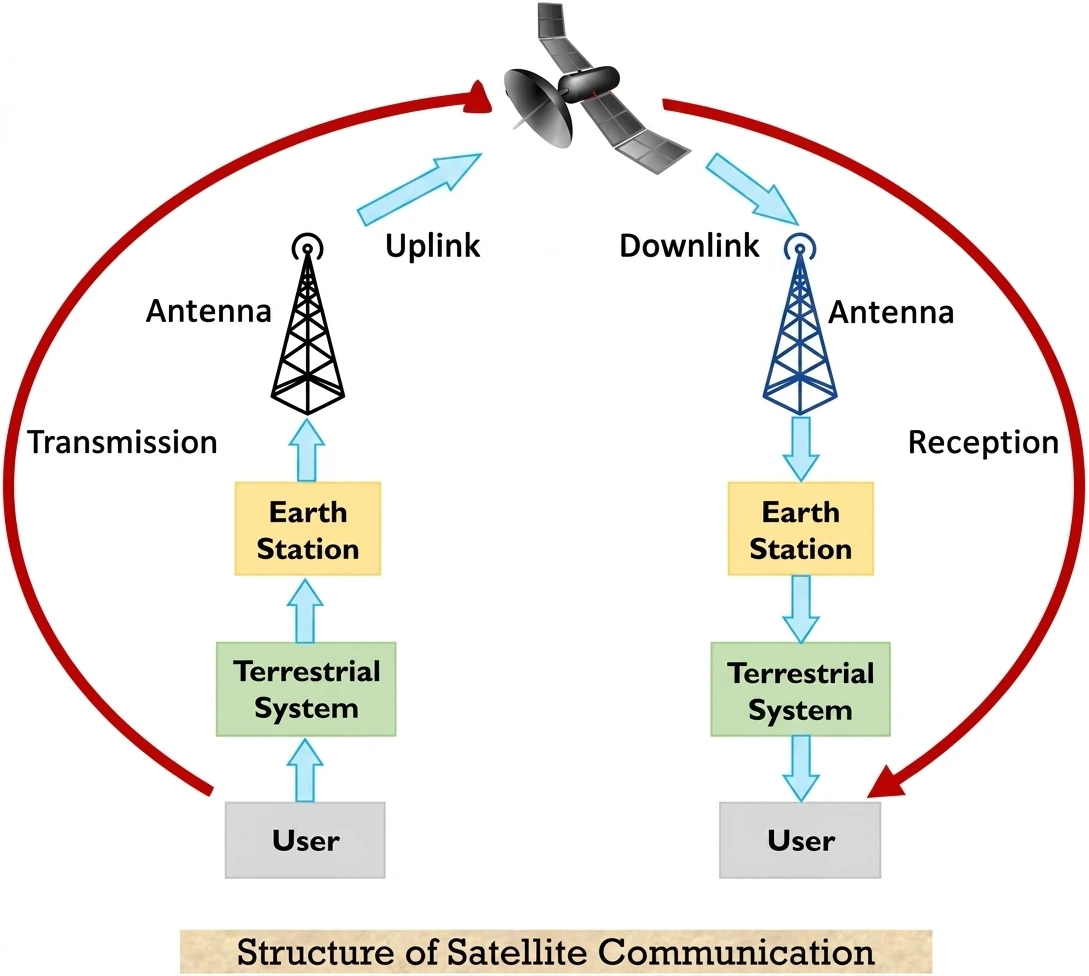
- 16Transmission Media Sattelite CommunicationSatellite Communication: Introduction, Communication Process, Types & ApplicationSatellite Communication is a communication system in which an artificial satellite is used to receive, amplify, process, and retransmit signals between two or more Earth-based stations. It is especially useful for long-distance and wide-area communication where traditional terrestrial communication infrastructure is difficult or expensive to establish.
Basic Communication Process: A transmitting Earth station sends a signal to the satellite. This process is called the uplink. The satellite receives the signal, processes or amplifies it using its transponder, and sends it back toward Earth. This process is called the downlink. A receiving Earth station then receives the transmitted signal.
Earth Station → Uplink → Satellite → Downlink → Earth Station
Satellite: A satellite is an object that moves around another celestial body in an orbit. Satellites may be natural, such as the Moon, or artificial, meaning they are designed and launched by humans for specific purposes.
Artificial Satellite: An artificial satellite is a man-made object launched into space and placed in orbit around the Earth or another celestial body. Artificial satellites are used for communication, weather forecasting, navigation, scientific research, remote sensing, and other purposes.
Communication Satellite: A communication satellite is an artificial satellite specifically designed to receive communication signals from Earth, process or amplify them, and retransmit them to another location on Earth.
Geostationary Satellite: A geostationary satellite moves in a circular orbit above the Earth's equator at an altitude of approximately 35,786 km. It takes approximately 24 hours to complete one orbit and appears to remain fixed relative to a particular location on Earth. This makes it highly suitable for continuous television broadcasting, communication, and weather services.
Uplink: Uplink is the transmission of a signal from an Earth station to a satellite.
Downlink: Downlink is the transmission of a signal from a satellite to an Earth station.
Usually, uplink and downlink use different frequency ranges. Using different frequencies helps prevent the transmitted uplink signal from interfering with the downlink signal.
Frequency Band: A frequency band is a specific range of frequencies allocated for a particular communication service. Satellite communication commonly uses microwave frequency bands such as C-band, Ku-band, and Ka-band.
Transponder: A transponder is an important electronic unit inside a communication satellite. It receives an uplink signal, filters and amplifies it, changes its frequency, and retransmits it toward the Earth as a downlink signal.
Latency: Latency is the delay experienced when a signal travels between an Earth station and a satellite and then returns to Earth. The long distance involved, particularly with geostationary satellites, causes noticeable communication delay.
Why Different Frequencies Are Used?
Satellite communication operates at microwave frequencies because these frequencies can carry large amounts of information and can be transmitted using highly directional antennas. Different frequency bands are selected according to coverage, bandwidth, atmospheric effects, and interference requirements.
Atmospheric conditions can affect satellite signals. For example, rain and water vapor can cause signal attenuation, especially at higher frequencies. This effect is commonly known as rain fade. Therefore, appropriate frequency bands and communication techniques are selected to maintain reliable communication.
Advantages of Satellite Communication:- Provides very wide geographical coverage.
- Supports long-distance communication.
- Can provide communication services to remote and rural areas.
- Useful for broadcasting television, radio, and other media.
- Can support mobile and maritime communication.
- Can establish communication where terrestrial infrastructure is unavailable.
- One satellite can serve a large geographical region.
- Useful for emergency and disaster communication.
- High initial cost for designing, building, and launching satellites.
- Satellite launching requires complex technology and infrastructure.
- Geostationary satellite communication can have significant latency.
- Signals may be affected by atmospheric conditions such as heavy rain.
- Available frequency spectrum and bandwidth are limited.
- Repairing or maintaining a satellite in orbit is extremely difficult and expensive.
- Satellite systems require sophisticated ground stations and equipment.
- Space debris and other space-related hazards can pose risks to satellites.
- Television Broadcasting: Satellites distribute television signals over large geographical areas.
- Mobile Communication: Satellites can provide communication services in areas where terrestrial networks are unavailable.
- Internet Services: Satellite networks can provide internet connectivity to remote and underserved regions.
- Weather Forecasting: Weather satellites collect information about clouds, storms, temperature, and atmospheric conditions.
- Remote Sensing: Satellites collect information about the Earth's surface, environment, agriculture, and natural resources.
- Navigation: Satellite systems support positioning and navigation services.
- Emergency Communication: Satellites can provide communication during natural disasters when terrestrial networks are damaged.
Key Point: Satellite communication is not simply about sending signals through space. It involves satellites, Earth stations, antennas, transponders, frequency management, signal processing, and careful coordination to provide reliable communication over large distances.
In short: Satellite communication uses artificial satellites as relay stations in space to connect distant locations. Its major strengths are wide coverage, long-distance connectivity, and service availability in remote areas, while its major limitations include high cost, latency, atmospheric interference, and maintenance difficulty.
স্যাটেলাইট যোগাযোগ (Satellite Communication) হলো এমন একটি যোগাযোগ ব্যবস্থা যেখানে একটি কৃত্রিম স্যাটেলাইট ব্যবহার করে পৃথিবীর দুই বা ততোধিক স্থানের মধ্যে তথ্য বা যোগাযোগ সংকেত আদান-প্রদান করা হয়। বিশেষ করে দীর্ঘ দূরত্ব এবং বিস্তৃত এলাকার যোগাযোগের ক্ষেত্রে এটি অত্যন্ত গুরুত্বপূর্ণ, যেখানে প্রচলিত স্থলভিত্তিক যোগাযোগ অবকাঠামো স্থাপন করা কঠিন বা ব্যয়বহুল।
যোগাযোগের মৌলিক প্রক্রিয়া: একটি Earth Station বা গ্রাউন্ড স্টেশন প্রথমে স্যাটেলাইটের দিকে একটি সংকেত পাঠায়। এই প্রক্রিয়াকে Uplink বলা হয়। স্যাটেলাইট সংকেত গ্রহণ করে তার Transponder-এর মাধ্যমে সংকেতকে প্রক্রিয়া বা Amplify করে এবং পুনরায় পৃথিবীর দিকে পাঠায়। এই প্রক্রিয়াকে Downlink বলা হয়। এরপর অন্য একটি Earth Station সেই সংকেত গ্রহণ করে।
Earth Station → Uplink → Satellite → Downlink → Earth Station
Satellite: Satellite বা উপগ্রহ হলো এমন একটি বস্তু যা অন্য কোনো মহাজাগতিক বস্তুর চারদিকে নির্দিষ্ট কক্ষপথে ঘোরে। Satellite প্রাকৃতিক হতে পারে, যেমন Moon বা চাঁদ, অথবা কৃত্রিম হতে পারে যা মানুষের তৈরি এবং নির্দিষ্ট উদ্দেশ্যে মহাকাশে পাঠানো হয়।
Artificial Satellite: Artificial Satellite বা কৃত্রিম উপগ্রহ হলো মানুষের তৈরি এমন একটি বস্তু যা মহাকাশে উৎক্ষেপণ করে পৃথিবী বা অন্য কোনো মহাজাগতিক বস্তুর চারদিকে কক্ষপথে স্থাপন করা হয়। এগুলো যোগাযোগ, আবহাওয়া পূর্বাভাস, নেভিগেশন, বৈজ্ঞানিক গবেষণা, Remote Sensing এবং বিভিন্ন কাজে ব্যবহৃত হয়।
Communication Satellite: Communication Satellite হলো এমন একটি কৃত্রিম উপগ্রহ যা মূলত পৃথিবী থেকে যোগাযোগ সংকেত গ্রহণ, প্রক্রিয়াকরণ বা শক্তিশালীকরণ এবং অন্য একটি স্থানে পুনরায় পাঠানোর জন্য ব্যবহৃত হয়।
Geostationary Satellite: Geostationary Satellite পৃথিবীর বিষুবরেখার উপরে প্রায় 35,786 km উচ্চতায় একটি বৃত্তাকার কক্ষপথে অবস্থান করে। এটি প্রায় ২৪ ঘণ্টায় একবার পৃথিবীকে প্রদক্ষিণ করে এবং পৃথিবীর একটি নির্দিষ্ট স্থানের তুলনায় আকাশে স্থির অবস্থানে আছে বলে মনে হয়। তাই Television Broadcasting, Communication এবং Weather Service-এর জন্য এটি অত্যন্ত উপযোগী।
Uplink: Earth Station থেকে Satellite-এর দিকে সংকেত পাঠানোর প্রক্রিয়াকে Uplink বলা হয়।
Downlink: Satellite থেকে Earth Station-এর দিকে সংকেত পাঠানোর প্রক্রিয়াকে Downlink বলা হয়।
সাধারণত Uplink এবং Downlink-এর জন্য ভিন্ন Frequency ব্যবহার করা হয়। এর ফলে Uplink এবং Downlink সংকেতের মধ্যে Interference বা পারস্পরিক বাধা কমানো যায়।
Frequency Band: Frequency Band হলো নির্দিষ্ট একটি Frequency Range, যা কোনো নির্দিষ্ট যোগাযোগ ব্যবস্থার জন্য বরাদ্দ করা হয়। Satellite Communication-এ সাধারণত C-band, Ku-band এবং Ka-band-এর মতো Microwave Frequency Band ব্যবহৃত হয়।
Transponder: Transponder হলো Communication Satellite-এর একটি গুরুত্বপূর্ণ Electronic Unit। এটি Uplink Signal গ্রহণ করে, সংকেতকে Filter ও Amplify করে, Frequency পরিবর্তন করে এবং Downlink Signal হিসেবে পৃথিবীর দিকে পুনরায় পাঠায়।
Latency: Satellite Communication-এ সংকেত এক স্থান থেকে Satellite-এ এবং Satellite থেকে আবার পৃথিবীতে যেতে যে সময় নেয়, তার কারণে যে Delay বা বিলম্ব সৃষ্টি হয় তাকে Latency বলা হয়। বিশেষ করে Geostationary Satellite-এর ক্ষেত্রে দীর্ঘ দূরত্বের কারণে এই Latency তুলনামূলকভাবে বেশি।
কেন ভিন্ন Frequency ব্যবহার করা হয়?
Satellite Communication-এ Microwave Frequency ব্যবহার করা হয় কারণ এগুলো বেশি পরিমাণ তথ্য বহন করতে পারে এবং Directional Antenna-এর মাধ্যমে নির্দিষ্ট দিকে সংকেত পাঠানো যায়। Coverage, Bandwidth, Atmospheric Effect এবং Interference-এর মতো বিষয় বিবেচনা করে বিভিন্ন Frequency Band নির্বাচন করা হয়।
বায়ুমণ্ডলের বিভিন্ন অবস্থার কারণে Satellite Signal-এর মান পরিবর্তিত হতে পারে। যেমন, বৃষ্টি এবং Water Vapor-এর কারণে বিশেষ করে উচ্চ Frequency-তে Signal Attenuation হতে পারে। এই সমস্যাকে সাধারণভাবে Rain Fade বলা হয়। তাই নির্ভরযোগ্য যোগাযোগের জন্য উপযুক্ত Frequency Band এবং Communication Technique নির্বাচন করা হয়।
Satellite Communication-এর সুবিধা:- বিশাল ভৌগোলিক এলাকায় যোগাযোগ সুবিধা প্রদান করতে পারে।
- দীর্ঘ দূরত্বে যোগাযোগ করতে পারে।
- দুর্গম ও প্রত্যন্ত অঞ্চলে যোগাযোগ সুবিধা প্রদান করতে পারে।
- Television, Radio এবং অন্যান্য Media Broadcasting-এর জন্য উপযোগী।
- Mobile এবং Maritime Communication-এ ব্যবহার করা যায়।
- যেখানে স্থলভিত্তিক যোগাযোগ অবকাঠামো নেই, সেখানেও যোগাযোগ স্থাপন করা যায়।
- একটি Satellite একটি বিশাল ভৌগোলিক এলাকা কভার করতে পারে।
- Emergency এবং Disaster Communication-এর ক্ষেত্রে কার্যকর।
- Satellite তৈরি, উৎক্ষেপণ এবং স্থাপনের জন্য অনেক বেশি প্রাথমিক খরচ হয়।
- Satellite Launch-এর জন্য জটিল প্রযুক্তি ও অবকাঠামো প্রয়োজন।
- Geostationary Satellite-এর ক্ষেত্রে উল্লেখযোগ্য Latency দেখা যায়।
- ভারী বৃষ্টি ও অন্যান্য Atmospheric Condition-এর কারণে Signal দুর্বল হতে পারে।
- Available Frequency Spectrum এবং Bandwidth সীমিত।
- কক্ষপথে থাকা Satellite মেরামত ও রক্ষণাবেক্ষণ করা অত্যন্ত কঠিন এবং ব্যয়বহুল।
- Satellite System পরিচালনার জন্য উন্নত Ground Station এবং Equipment প্রয়োজন।
- Space Debris এবং অন্যান্য মহাকাশজনিত ঝুঁকি Satellite-এর জন্য বিপদ সৃষ্টি করতে পারে।
- Television Broadcasting: Satellite-এর মাধ্যমে বিশাল ভৌগোলিক এলাকায় Television Signal সম্প্রচার করা যায়।
- Mobile Communication: যেখানে প্রচলিত Terrestrial Network নেই, সেখানে Satellite Mobile Communication সুবিধা দিতে পারে।
- Internet Service: Remote এবং Underserved এলাকায় Satellite Network-এর মাধ্যমে Internet Connectivity প্রদান করা যায়।
- Weather Forecasting: Weather Satellite মেঘ, ঝড়, তাপমাত্রা এবং বায়ুমণ্ডলের বিভিন্ন তথ্য সংগ্রহ করে।
- Remote Sensing: Satellite পৃথিবীর ভূমি, পরিবেশ, কৃষি এবং প্রাকৃতিক সম্পদ সম্পর্কে তথ্য সংগ্রহ করে।
- Navigation: Satellite System Positioning এবং Navigation Service প্রদান করতে সাহায্য করে।
- Emergency Communication: প্রাকৃতিক দুর্যোগের সময় Terrestrial Network ক্ষতিগ্রস্ত হলে Satellite Communication যোগাযোগ ব্যবস্থা সচল রাখতে সাহায্য করে।
গুরুত্বপূর্ণ বিষয়: Satellite Communication শুধু মহাকাশের মধ্য দিয়ে Signal পাঠানোর বিষয় নয়। এর সঙ্গে Satellite, Earth Station, Antenna, Transponder, Frequency Management, Signal Processing এবং বিভিন্ন প্রযুক্তিগত ব্যবস্থার সমন্বয় জড়িত। এসব ব্যবস্থার মাধ্যমে দীর্ঘ দূরত্বে নির্ভরযোগ্য যোগাযোগ নিশ্চিত করা হয়।
সংক্ষেপে: Satellite Communication হলো এমন একটি যোগাযোগ ব্যবস্থা যেখানে Artificial Satellite-কে মহাকাশে একটি Relay Station হিসেবে ব্যবহার করে দূরবর্তী স্থানগুলোর মধ্যে যোগাযোগ স্থাপন করা হয়। এর প্রধান সুবিধা হলো বিস্তৃত Coverage, Long-distance Communication এবং Remote Area Connectivity। অন্যদিকে High Cost, Latency, Atmospheric Interference এবং Maintenance Difficulty হলো এর প্রধান সীমাবদ্ধতা।
Previous Job Question: Transmission Media
- ☆1Data CommunicationTransmission MediaWhat are the different types of transmission media used for data communication? Explain their advantages and disadvantages.Combined Bank, SO(IT), 24 | Senior Officer (IT)
Types of Transmission Media
Transmission media are used to carry data from a source to a destination. They are categorized into two types:
1. Guided Media (Wired)
Guided media use physical cables for data transmission. Examples:
1. Twisted Pair Cable: Commonly used in LANs.
- Advantages: Cheap, easy to install, supports high-speed LAN.
- Disadvantages: Limited distance, susceptible to interference.
2. Coaxial Cable: Used for cable TV and internet.
- Advantages: High-speed data transfer, better shielding.
- Disadvantages: Expensive, network failure if damaged.
3. Fiber Optic Cable: Used for high-speed broadband and long-distance communication.
- Advantages: High bandwidth, low signal loss, immune to interference.
- Disadvantages: Expensive, fragile, complex installation.
2. Unguided Media (Wireless)
Unguided media use electromagnetic waves for data transmission. Examples:
1. Radio Waves: Used in Wi-Fi, AM/FM, and mobile networks.
- Advantages: Covers large areas, low setup cost.
- Disadvantages: Prone to interference, less secure.
2. Microwaves: Used in satellite and long-distance communication.
- Advantages: No cables needed, suitable for remote areas.
- Disadvantages: High installation cost, weather-dependent.
3. Infrared: Used in remote controls and short-range communication.
- Advantages: Secure, low power consumption.
- Disadvantages: Short range, blocked by obstacles.
Source: Tutorialspoint
Transmission Media-এর ধরন
Transmission media হলো এমন মাধ্যম যা source থেকে destination পর্যন্ত data বহন করে। এগুলো প্রধানত দুই ধরনের:
1. Guided Media (Wired)
Guided media-তে physical cable ব্যবহার করে data transmit করা হয়। উদাহরণ:
1. Twisted Pair Cable: সাধারণত LAN-এ ব্যবহৃত হয়।
- Advantages: কম খরচে পাওয়া যায়, install করা সহজ, high-speed LAN support করে।
- Disadvantages: দূরত্ব সীমিত, interference-এর প্রভাব বেশি।
2. Coaxial Cable: Cable TV এবং internet-এ ব্যবহৃত হয়।
- Advantages: High-speed data transfer, ভালো shielding।
- Disadvantages: ব্যয়বহুল, cable ক্ষতিগ্রস্ত হলে network failure হয়।
3. Fiber Optic Cable: High-speed broadband এবং long-distance communication-এ ব্যবহৃত হয়।
- Advantages: High bandwidth, signal loss কম, interference মুক্ত।
- Disadvantages: ব্যয়বহুল, ভঙ্গুর, install করা জটিল।
2. Unguided Media (Wireless)
Unguided media electromagnetic wave ব্যবহার করে data transmit করে। উদাহরণ:
1. Radio Waves: Wi-Fi, AM/FM এবং mobile network-এ ব্যবহৃত হয়।
- Advantages: বড় এলাকা জুড়ে coverage, setup cost কম।
- Disadvantages: Interference-এর সম্ভাবনা বেশি, security কম।
2. Microwaves: Satellite এবং long-distance communication-এ ব্যবহৃত হয়।
- Advantages: Cable দরকার হয় না, remote area-র জন্য উপযোগী।
- Disadvantages: Installation cost বেশি, weather-এর উপর নির্ভরশীল।
3. Infrared: Remote control এবং short-range communication-এ ব্যবহৃত হয়।
- Advantages: Secure, কম power ব্যবহার করে।
- Disadvantages: স্বল্প দূরত্বে কাজ করে, বাধা পেলে signal block হয়।
Source: Tutorialspoint
- ☆2Data CommunicationTransmission MediaDifference between Guided and Unguided media. Difference between STP and UTP. Why using benefit UTP instead of STP?.CB, O(IT), 23 | Officer (IT)
1. Difference between Guided and Unguided Transmission Media
Aspect Guided Media Unguided Media Definition Data is transmitted through physical cables Data is transmitted through air without cables Transmission Path Uses wired path Uses wireless path Interference Low interference High interference Security More secure Less secure Examples Twisted pair, Co-axial cable, Fiber optics Radio waves, Microwave, Satellite 2. Difference between STP and UTP Cable
Aspect STP (Shielded Twisted Pair) UTP (Unshielded Twisted Pair) Shielding Has metallic shielding No shielding Interference Protection High protection from EMI Less protection from EMI Cost More expensive Cheaper Installation Difficult Easy Usage Industrial environment LAN and office networks 3. Why UTP is Preferred over STP
- Low Cost: UTP cables are cheaper than STP cables.
- Easy Installation: UTP cables are lighter and flexible.
- Widely Available: Used in most LAN and Ethernet networks.
- Sufficient Performance: Provides good performance in normal office environments.
১. Guided ও Unguided Transmission Media-এর পার্থক্য
বিষয় Guided Media Unguided Media সংজ্ঞা Physical cable ব্যবহার করে data পাঠানো হয় Air বা space দিয়ে data পাঠানো হয় Transmission Path Wired মাধ্যম Wireless মাধ্যম Interference কম বেশি Security বেশি নিরাপদ কম নিরাপদ উদাহরণ Twisted pair, Co-axial cable, Fiber optics Radio wave, Microwave, Satellite ২. STP ও UTP Cable-এর পার্থক্য
বিষয় STP (Shielded Twisted Pair) UTP (Unshielded Twisted Pair) Shielding Metallic shielding থাকে Shielding থাকে না Interference Protection EMI থেকে বেশি সুরক্ষা EMI থেকে কম সুরক্ষা খরচ বেশি কম Installation কঠিন সহজ ব্যবহার Industrial environment LAN ও office network ৩. STP-এর তুলনায় UTP ব্যবহার করার সুবিধা
- কম খরচ: UTP cable তুলনামূলকভাবে সস্তা।
- সহজ Installation: UTP হালকা ও flexible হওয়ায় সহজে বসানো যায়।
- ব্যাপক ব্যবহার: অধিকাংশ Ethernet ও LAN network-এ ব্যবহৃত হয়।
- যথেষ্ট Performance: সাধারণ office environment-এর জন্য যথেষ্ট ভালো performance দেয়।
- ☆3Data CommunicationTransmission MediaWhat is the main benefit of broadband transmission system compared to baseband? What is the attenuation of transmission media? Distinguish between twisted pair, co-axial cable and fiber optics in tabular form.Rupali, ANE, 23 | AME/ANE/AE
1. Main Benefit of Broadband Transmission System over Baseband
The main benefit of a broadband transmission system is that it can carry multiple signals simultaneously over the same transmission medium using different frequency bands, whereas baseband transmission can carry only one signal at a time.
Broadband transmission supports higher data capacity, longer distance communication, and is widely used in cable TV, internet, and long-distance networks.
2. Attenuation of Transmission Media
Attenuation is the gradual loss of signal strength as data travels through a transmission medium over a distance. As the signal moves farther, it becomes weaker and may cause data errors.
Attenuation depends on the type of transmission media, distance, and signal frequency, and it is usually measured in decibels (dB).
3. Difference between Twisted Pair, Co-axial Cable and Fiber Optics

১. Baseband-এর তুলনায় Broadband Transmission System-এর প্রধান সুবিধা
Broadband transmission system-এর প্রধান সুবিধা হলো এটি একই transmission media ব্যবহার করে একসাথে একাধিক signal পাঠাতে পারে, যেখানে baseband transmission এক সময়ে শুধু একটি signal পাঠাতে পারে。
Broadband transmission বেশি data বহন করতে পারে, দীর্ঘ দূরত্বে কাজ করে এবং cable TV, internet ও long-distance communication-এ ব্যবহৃত হয়।
২. Transmission Media-এর Attenuation
Attenuation হলো transmission media দিয়ে data পাঠানোর সময় signal-এর শক্তি ধীরে ধীরে কমে যাওয়া। দূরত্ব যত বাড়ে, signal তত দুর্বল হয় এবং data error হতে পারে।
Attenuation transmission media-এর ধরন, দূরত্ব ও signal frequency-এর উপর নির্ভর করে এবং সাধারণত decibel (dB) এককে পরিমাপ করা হয়।
৩. Twisted Pair, Co-axial Cable ও Fiber Optics-এর পার্থক্য

Assigment: Transmission Media
- Comparison of Different Guided Transmission Media (In Tabular format)
- Comparison of Different Unguided Transmission Media (In Tabular format)
Explain briefly how satellite communication works.

Working Principle of Fiber-Optic Cable
Earth Station → Uplink → Satellite → Downlink → Earth Station