- ☆1Non Technical Question
1. Focus Writing in Bangla: “বাংলাদেশের ব্যাংকিং খাতে খেলাপি ঋণ: কারণ, প্রভাব ও উত্তরণের উপায়”
2. Focus Writing in Englsih: "The Role of Sustainable Banking in Achieving the UN Sustainable Development Goals (SDGs) in Bangladesh."
3.Translate the following passage into English
“এক ক্ষুধার্ত শিয়াল একটি আঙুর ক্ষেতের পাশ দিয়ে যাচ্ছিল। উঁচুতে ঝোলানো আঙুর দেখে সে তা খাওয়ার চেষ্টা করল, কিন্তু বারবার লাফিয়েও ব্যর্থ হলো । অবশেষে সে হতাশ হয়ে চলে গেল । যাওয়ার সময় বলল, আঙুরগুলো আসলে টক।”
4.Translate the following passage into Bangla
"The boy found a lost wallet on his way to school. Instead of keeping it, he looked for the owner and returned it. The owner, impressed by his honesty, offered him a reward. The boy politely refused, saying that honesty is its own reward."
5.General Knowledge
5.1 Which river is known as the "Lifeline of Bangladesh"?
5.2 What is the name of the international organization that monitors global health standards and coordinates the response to pandemics?
5.3 What is the name of Bangladesh's first deep-sea port?
5.4 Where is the headquarters of the International Monetary Fund (IMF) located?
5.5 Which country has the world's longest coastline? - ☆2MiscellaneousDifferentiate between a Fuse and a Miniature Circuit Breaker (MCB). Which one is more suitable for modern office electrical installations and why?
Difference Between Fuse and Miniature Circuit Breaker (MCB)
Fuse Miniature Circuit Breaker (MCB) A Fuse protects an electrical circuit by melting its metal wire when excessive current flows. An MCB protects an electrical circuit by automatically switching off (tripping) when an overload or short circuit occurs. Works only once; it must be replaced after it blows. Can be reset and reused after the fault is cleared. Slower and less convenient to restore power. Provides faster and more reliable protection. Maintenance cost is higher because the fuse needs replacement. Lower maintenance cost since it is reusable. Provides only basic overcurrent protection. Provides better protection against Overload and Short Circuit. Which is More Suitable for Modern Office Installations?
Miniature Circuit Breaker (MCB) is more suitable for modern office electrical installations because it provides fast and reliable protection, can be reset without replacement, reduces maintenance cost, improves safety, and minimizes downtime after electrical faults.
Fuse এবং Miniature Circuit Breaker (MCB)-এর মধ্যে পার্থক্য
Fuse Miniature Circuit Breaker (MCB) Fuse অতিরিক্ত Current প্রবাহিত হলে ভিতরের ধাতব তার গলে Circuit বিচ্ছিন্ন করে। MCB Overload বা Short Circuit হলে স্বয়ংক্রিয়ভাবে Trip করে Circuit বিচ্ছিন্ন করে। একবার নষ্ট হলে নতুন Fuse লাগাতে হয়। Fault দূর করার পরে পুনরায় Reset করে ব্যবহার করা যায়। Power পুনরুদ্ধারে তুলনামূলক বেশি সময় লাগে। দ্রুত এবং নির্ভরযোগ্যভাবে Circuit সুরক্ষা দেয়। বারবার পরিবর্তন করতে হওয়ায় Maintenance Cost বেশি। পুনর্ব্যবহারযোগ্য হওয়ায় Maintenance Cost কম। শুধুমাত্র মৌলিক Overcurrent Protection প্রদান করে। Overload এবং Short Circuit উভয়ের বিরুদ্ধে উন্নত সুরক্ষা প্রদান করে। আধুনিক Office Electrical Installation-এর জন্য কোনটি উপযুক্ত?
আধুনিক Office Electrical Installation-এর জন্য Miniature Circuit Breaker (MCB) বেশি উপযুক্ত। কারণ এটি দ্রুত Trip করে Circuit সুরক্ষা দেয়, পুনরায় Reset করে ব্যবহার করা যায়, Maintenance Cost কম, নিরাপত্তা বেশি এবং Electrical Fault-এর পর দ্রুত বিদ্যুৎ সরবরাহ পুনরুদ্ধার করা সম্ভব।
- ☆3MiscellaneousExplain the working principle of a PN junction diode. Draw its symbol and describe the difference between forward bias and reverse bias.
PN Junction Diode
Working Principle
A PN Junction Diode is a semiconductor device formed by joining P-type and N-type semiconductor materials. At the junction, a Depletion Region is formed, creating a potential barrier that controls the flow of current.
When the diode is Forward Biased, the potential barrier decreases, allowing current to flow easily. When it is Reverse Biased, the potential barrier increases, preventing the flow of current except for a very small leakage current.
Symbol of PN Junction Diode
Difference Between Forward Bias and Reverse Bias
Forward Bias Reverse Bias P-side is connected to the positive (+) terminal and N-side to the negative (−) terminal. P-side is connected to the negative (−) terminal and N-side to the positive (+) terminal. The Depletion Region becomes thinner. The Depletion Region becomes wider. Current flows easily through the diode. Current is blocked except for a small leakage current. The diode acts as a closed switch (ON). The diode acts as an open switch (OFF). Conclusion
A PN Junction Diode allows current to flow in only one direction. Therefore, it is widely used in Rectifiers, Voltage Regulators, Signal Processing, and Protection Circuits.
PN Junction Diode
কার্যপ্রণালী (Working Principle)
PN Junction Diode হলো একটি Semiconductor Device, যা P-type এবং N-type Semiconductor যুক্ত করে তৈরি করা হয়। সংযোগস্থলে একটি Depletion Region সৃষ্টি হয়, যা একটি Potential Barrier তৈরি করে এবং Current-এর প্রবাহ নিয়ন্ত্রণ করে।
যখন Diode-কে Forward Bias করা হয়, তখন Potential Barrier কমে যায় এবং সহজে Current প্রবাহিত হয়। আর Reverse Bias করলে Potential Barrier বৃদ্ধি পায়, ফলে খুব সামান্য Leakage Current ছাড়া প্রায় কোনো Current প্রবাহিত হয় না।
PN Junction Diode-এর Symbol
Forward Bias এবং Reverse Bias-এর পার্থক্য
Forward Bias Reverse Bias P-side Positive (+) Terminal এবং N-side Negative (−) Terminal-এর সাথে সংযুক্ত থাকে। P-side Negative (−) Terminal এবং N-side Positive (+) Terminal-এর সাথে সংযুক্ত থাকে। Depletion Region পাতলা হয়ে যায়। Depletion Region প্রশস্ত হয়ে যায়। সহজে Current প্রবাহিত হয়। অতি সামান্য Leakage Current ছাড়া Current প্রবাহিত হয় না। Diode একটি Closed Switch (ON) হিসেবে কাজ করে। Diode একটি Open Switch (OFF) হিসেবে কাজ করে। উপসংহার
PN Junction Diode শুধুমাত্র একদিকে Current প্রবাহিত হতে দেয়। তাই এটি Rectifier, Voltage Regulator, Signal Processing এবং Protection Circuit-এ ব্যাপকভাবে ব্যবহৃত হয়।
- ☆4Object Oriented ProgrammingExplain the concepts of Inheritance and Polymorphism in Java. Write a Java program to demonstrate method overriding.
Inheritance
Inheritance is an Object-Oriented Programming (OOP) feature in which one class (child/subclass) acquires the properties and methods of another class (parent/superclass). It promotes Code Reusability, Extensibility, and easier maintenance.
Polymorphism
Polymorphism means "many forms." It allows the same method to perform different behaviors depending on the object that invokes it. In Java, Method Overriding is an example of Runtime Polymorphism.
Java Program: Demonstration of Method Overriding
class Animal { void sound() { System.out.println("Animal makes a sound"); } } class Dog extends Animal { @Override void sound() { System.out.println("Dog barks"); } } public class Main { public static void main(String[] args) { Animal obj = new Dog(); obj.sound(); } }Output
Dog barks
Explanation
The Dog class inherits the Animal class and overrides the sound() method. At runtime, the overridden method of the Dog class is executed, demonstrating Method Overriding and Runtime Polymorphism.
- ☆5Web TechnologyDescribe any two key differences between the HTTP GET and HTTP POST methods used for communication between a web browser and a web server.
Difference Between HTTP GET and HTTP POST Methods
HTTP GET HTTP POST GET sends data as part of the URL (Query String). POST sends data inside the HTTP Request Body. Suitable for retrieving data from the server. Suitable for submitting, creating, or updating data on the server. Data is visible in the browser URL and has length limitations. Data is not visible in the URL and can send large amounts of data. Can be cached and bookmarked. Cannot normally be cached or bookmarked. Example
GET: Searching products on an e-commerce website.
POST: Submitting a registration form or logging into a website.Conclusion
GET is mainly used to retrieve data, whereas POST is used to send data securely to the server for processing.
HTTP GET এবং HTTP POST Method-এর মধ্যে পার্থক্য
HTTP GET HTTP POST GET Method Data-কে URL-এর Query String হিসেবে পাঠায়। POST Method Data-কে HTTP Request Body-এর মাধ্যমে পাঠায়। Server থেকে Data Retrieve করার জন্য ব্যবহৃত হয়। Server-এ Data Submit, Create অথবা Update করার জন্য ব্যবহৃত হয়। Data Browser-এর URL-এ দৃশ্যমান থাকে এবং Data Size সীমিত। Data URL-এ দৃশ্যমান থাকে না এবং বড় আকারের Data পাঠানো যায়। Bookmark এবং Cache করা যায়। সাধারণত Bookmark বা Cache করা যায় না। উদাহরণ
GET: E-commerce Website-এ Product Search করা।
POST: Registration Form Submit করা বা Website-এ Login করা।উপসংহার
GET মূলত Server থেকে Data আনার জন্য ব্যবহৃত হয়, আর POST Server-এ Data নিরাপদভাবে পাঠিয়ে Process করার জন্য ব্যবহৃত হয়।
- ☆6Data Center & VirtualizationA physical server has 32 CPU cores, 96 GB RAM, and 4 TB storage. Each virtual machine (VM) requires 4 CPU cores, 16 GB RAM, and 500 GB storage. Calculate the maximum number of VMs that can be hosted on the server without overcommitting resources. Identify which hardware resource limits the number of VMs.
Maximum Number of Virtual Machines (VMs)
Given:
Physical Server Resources:
• CPU Cores = 32
• RAM = 96 GB
• Storage = 4 TB = 4000 GB (approximately)Each VM Requires:
• CPU = 4 Cores
• RAM = 16 GB
• Storage = 500 GBStep 1: Calculate VMs Supported by Each Resource
CPU: 32 ÷ 4 = 8 VMs
RAM: 96 ÷ 16 = 6 VMs
Storage: 4000 ÷ 500 = 8 VMsStep 2: Determine the Maximum Number of VMs
Maximum VMs = Minimum of (8, 6, 8)
Maximum Number of VMs = 6
Limiting Hardware Resource
The RAM (96 GB) is the limiting resource because it supports only 6 VMs, whereas the CPU and Storage can each support 8 VMs.
Final Answer
Maximum VMs = 6
Limiting Resource = RAM (Memory)
- ☆7Database Management SystemWhat is JDBC? Explain the steps required to connect a Java application to a MySQL database.
JDBC (Java Database Connectivity)
JDBC (Java Database Connectivity) is a standard Java API that enables Java applications to connect to relational databases such as MySQL, Oracle, SQL Server, and PostgreSQL. It allows applications to execute SQL queries, retrieve data, and update database records.
Steps to Connect a Java Application to a MySQL Database
- Add the MySQL JDBC Driver
Include the MySQL Connector/J library (JAR file) in the Java project. - Import JDBC Packages
Import the required package:import java.sql.*; - Load the JDBC Driver
Load the MySQL JDBC driver.Class.forName("com.mysql.cj.jdbc.Driver"); - Establish the Database Connection
Create a connection using the database URL, username, and password.Connection con = DriverManager.getConnection( "jdbc:mysql://localhost:3306/mydb", "root", "password"); - Create a Statement
Create a Statement or PreparedStatement object.Statement stmt = con.createStatement(); - Execute SQL Queries
Execute SQL commands using the statement object.ResultSet rs = stmt.executeQuery("SELECT * FROM student"); - Process the Result
Read data from the ResultSet.while(rs.next()){ System.out.println(rs.getInt("id") + " " + rs.getString("name")); } - Close Resources
Close the ResultSet, Statement, and Connection objects.rs.close(); stmt.close(); con.close();
Conclusion
JDBC provides a standard way for Java applications to communicate with MySQL databases through the steps: Load Driver → Connect → Create Statement → Execute SQL → Process Result → Close Connection.
- Add the MySQL JDBC Driver
- ☆8Structure Query LanguageAn institute wants to create a database table named STUDENT to store student information. The table should include the columns Roll Number, Name, Department, Email, and Admission Date. Specify the most appropriate SQL data type for each column and identify which column should be defined as the Primary Key, giving a brief justification for your choice.
Table Structure with Appropriate SQL Data Types
Column Name SQL Data Type Reason RollNumber INT Stores numeric roll numbers efficiently. Name VARCHAR(100) Stores student names of variable length. Department VARCHAR(50) Stores department names such as CSE, EEE, BBA, etc. Email VARCHAR(100) Stores email addresses of varying lengths. AdmissionDate DATE Stores only the admission date in YYYY-MM-DD format. Primary Key
RollNumber should be defined as the Primary Key because it uniquely identifies each student record, does not allow duplicate values, and cannot contain NULL values.
Sample SQL Statement
CREATE TABLE STUDENT ( RollNumber INT PRIMARY KEY, Name VARCHAR(100), Department VARCHAR(50), Email VARCHAR(100), AdmissionDate DATE );
- ☆9Software EngineeringA software company has been hired to develop an Online Library Management System for a university. The librarian wants the system to be delivered in phases so that feedback from users can be incorporated after each release. As a software developer, identify the most suitable Software Development Life Cycle (SDLC) model for this project. Justify your choice by mentioning two advantages of the selected model.
Suitable SDLC Model for the Online Library Management System
The most suitable Software Development Life Cycle (SDLC) model for this project is the Incremental Model.
Justification
The university librarian wants the system to be delivered in phases, allowing users to provide feedback after each release. The Incremental Model develops and delivers the software in multiple increments, enabling improvements based on user feedback before the next release.
Advantages of the Incremental Model
1. Early Delivery of Software:
The system is delivered in small functional releases, allowing users to start using important features earlier.2. Easy Incorporation of User Feedback:
Feedback received after each release can be incorporated into subsequent increments, resulting in a system that better meets user requirements.Conclusion
The Incremental Model is the best choice because it supports phased delivery, continuous user feedback, and gradual enhancement of the Online Library Management System.
Online Library Management System-এর জন্য উপযুক্ত SDLC Model
এই Project-এর জন্য সবচেয়ে উপযুক্ত Software Development Life Cycle (SDLC) Model হলো Incremental Model।
যৌক্তিকতা
University-এর Librarian চান System-টি ধাপে ধাপে (Phases) Deliver করা হোক, যাতে প্রতিটি Release-এর পরে User-এর Feedback নিয়ে পরবর্তী Version-এ উন্নয়ন করা যায়। Incremental Model-এ Software-কে একাধিক Increment-এ Develop ও Release করা হয়, ফলে প্রতিটি ধাপে Feedback অনুযায়ী পরিবর্তন করা সহজ হয়।
Incremental Model-এর দুটি সুবিধা
১. দ্রুত কার্যকর Software সরবরাহ:
সম্পূর্ণ Project শেষ হওয়ার অপেক্ষা না করে গুরুত্বপূর্ণ Feature-গুলো ধাপে ধাপে ব্যবহারকারীর কাছে সরবরাহ করা যায়।২. User Feedback সহজে অন্তর্ভুক্ত করা যায়:
প্রতিটি Release-এর পর প্রাপ্ত Feedback পরবর্তী Increment-এ যুক্ত করা যায়, ফলে System আরও উন্নত ও ব্যবহারকারীর চাহিদা অনুযায়ী তৈরি হয়।উপসংহার
Incremental Model ধাপে ধাপে Software Delivery, ধারাবাহিক User Feedback গ্রহণ এবং পর্যায়ক্রমে System উন্নয়নের সুবিধা প্রদান করে। তাই এটি Online Library Management System-এর জন্য সবচেয়ে উপযুক্ত SDLC Model।
- ☆10Computer NetworkSubnettingAn organization has been assigned the IPv4 network address 192.168.1.0/24. As part of the network deployment, the network administrator is required to divide the address space into four equal-sized subnets to support different departments. Determine the Network Address, Subnet Mask (both CIDR and dotted-decimal notation)
Subnetting of 192.168.1.0/24 into Four Equal-Sized Subnets
To divide the network 192.168.1.0/24 into 4 equal-sized subnets:
• Original Prefix = /24
• Number of Required Subnets = 4 = 2²
• Borrowed Bits = 2
• New Prefix = /26
• Subnet Mask = 255.255.255.192Subnet Details
Subnet Network Address CIDR Subnet Mask Broadcast Address Usable Host Range Subnet 1 192.168.1.0 /26 255.255.255.192 192.168.1.63 192.168.1.1 – 192.168.1.62 Subnet 2 192.168.1.64 /26 255.255.255.192 192.168.1.127 192.168.1.65 – 192.168.1.126 Subnet 3 192.168.1.128 /26 255.255.255.192 192.168.1.191 192.168.1.129 – 192.168.1.190 Subnet 4 192.168.1.192 /26 255.255.255.192 192.168.1.255 192.168.1.193 – 192.168.1.254 Final Answer
Network Addresses: 192.168.1.0, 192.168.1.64, 192.168.1.128, 192.168.1.192
Subnet Mask (CIDR): /26
Subnet Mask (Dotted Decimal): 255.255.255.192
- ☆11Computer SecurityAttackDifferentiate between a Computer Virus and a Computer Worm based on how they spread and replicate across host networks.
Difference Between a Computer Virus and a Computer Worm
Computer Virus Computer Worm A Computer Virus is a malicious program that attaches itself to a host file or program. A Computer Worm is a standalone malicious program that does not require a host file. It spreads when the infected file or program is executed by the user. It spreads automatically across networks without any user action. Requires user interaction to replicate. Replicates automatically by exploiting network or system vulnerabilities. Usually spreads through infected files, email attachments, USB drives, or software downloads. Usually spreads through network connections and security vulnerabilities. Generally spreads more slowly. Spreads very rapidly across host networks. May corrupt or modify files and programs. Consumes network bandwidth and system resources, and may install other malware. Conclusion
The main difference is that a Computer Virus requires a host file and user action to spread, whereas a Computer Worm is a standalone program that replicates automatically across networks without user intervention.
Computer Virus এবং Computer Worm-এর মধ্যে পার্থক্য
Computer Virus Computer Worm Computer Virus হলো একটি Malicious Program, যা কোনো Host File বা Program-এর সাথে যুক্ত থাকে। Computer Worm হলো একটি Standalone Malicious Program, যা Host File-এর প্রয়োজন হয় না। Infected File বা Program Execute করলে এটি ছড়ায়। User-এর কোনো Action ছাড়াই Network-এর মাধ্যমে স্বয়ংক্রিয়ভাবে ছড়িয়ে পড়ে। Replication-এর জন্য User Interaction প্রয়োজন হয়। Network বা System-এর Vulnerability ব্যবহার করে স্বয়ংক্রিয়ভাবে Replicate করে। সাধারণত Infected File, Email Attachment, USB Drive অথবা Software Download-এর মাধ্যমে ছড়ায়। সাধারণত Network Connection এবং Security Vulnerability-এর মাধ্যমে ছড়ায়। তুলনামূলক ধীরগতিতে ছড়ায়। Host Network জুড়ে খুব দ্রুত ছড়িয়ে পড়ে। File বা Program ক্ষতিগ্রস্ত বা পরিবর্তন করতে পারে। Network Bandwidth এবং System Resource ব্যবহার করে এবং অতিরিক্ত Malware Install করতে পারে। উপসংহার
মূল পার্থক্য হলো, Computer Virus ছড়ানোর জন্য Host File এবং User Action প্রয়োজন হয়, কিন্তু Computer Worm একটি Standalone Program, যা User-এর হস্তক্ষেপ ছাড়াই Host Network-এ স্বয়ংক্রিয়ভাবে Replicate ও ছড়িয়ে পড়ে।
- ☆12Computer SecurityAttackDescribe the SQL Injection and Cross-Site Scripting (XSS) web security threats and suggest preventive measures for each.
SQL Injection (SQLi) and Cross-Site Scripting (XSS)
1. SQL Injection (SQLi)
SQL Injection is a web security vulnerability in which an attacker inserts malicious SQL statements into user input fields. If the application does not properly validate the input, the attacker can execute unauthorized database queries to read, modify, or delete data.
Preventive Measures
• Use Prepared Statements (Parameterized Queries).
• Validate and sanitize all user inputs.
• Apply the Principle of Least Privilege for database accounts.
• Avoid constructing SQL queries using string concatenation.2. Cross-Site Scripting (XSS)
Cross-Site Scripting (XSS) is a vulnerability in which an attacker injects malicious JavaScript or other client-side scripts into a trusted web page. When another user visits the page, the malicious script executes in the user's browser.
Preventive Measures
• Validate and sanitize user input.
• Encode HTML output before displaying user-supplied data.
• Use a Content Security Policy (CSP).
• Store sensitive cookies with the HttpOnly and Secure attributes.Conclusion
SQL Injection targets the Database, whereas XSS targets the User's Browser. Proper input validation, output encoding, and secure coding practices are essential to prevent both attacks.
SQL Injection (SQLi) এবং Cross-Site Scripting (XSS)
১. SQL Injection (SQLi)
SQL Injection হলো একটি Web Security Vulnerability, যেখানে আক্রমণকারী User Input-এর মাধ্যমে ক্ষতিকর SQL Query প্রবেশ করায়। যদি Application Input সঠিকভাবে Validate না করে, তাহলে আক্রমণকারী Database-এর Data পড়তে, পরিবর্তন করতে বা মুছে ফেলতে পারে।
প্রতিরোধের উপায়
• Prepared Statement (Parameterized Query) ব্যবহার করতে হবে।
• সকল User Input Validate এবং Sanitize করতে হবে।
• Database Account-এ Least Privilege নীতি অনুসরণ করতে হবে।
• String Concatenation ব্যবহার করে SQL Query তৈরি করা যাবে না।২. Cross-Site Scripting (XSS)
Cross-Site Scripting (XSS) হলো এমন একটি Vulnerability, যেখানে আক্রমণকারী ক্ষতিকর JavaScript বা অন্যান্য Client-side Script Web Page-এ Inject করে। অন্য কোনো User সেই Page Visit করলে Browser-এ ওই Script Execute হয়।
প্রতিরোধের উপায়
• সকল User Input Validate এবং Sanitize করতে হবে।
• User-এর Data প্রদর্শনের আগে HTML Output Encoding করতে হবে।
• Content Security Policy (CSP) ব্যবহার করতে হবে।
• Cookie-তে HttpOnly এবং Secure Attribute ব্যবহার করতে হবে।উপসংহার
SQL Injection মূলত Database-কে লক্ষ্য করে, আর XSS ব্যবহারকারীর Browser-কে লক্ষ্য করে। সঠিক Input Validation, Output Encoding এবং Secure Coding Practice অনুসরণ করলে এই দুই ধরনের আক্রমণ প্রতিরোধ করা যায়।
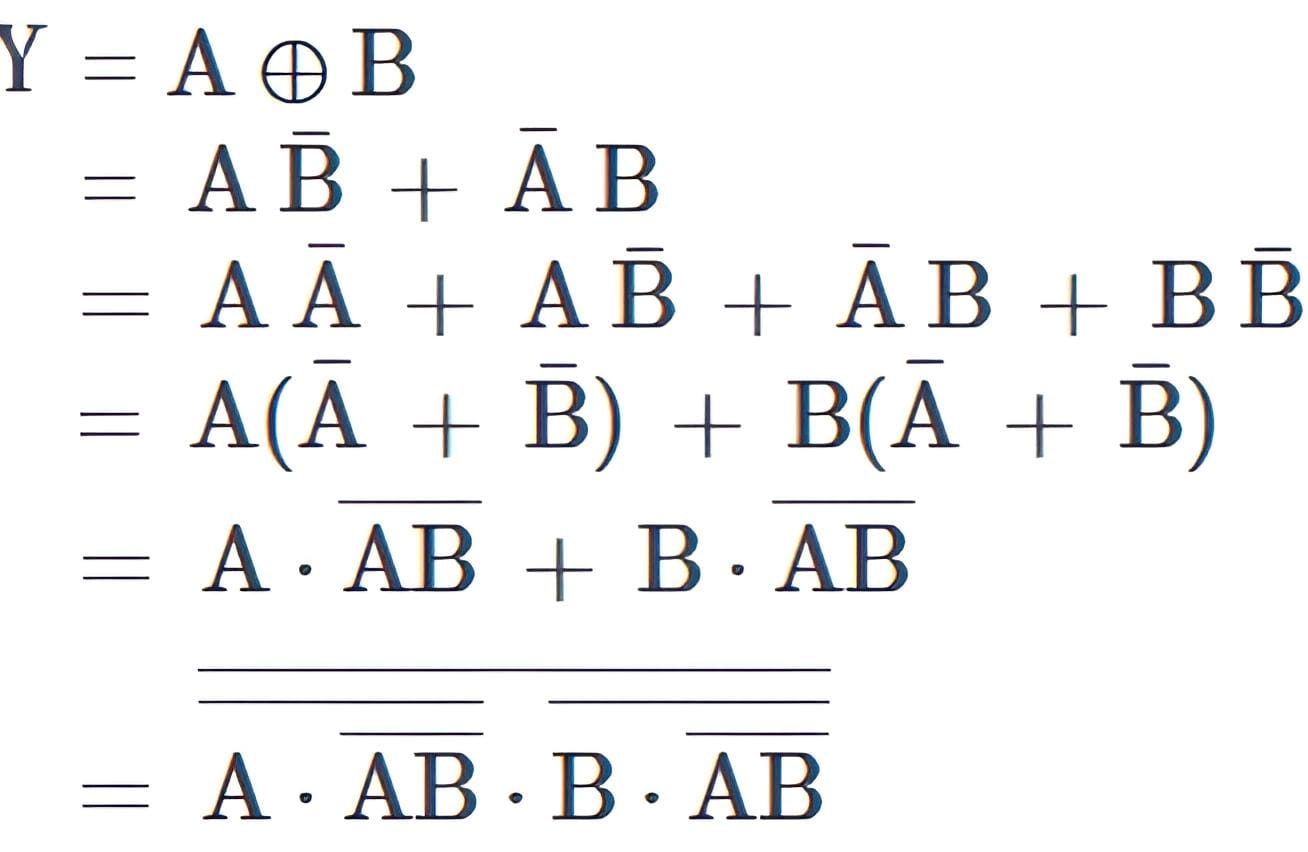
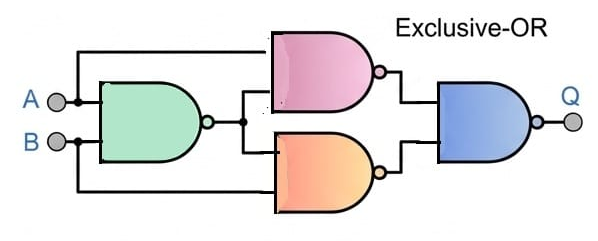
- ☆13Digital Logic DesignUniversal GateDraw the circuit schematic diagrams to build an Exclusive-OR (XOR) logic function using only universal NAND gates.XOR gate: (Using 4 NAND Gates)[ Previous Buet Pattern Question]


- ☆14Digital Logic DesignMultiplexer/DemultiplexerWhat is the difference between a Multiplexer and a Demultiplexer? Explain one practical application of each in digital systems.
Difference Between Multiplexer (MUX) and Demultiplexer (DEMUX)
Multiplexer (MUX) Demultiplexer (DEMUX) A Multiplexer (MUX) is a digital circuit that selects one input from multiple input lines and forwards it to a single output line. A Demultiplexer (DEMUX) is a digital circuit that receives data from one input line and routes it to one of multiple output lines. Many Inputs → One Output. One Input → Many Outputs. Uses Select Lines to choose one input. Uses Select Lines to choose the destination output. Acts as a Data Selector. Acts as a Data Distributor. Reduces the number of communication lines. Distributes data to different devices or destinations. Practical Applications
Multiplexer (MUX):
Used in Communication Systems to transmit multiple signals over a single communication channel, reducing wiring and transmission cost.Demultiplexer (DEMUX):
Used at the receiving end of Communication Systems to separate the received data and deliver it to the correct output device or destination.Conclusion
A Multiplexer combines multiple input signals into one output, whereas a Demultiplexer distributes one input signal to one of many outputs. They are widely used together in digital communication and data transmission systems.
Multiplexer (MUX) এবং Demultiplexer (DEMUX)-এর মধ্যে পার্থক্য
Multiplexer (MUX) Demultiplexer (DEMUX) Multiplexer (MUX) হলো একটি Digital Circuit, যা একাধিক Input Line থেকে একটি Input নির্বাচন করে একটি Output Line-এ পাঠায়। Demultiplexer (DEMUX) হলো একটি Digital Circuit, যা একটি Input Line-এর Data-কে একাধিক Output Line-এর মধ্যে নির্দিষ্ট একটি Output-এ পাঠায়। অনেক Input → একটি Output। একটি Input → অনেক Output। Select Line ব্যবহার করে Input নির্বাচন করে। Select Line ব্যবহার করে কোন Output-এ Data যাবে তা নির্ধারণ করে। Data Selector হিসেবে কাজ করে। Data Distributor হিসেবে কাজ করে। Communication Line-এর সংখ্যা কমাতে সাহায্য করে। Data বিভিন্ন Device বা Destination-এ বিতরণ করতে ব্যবহৃত হয়। ব্যবহারিক প্রয়োগ
Multiplexer (MUX):
Communication System-এ একাধিক Signal-কে একটি Communication Channel-এর মাধ্যমে প্রেরণের জন্য ব্যবহৃত হয়, ফলে Wiring এবং Transmission Cost কমে।Demultiplexer (DEMUX):
Communication System-এর Receiver Side-এ প্রাপ্ত Data-কে সঠিক Device বা Output Line-এ বিতরণ করার জন্য ব্যবহৃত হয়।উপসংহার
Multiplexer (MUX) একাধিক Input থেকে একটি Output নির্বাচন করে, আর Demultiplexer (DEMUX) একটি Input-কে একাধিক Output-এর মধ্যে নির্দিষ্ট একটিতে বিতরণ করে। Digital Communication এবং Data Transmission System-এ এ দুটি Circuit ব্যাপকভাবে ব্যবহৃত হয়।
- ☆15Computer NetworkNetwork Topology & DevicesDescribe the functions of a Switch and a Router and explain two key differences between these networking devices.
Switch and Router
Functions of a Switch
A Switch is a networking device that connects multiple devices within the same Local Area Network (LAN). It forwards data frames to the correct destination using MAC Addresses, improving network efficiency and reducing unnecessary traffic.
Functions of a Router
A Router is a networking device that connects two or more different networks, such as a LAN and the Internet. It forwards data packets between networks using IP Addresses and determines the best path for packet delivery.
Key Differences Between Switch and Router
Switch Router Operates mainly at the Data Link Layer (Layer 2) of the OSI model. Operates at the Network Layer (Layer 3) of the OSI model. Uses MAC Addresses to forward data within the same network. Uses IP Addresses to route packets between different networks.
Switch এবং Router
Switch-এর কাজ
Switch হলো একটি Networking Device, যা একই Local Area Network (LAN)-এর একাধিক Device-কে সংযুক্ত করে। এটি MAC Address ব্যবহার করে Data Frame সঠিক Device-এ পাঠায়, ফলে Network Traffic কমে এবং Communication আরও কার্যকর হয়।
Router-এর কাজ
Router হলো একটি Networking Device, যা দুই বা ততোধিক ভিন্ন Network (যেমন LAN এবং Internet) সংযুক্ত করে। এটি IP Address ব্যবহার করে Data Packet-এর সর্বোত্তম পথ নির্ধারণ করে এবং এক Network থেকে অন্য Network-এ পাঠায়।
Switch এবং Router-এর দুটি প্রধান পার্থক্য
Switch Router OSI Model-এর Data Link Layer (Layer 2)-এ কাজ করে। OSI Model-এর Network Layer (Layer 3)-এ কাজ করে। একই Network-এর মধ্যে Data পাঠাতে MAC Address ব্যবহার করে। ভিন্ন Network-এর মধ্যে Packet পাঠাতে IP Address ব্যবহার করে।
- ☆16Operating SystemProcess Scheduling Algorithm
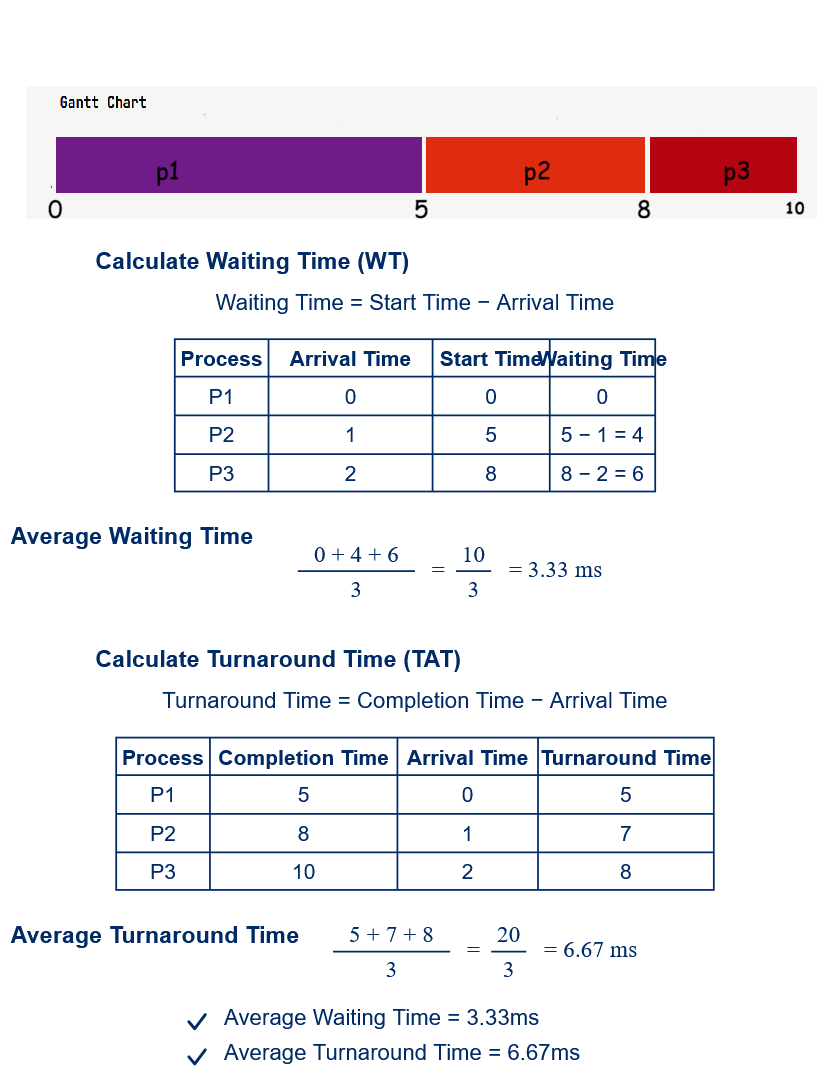
A system has three processes with the following arrival times and CPU burst times:
Process Arrival Time (ms) Burst Time (ms) P1 0 5 P2 1 3 P3 2 2 Using the First-Come, First-Served (FCFS) CPU scheduling algorithm, calculate the average waiting time and the average turnaround time.