Exam Module Subscription Required
You need an active Exam Module Subscription to access this content. Subscribe now to unlock the exam materials and continue your preparation.
Previous Job Question: Process Scheduling Algorithm
Previous Job Question: Process Scheduling Algorithm
- ☆1Operating SystemProcess Scheduling Algorithm
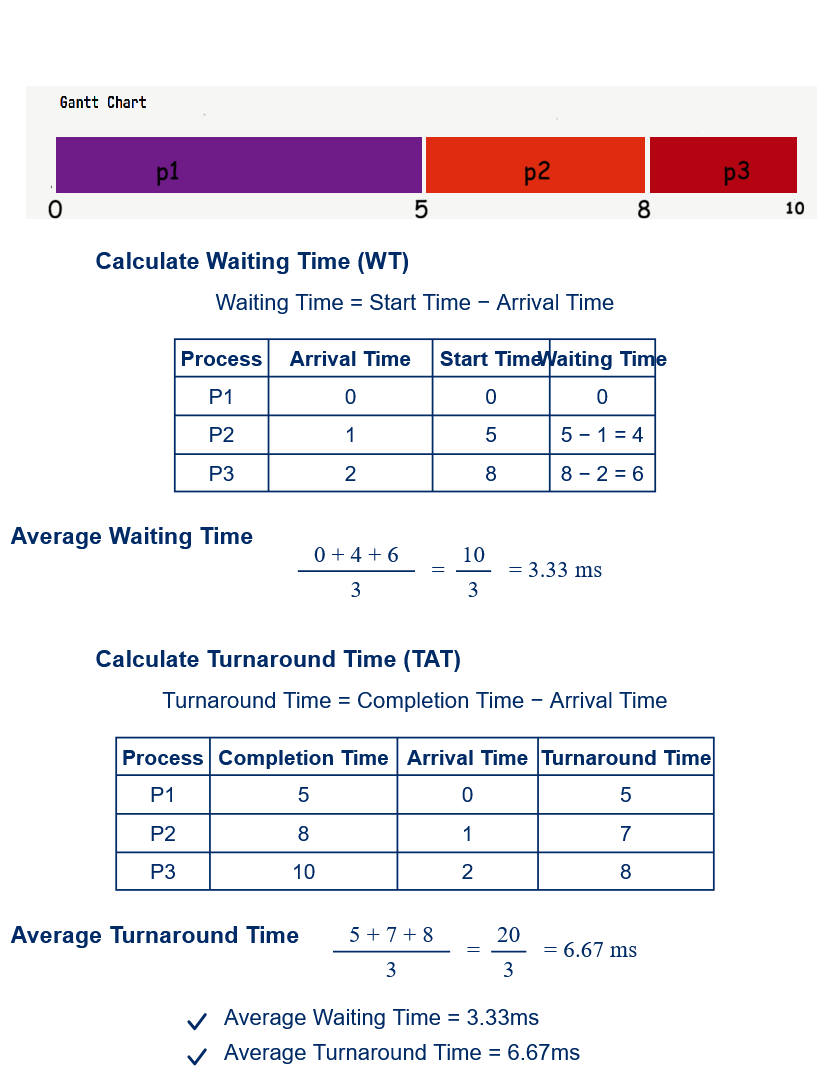
A system has three processes with the following arrival times and CPU burst times:
Process Arrival Time (ms) Burst Time (ms) P1 0 5 P2 1 3 P3 2 2 Using the First-Come, First-Served (FCFS) CPU scheduling algorithm, calculate the average waiting time and the average turnaround time.
CB, O(IT-24), 26 | Officer (IT)
- ☆2Operating SystemProcess Scheduling AlgorithmWhy is a Circular Queue preferred over a Linear Queue in many operating systems? Explain with one example.Combined Bank, SO(IT-24), 26 | Senior Officer (IT)
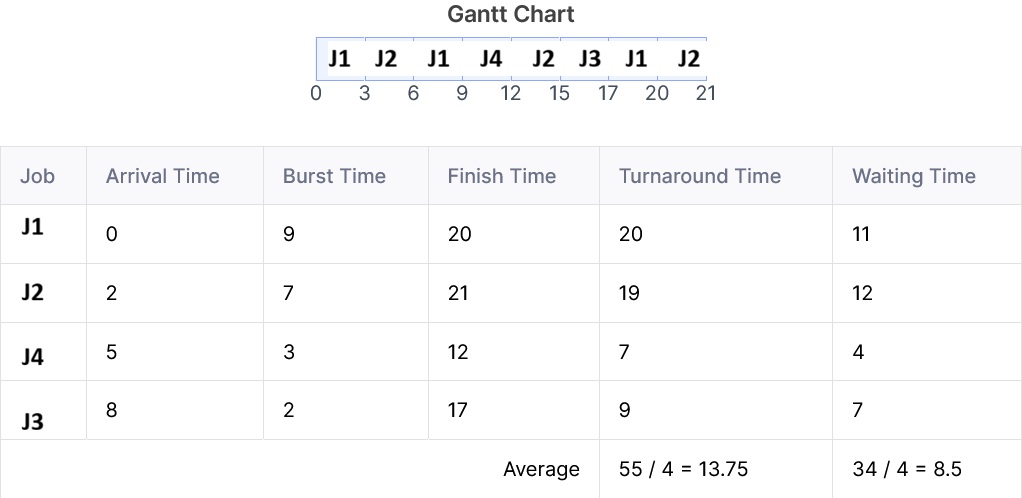
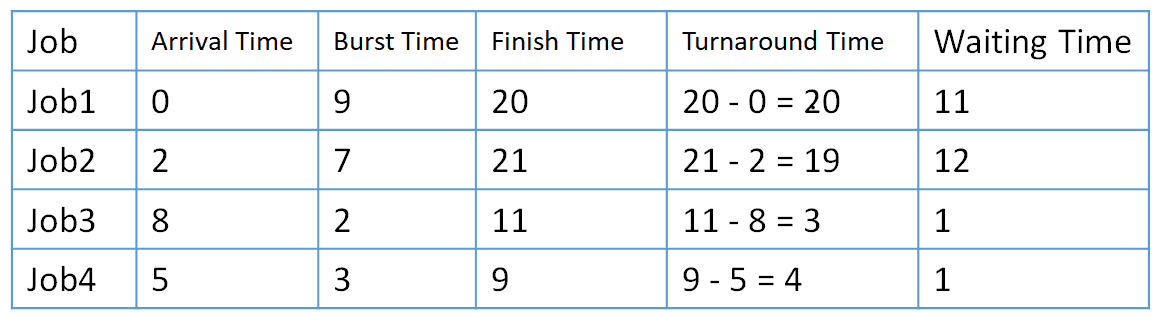
- ☆3Operating SystemProcess Scheduling AlgorithmOperating System Round Robin: (Quantum number =3), 4 job (job1, job2, job3, job4), Arrival time: 0,2,8,5; Burst time: 9, 7, 2, 3. What is the average waiting time?CB, AE(IT)/AHME/SO, 21 | AME/ANE/AE

- ☆4Operating SystemProcess Scheduling AlgorithmOperating System (OS) scheduling is the key concept of multiprogramming. List and briefly define the major types of OS scheduling.CB, O(IT), 20 | Officer (IT)
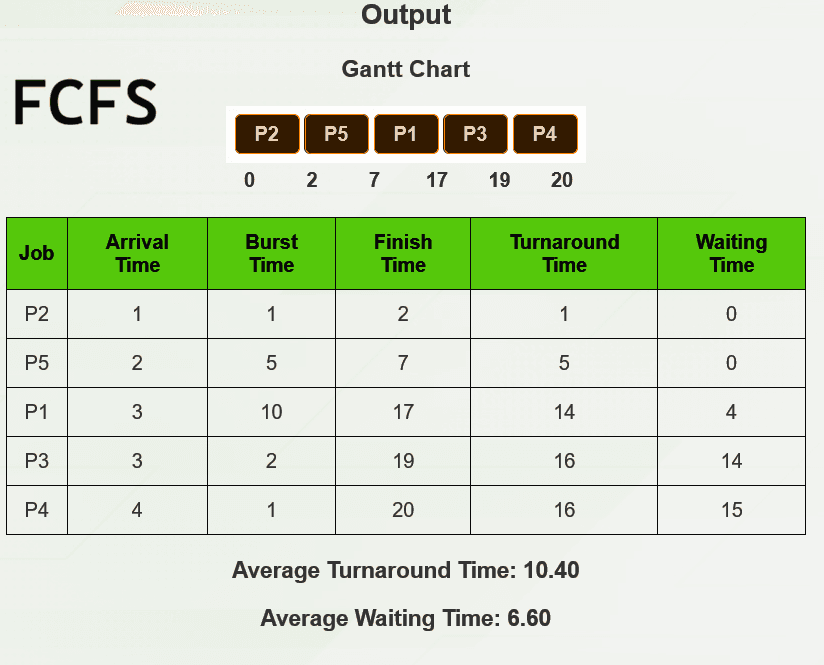
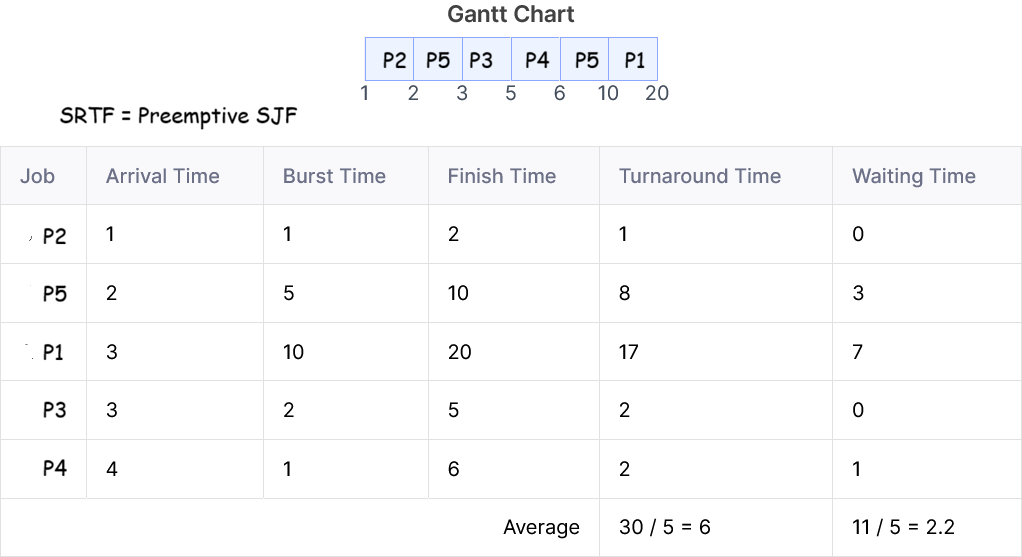
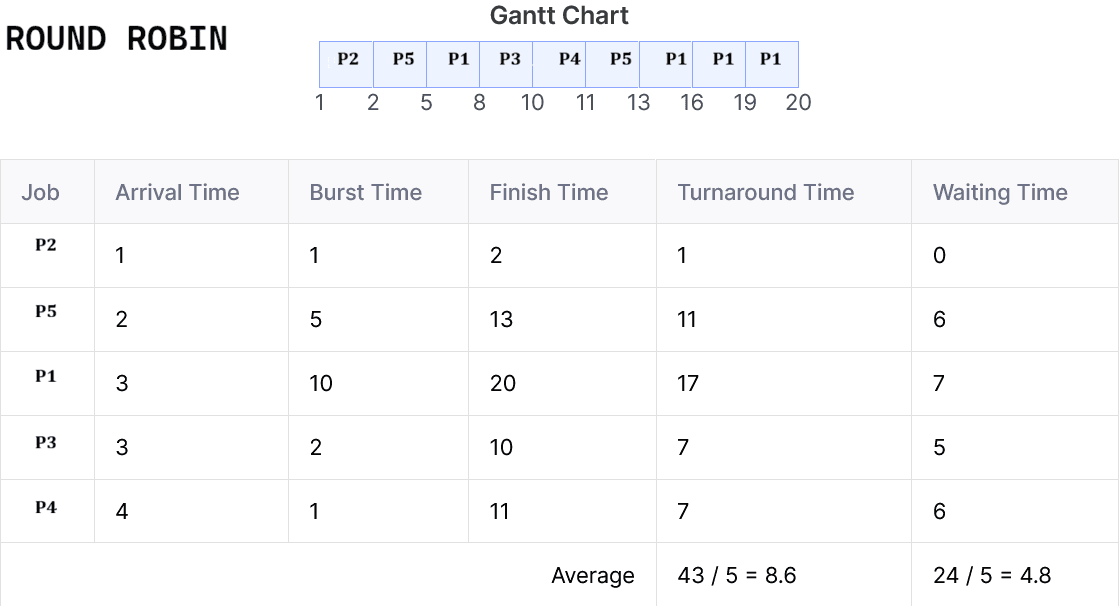
- ☆5Operating SystemProcess Scheduling AlgorithmCalculate The Average Waiting Time of SJF scheduling algorithm.
Process Burst Time Arrival Time P1 10 3 P2 1 1 P3 2 3 P4 1 4 P5 5 2
(i) Average waiting time for FCFS
(ii) Preemptive SJF
(iii) Round Robin (Quantum time: 3) scheduling algorithmJanata, ASA, 21 | AME/ANE/AE


- ☆6Operating SystemProcess Scheduling Algorithm
১ (গ) নিচের সারণীটি দেখুন-
Process
Burst Time (milli second)
Priority
P1
15
3
P2
2
1
P3
4
3
P4
2
4
P5
8
2
সমস্থ process একই সাথে 0 সময়ে এসে পৌঁছে।
- i) FCFS এবং SJF Scheduling algorithm ব্যবহার করে Gantt Chart এর মাধ্যমে process গুলোর execution দেখান।
- ii) উপরের উভয় algorithm এর জন্য প্রত্যেকটি process এর turnaround সময় নির্ণয় করুন।
BPSC_MoHA_AP, 26 | Assistant Programmer (BPSC) - ☆7Operating SystemProcess Scheduling Algorithm
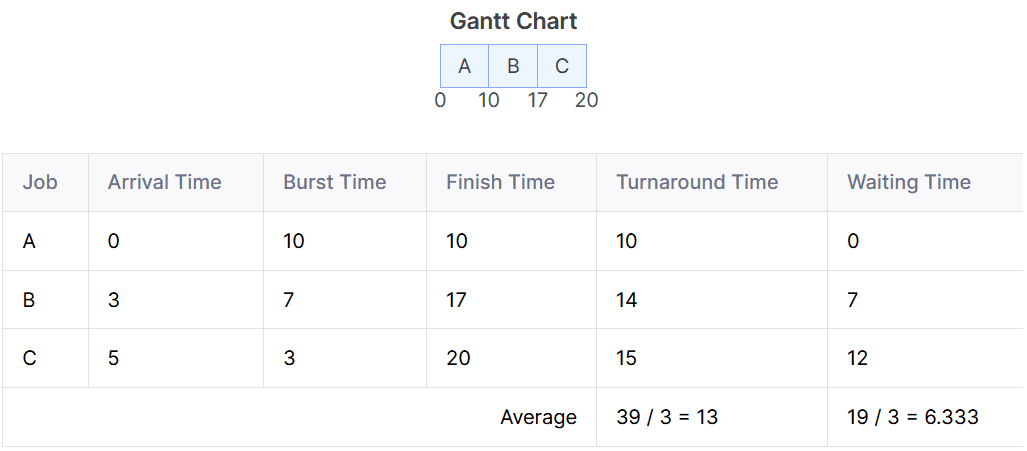
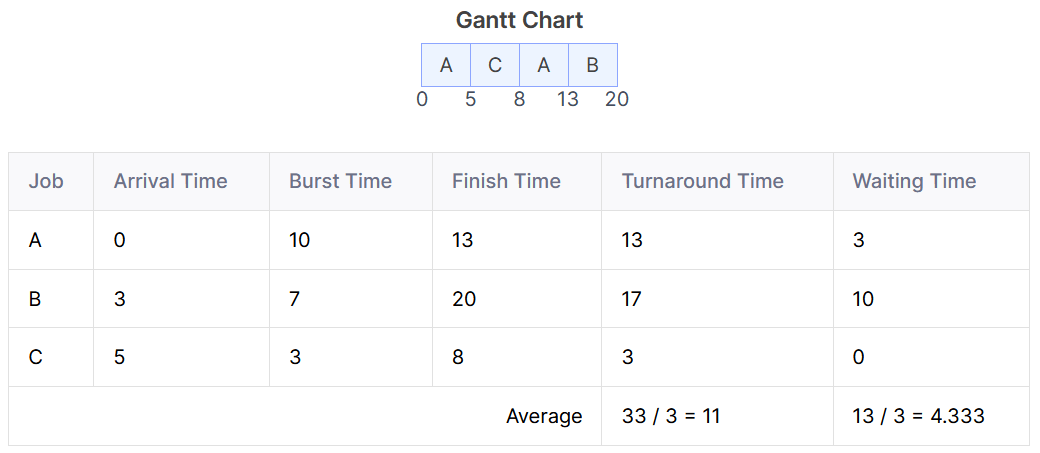
Job arrival time and execution time of Operating system tasks table is given, find out
Average waiting timeJob Arrival Time Execution Time A 0 10 B 3 7 C 5 3
(i) FCFS
(ii) Preemptive SJF
(iii) Round Robin (Quantum time: 3)Rupali, ANE, 21 |(i) FCFS:
(ii)SJF

(iii) Round Robin:
- ☆8Operating SystemProcess Scheduling Algorithm
Consider the following processes with their CPU burst times:
Process Burst Time P1 4 P2 2 P3 8 P4 6 Assume that all processes arrive at time t = 0 and are scheduled using the Non-Preemptive Shortest Job First (SJF) scheduling algorithm.
- Calculate the completion time of each process (P1, P2, P3, and P4).
- Calculate the waiting time of each process and the average waiting time.
BPDB, AE(CSE),2026 | Power Sector