Loading...
Bangladesh Bank <
Assistant Maintenance Engineer/Assistant Engineer (IT)
Exam Date: 08/05/2026
1. A maintenance engineer is setting up a RAID 5 array with five hard drives, each having a capacity of 4 TB. What is the total usable storage capacity, and why is it not 20 TB?

In RAID 5, the storage capacity of one drive is used for parity information.

Parity is used for fault tolerance and data recovery if one drive fails.

Given:

Number of drives = 5
Capacity of each drive = 4 TB

Total Raw Capacity

5 × 4 TB = 20 TB

Usable RAID 5 Capacity Formula

(Number of Drives − 1) × Drive Capacity

Calculation

(5 − 1) × 4 TB
= 4 × 4 TB
= 16 TB

Answer

Total Usable Storage Capacity = 16 TB

It is not 20 TB because RAID 5 uses the equivalent capacity of one drive for storing parity data, which provides redundancy and allows recovery if a drive fails.

একজন maintenance engineer পাঁচটি 4 TB hard drive ব্যবহার করে RAID 5 array তৈরি করছে। মোট usable storage capacity কত হবে এবং কেন এটি 20 TB নয়?

RAID 5-এ একটি drive-এর storage capacity parity information সংরক্ষণের জন্য ব্যবহৃত হয়।

Parity fault tolerance এবং drive failure হলে data recovery-এর জন্য ব্যবহৃত হয়।

প্রদত্ত:

Drive সংখ্যা = 5
প্রতিটি drive-এর capacity = 4 TB

মোট Raw Capacity

5 × 4 TB = 20 TB

RAID 5 Usable Capacity Formula

(Number of Drives − 1) × Drive Capacity

গণনা

(5 − 1) × 4 TB
= 4 × 4 TB
= 16 TB

উত্তর

মোট Usable Storage Capacity = 16 TB

এটি 20 TB নয় কারণ RAID 5-এ একটি drive-এর সমপরিমাণ storage parity data সংরক্ষণের জন্য ব্যবহৃত হয়, যা redundancy প্রদান করে এবং কোনো drive নষ্ট হলে data recovery করতে সাহায্য করে।

2. Distinguish between Preventive and Corrective maintenance with a real-world example for each in a data center environment. A critical system consists of three components (Power Supply, Motherboard, and Storage) connected in a series configuration. If each component has a reliability of 0.95, what is the total reliability of the system?

Preventive Maintenance: Preventive maintenance is the maintenance performed regularly before any failure occurs in order to reduce the chance of system breakdown. Its main goal is to prevent faults and improve system reliability.

Real-World Example:
In a data center, regularly cleaning server cooling fans and replacing UPS batteries before failure is an example of preventive maintenance.

Corrective Maintenance: Corrective maintenance is the maintenance performed after a fault or failure has occurred to restore the system to normal operation. Its main goal is to repair failed components and resume service.

Real-World Example:
If a server hard disk suddenly fails in a data center and the technician replaces the failed disk to restore operation, it is corrective maintenance.

Difference Between Preventive and Corrective Maintenance

Preventive MaintenanceCorrective Maintenance
Performed before failure occurs.Performed after failure occurs.
Reduces possibility of breakdown.Restores failed system.
Planned and scheduled maintenance.Unplanned maintenance.
Improves reliability and lifespan.Focuses on repairing faults.
Example: Cleaning cooling systems.Example: Replacing failed hard disk.

Reliability Calculation of Series System: In a series configuration, total system reliability is the product of reliabilities of all components.

Given: Reliability of Power Supply = 0.95 Reliability of Motherboard = 0.95 Reliability of Storage = 0.95

Formula: R = R1 × R2 × R3

Calculation:

R = 0.95 × 0.95 × 0.95 R = 0.857375

Answer: Total Reliability of the System = 0.857375 ≈ 85.74%

প্রশ্ন: Data Center Environment-এ Preventive এবং Corrective Maintenance-এর পার্থক্য বাস্তব উদাহরণসহ ব্যাখ্যা কর। এছাড়া একটি Series System-এর Reliability নির্ণয় কর।

Preventive Maintenance: Preventive maintenance হলো এমন maintenance যা কোনো fault বা failure হওয়ার আগেই নিয়মিতভাবে করা হয়, যাতে system breakdown-এর সম্ভাবনা কমে। এর মূল উদ্দেশ্য হলো fault প্রতিরোধ করা এবং system reliability বৃদ্ধি করা।

Real Example:
Data center-এ server cooling fan পরিষ্কার করা বা UPS battery failure হওয়ার আগেই পরিবর্তন করা preventive maintenance-এর উদাহরণ।

Corrective Maintenance: Corrective maintenance হলো এমন maintenance যা fault বা failure হওয়ার পরে system-কে পুনরায় স্বাভাবিক অবস্থায় ফিরিয়ে আনতে করা হয়। এর মূল উদ্দেশ্য হলো faulty component repair বা replace করা।

Real Example:
Data center-এ কোনো server-এর hard disk হঠাৎ নষ্ট হলে সেটি পরিবর্তন করে system restore করা corrective maintenance-এর উদাহরণ।

Preventive এবং Corrective Maintenance-এর পার্থক্য

Preventive MaintenanceCorrective Maintenance
Failure হওয়ার আগে করা হয়।Failure হওয়ার পরে করা হয়।
Breakdown-এর সম্ভাবনা কমায়।Failed system পুনরুদ্ধার করে।
Planned এবং scheduled maintenance।Unplanned maintenance।
Reliability এবং lifespan বৃদ্ধি করে।Fault repair করার উপর গুরুত্ব দেয়।
উদাহরণ: Cooling system পরিষ্কার করা।উদাহরণ: নষ্ট hard disk পরিবর্তন করা।

Series System-এর Reliability নির্ণয়

Series configuration-এ total system reliability হলো সব component-এর reliability-এর গুণফল।

Power Supply-এর Reliability = 0.95 Motherboard-এর Reliability = 0.95 Storage-এর Reliability = 0.95

সূত্র: R = R1 × R2 × R3

R = 0.95 × 0.95 × 0.95 R = 0.857375

System-এর মোট Reliability = 0.857375 ≈ 85.74%

3. At which layer of the OSI model does a standard Router primarily operate, and what is the specific name of the Protocol Data Unit (PDU) at this layer? A router has four contiguous /24 routing table entries: 10.1.0.0/24, 10.1.1.0/24, 10.1.2.0/24, and 10.1.3.0/24. If you summarize (supernet) these into a single route, what will be the new CIDR notation?

A standard router primarily operates at the Network Layer, which is Layer 3 of the OSI model.

The Protocol Data Unit (PDU) at the Network Layer is called a Packet.

Given Routing Entries:10.1.0.0/24
10.1.1.0/24
10.1.2.0/24
10.1.3.0/24

These four networks are continuous or contiguous because their network addresses increase sequentially

First Network: 10.1.0.0/24
Range: 10.1.0.0 to 10.1.0.255

Second Network: 10.1.1.0/24
Range: 10.1.1.0 to 10.1.1.255

Third Network: 10.1.2.0/24
Range: 10.1.2.0 to 10.1.2.255

Fourth Network: 10.1.3.0/24
Range: 10.1.3.0 to 10.1.3.255

Together, these four networks cover addresses from:10.1.0.0 to 10.1.3.255

Each /24 network contains 256 addresses.

So total addresses become:256 + 256 + 256 + 256 = 1024 addresses

To represent 1024 addresses, 10 host bits are required.

Since IPv4 address contains 32 bits:32 − 10 = 22

Therefore, the summarized CIDR notation becomes:10.1.0.0/22

Final Answer:Router Layer = Network Layer / Layer 3
PDU Name = Packet
Supernet = 10.1.0.0/22

Standard router মূলত Network Layer-এ কাজ করে, যা OSI model-এর Layer 3

Network Layer-এর Protocol Data Unit (PDU)-কে Packet বলা হয়।

প্রদত্ত Routing Entries: 10.1.0.0/24
10.1.1.0/24
10.1.2.0/24
10.1.3.0/24

এই চারটি network continuous বা contiguous কারণ network address ধারাবাহিকভাবে বৃদ্ধি পাচ্ছে।

প্রথম Network: 10.1.0.0/24
Range: 10.1.0.0 থেকে 10.1.0.255

দ্বিতীয় Network: 10.1.1.0/24
Range: 10.1.1.0 থেকে 10.1.1.255

তৃতীয় Network: 10.1.2.0/24
Range: 10.1.2.0 থেকে 10.1.2.255

চতুর্থ Network: 10.1.3.0/24
Range: 10.1.3.0 থেকে 10.1.3.255

এই চারটি network একসাথে নিচের address range cover করে: 10.1.0.0 থেকে 10.1.3.255

প্রতিটি /24 network-এ 256টি address থাকে।

তাই মোট address সংখ্যা: 256 + 256 + 256 + 256 = 1024 addresses

1024টি address প্রকাশ করার জন্য 10টি host bit দরকার হয়।

যেহেতু IPv4 address মোট 32 bit-এর হয়:32 − 10 = 22

তাই summarized CIDR notation হবে: 10.1.0.0/22

Final Answer:Router Layer = Network Layer / Layer 3
PDU Name = Packet
Supernet = 10.1.0.0/22

4. What does the Consistency property in ACID guarantee during a bank fund transfer transaction? You are designing the schema for a Savings_Accounts table. Write the specific SQL constraint clause to ensure that the current_balance column can never drop below zero.

Consistency Property in ACID

  • Consistency ensures that a database always remains in a valid state before and after a transaction.
  • During a bank fund transfer transaction, consistency guarantees that all database rules and constraints are maintained properly.

For example, if money is transferred from one account to another:

  • The amount deducted from one account must be added to the other account correctly.
  • The total balance in the system must remain consistent.
  • No account balance can become invalid or violate database rules.

If any part of the transaction fails, the entire transaction is rolled back to preserve consistency.

SQL Constraint Clause

To ensure that the current_balance column never becomes negative, the following CHECK constraint can be used:

CHECK (current_balance >= 0)

Example in Table Schema

CREATE TABLE Savings_Accounts (
    account_id INT PRIMARY KEY,
    customer_name VARCHAR(100),
    current_balance DECIMAL(10,2),
    
    CHECK (current_balance >= 0)
);

প্রশ্ন: ব্যাংক fund transfer transaction-এর সময় ACID-এর Consistency property কী নিশ্চিত করে? এছাড়া current_balance কখনো শূন্যের নিচে না যাওয়ার জন্য SQL constraint clause লিখ।

ACID-এর Consistency Property

  • Consistency নিশ্চিত করে যে transaction-এর আগে এবং পরে database সবসময় valid অবস্থায় থাকবে।
  • Bank fund transfer transaction-এর ক্ষেত্রে consistency নিশ্চিত করে যে database-এর সব rule এবং constraint সঠিকভাবে বজায় থাকবে।

উদাহরণস্বরূপ, যদি একটি account থেকে অন্য account-এ টাকা transfer করা হয়:

  • এক account থেকে কাটা amount অবশ্যই অন্য account-এ সঠিকভাবে যোগ হতে হবে।
  • System-এর মোট balance consistent থাকতে হবে।
  • কোনো account balance invalid হতে পারবে না বা database rule ভঙ্গ করতে পারবে না।

যদি transaction-এর কোনো অংশ ব্যর্থ হয়, তাহলে পুরো transaction rollback হবে যাতে consistency বজায় থাকে।

SQL Constraint Clause

current_balance যেন কখনো negative না হয়, তার জন্য নিচের CHECK constraint ব্যবহার করা যায়:

CHECK (current_balance >= 0)

Table Schema উদাহরণ

CREATE TABLE Savings_Accounts (
    account_id INT PRIMARY KEY,
    customer_name VARCHAR(100),
    current_balance DECIMAL(10,2),
    
    CHECK (current_balance >= 0)
);
5. Briefly explain "Circular Wait." In a Resource Allocation Graph (RAG), if a cycle exists, does it absolutely guarantee that a Deadlock has occurred? Explain briefly.

Circular Wait

  • Circular wait is one of the necessary conditions for deadlock.
  • It occurs when a group of processes are waiting for resources in a circular chain.
  • In this situation, each process holds at least one resource and waits for another resource held by the next process in the cycle.

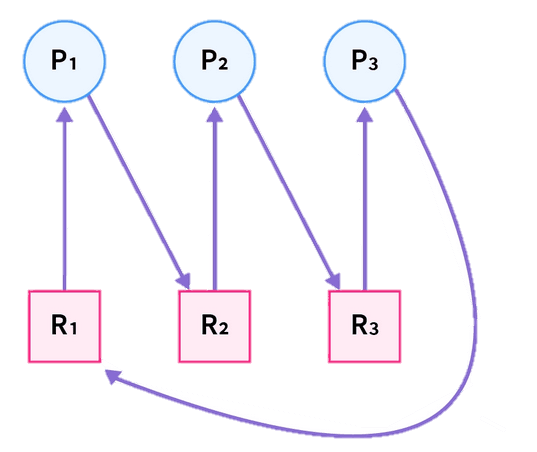
Example:

  • Process P1 holds Resource R1 and waits for R2.
  • Process P2 holds Resource R2 and waits for R3.
  • Process P3 holds Resource R3 and waits for R1.

This creates a circular waiting condition.

Cycle in Resource Allocation Graph (RAG)

If a cycle exists in a Resource Allocation Graph, it does not always guarantee deadlock.

  • If each resource type has only one instance, then a cycle definitely indicates deadlock.
  • If resource types have multiple instances, then a cycle may exist without deadlock.

So, a cycle is:

  • A necessary condition for deadlock
  • But not always a sufficient condition

Deadlock Detection using Resource Allocation Graph

To detect deadlock using Resource Allocation Graph (RAG), we follow these steps −

  • If RAG contains no cycles, then there is no deadlock in the system.
  • If RAG is of single instance resources and it contains a cycle, then there is a deadlock in the system.
  • If RAG is of multiple instance resources and it contains a cycle, then deadlock may or may not exist. To check for deadlock, we need convert multiple instance RAG to single instance RAG, by treating each instance of a resource as a separate resource type.


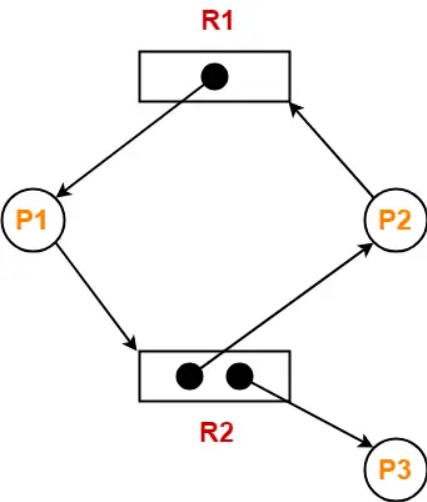
In the graph:

  • Resource R1 has only one instance.
  • Resource R2 has two instances.
  • P1 is holding R1 and requesting R2.
  • P2 is holding one instance of R2 and requesting R1.
  • P3 is using another instance of R2.

A cycle exists in the graph: P1 → R2 → P2 → R1 → P1

But this graph does not indicate deadlock.

Reason:

Resource R2 has multiple instances. One instance of R2 is currently allocated to P3.

If P3 finishes its work and releases R2, then:

  • P1 can obtain R2 and complete execution.
  • After P1 completes, it releases R1.
  • Then P2 can obtain R1 and continue execution.

Since the processes can still proceed and resources can eventually be released, the system is not permanently blocked.

প্রশ্ন: Circular Wait সংক্ষেপে ব্যাখ্যা কর। Resource Allocation Graph (RAG)-এ cycle থাকলে কি নিশ্চিতভাবে Deadlock হয়েছে বোঝায়? সংক্ষেপে ব্যাখ্যা কর।

Circular Wait

  • Circular wait হলো deadlock-এর একটি প্রয়োজনীয় শর্ত।
  • এটি তখন ঘটে যখন একাধিক process একটি circular chain আকারে resource-এর জন্য অপেক্ষা করে।
  • এখানে প্রতিটি process অন্তত একটি resource ধরে রাখে এবং পরবর্তী process-এর কাছে থাকা অন্য resource-এর জন্য অপেক্ষা করে।

উদাহরণ:

  • Process P1 Resource R1 ধরে রেখে R2-এর জন্য অপেক্ষা করছে।
  • Process P2 Resource R2 ধরে রেখে R3-এর জন্য অপেক্ষা করছে।
  • Process P3 Resource R3 ধরে রেখে R1-এর জন্য অপেক্ষা করছে।

এভাবে একটি circular waiting condition তৈরি হয়।

Resource Allocation Graph (RAG)-এ Cycle

RAG-এ cycle থাকলেই সবসময় deadlock হয়েছে এমন নয়।

  • যদি প্রতিটি resource type-এর শুধুমাত্র একটি instance থাকে, তাহলে cycle থাকলে নিশ্চিত deadlock হয়েছে।
  • কিন্তু resource type-এর একাধিক instance থাকলে cycle থাকলেও deadlock নাও হতে পারে।

অতএব cycle হলো:

  • Deadlock-এর জন্য একটি necessary condition
  • কিন্তু সবসময় sufficient condition নয়


Graph-এ:

  • Resource R1-এর একটি instance রয়েছে।
  • Resource R2-এর দুটি instance রয়েছে।
  • P1, R1 ধরে রেখে R2-এর জন্য অপেক্ষা করছে।
  • P2, R2-এর একটি instance ধরে রেখে R1-এর জন্য অপেক্ষা করছে।
  • P3, R2-এর অন্য instance ব্যবহার করছে।

Graph-এ একটি cycle রয়েছে:

P1 → R2 → P2 → R1 → P1

কিন্তু এই graph-এ deadlock নেই

কারণ:

Resource R2-এর একাধিক instance রয়েছে। বর্তমানে R2-এর একটি instance P3 ব্যবহার করছে।

যদি P3 তার কাজ শেষ করে R2 release করে, তাহলে:

  • P1, R2 পেয়ে execution সম্পন্ন করতে পারবে।
  • P1 কাজ শেষ করলে R1 release করবে।
  • তারপর P2, R1 পেয়ে execution চালিয়ে যেতে পারবে।

অর্থাৎ process-গুলো পরবর্তীতে execution চালিয়ে যেতে পারছে, তাই system permanently blocked নয়।

6. A server suddenly starts sending abnormal traffic to external systems. Analyze the possible cause and suggest immediate actions.

Possible Causes

A server sending abnormal traffic may indicate security or system-related problems. Possible causes include:

  • Malware or Virus Infection: The server may be infected with malware, botnet software, or ransomware that is sending malicious traffic.
  • DDoS Attack Participation: The compromised server may be used to launch Distributed Denial of Service (DDoS) attacks.
  • Unauthorized Access: An attacker may have gained access using weak passwords, stolen credentials, or vulnerabilities.
  • Misconfigured Applications: Faulty software or incorrect network configuration may generate excessive traffic.
  • Data Breach or Data Exfiltration: Sensitive data may be transferred illegally to external systems.

Immediate Actions

  • Isolate the Server: Disconnect the server from the network immediately to stop abnormal traffic.
  • Check System Logs: Analyze firewall, server, and application logs to identify suspicious activities.
  • Run Security Scan: Use antivirus and malware detection tools to scan the server.
  • Identify Active Connections: Check running processes and network connections using monitoring tools.
  • Change Credentials: Reset passwords and disable compromised accounts.
  • Apply Security Updates: Patch operating system and software vulnerabilities.
  • Notify Security Team: Inform administrators or incident response teams immediately.
  • Backup Important Data: Secure critical data before recovery actions.

Abnormal outbound traffic is often a sign of compromise or malfunction. Quick isolation, investigation, and security response are necessary to protect the network and prevent further damage.

প্রশ্ন: একটি server হঠাৎ external system-এ abnormal traffic পাঠাতে শুরু করেছে। সম্ভাব্য কারণ বিশ্লেষণ কর এবং তাৎক্ষণিক করণীয় উল্লেখ কর।

সম্ভাব্য কারণসমূহ

Server থেকে abnormal traffic পাঠানো security বা system-related সমস্যার ইঙ্গিত হতে পারে। সম্ভাব্য কারণগুলো হলো:

  • Malware বা Virus Infection: Server malware, botnet software বা ransomware দ্বারা আক্রান্ত হতে পারে যা malicious traffic পাঠাচ্ছে।
  • DDoS Attack-এ অংশগ্রহণ: Compromised server অন্য system-এর উপর DDoS attack চালাতে ব্যবহৃত হতে পারে।
  • Unauthorized Access: দুর্বল password, stolen credential বা vulnerability ব্যবহার করে attacker access পেতে পারে।
  • Misconfigured Application: Faulty software বা ভুল network configuration অতিরিক্ত traffic তৈরি করতে পারে।
  • Data Breach বা Data Exfiltration: Sensitive data অবৈধভাবে external system-এ পাঠানো হতে পারে।

তাৎক্ষণিক করণীয়

  • Server Isolate করা: Abnormal traffic বন্ধ করার জন্য server-কে দ্রুত network থেকে বিচ্ছিন্ন করতে হবে।
  • System Log পরীক্ষা: Firewall, server এবং application log বিশ্লেষণ করে suspicious activity খুঁজতে হবে।
  • Security Scan চালানো: Antivirus এবং malware detection tool দিয়ে server scan করতে হবে।
  • Active Connection পরীক্ষা: Running process এবং network connection monitoring tool দিয়ে পরীক্ষা করতে হবে।
  • Credential পরিবর্তন: Password reset এবং compromised account disable করতে হবে।
  • Security Update প্রয়োগ: Operating system এবং software-এর vulnerability patch করতে হবে।
  • Security Team-কে জানানো: Administrator বা incident response team-কে দ্রুত অবহিত করতে হবে।
  • গুরুত্বপূর্ণ Data Backup: Recovery action নেওয়ার আগে গুরুত্বপূর্ণ data নিরাপদে backup রাখতে হবে।

উপসংহার

Abnormal outbound traffic সাধারণত compromise বা system malfunction-এর লক্ষণ। Network সুরক্ষা এবং ক্ষতি প্রতিরোধের জন্য দ্রুত isolation, investigation এবং security response প্রয়োজন।

7. A financial services provider needs to handle massive streaming and historical log data to perform fraud analytics and ML-driven maintenance prediction. Identify five Hadoop ecosystem technologies appropriate for this use case and describe their roles. (Assumming)

To process large-scale streaming and historical log data, different Hadoop ecosystem technologies can be used together for storage, processing, querying, and machine learning.

1. HDFS (Hadoop Distributed File System)

  • HDFS is used for distributed storage of massive amounts of data across multiple servers.
  • It stores historical logs, transaction records, and streaming data reliably with fault tolerance.

Role: Large-scale distributed data storage.

2. Apache Kafka

  • Kafka is used for real-time data streaming and message collection.
  • It collects continuous transaction logs, user activities, and system events from different sources.

Role: Real-time streaming data ingestion.

3. Apache Spark

  • Spark is a fast data processing framework used for big data analytics and machine learning.
  • It can process both streaming data and historical data efficiently.

Role: Real-time analytics, fraud detection, and ML processing.

4. Apache Hive

  • Hive is a data warehouse tool used to query large datasets using SQL-like language.
  • Analysts can generate reports and analyze fraud-related historical data easily.

Role: SQL-based querying and data analysis.

5. Apache Mahout

  • Mahout provides machine learning algorithms for big data applications.
  • It can be used for predictive analytics, anomaly detection, and maintenance prediction models.

Role: Machine learning and predictive analytics.

প্রশ্ন: একটি financial services provider massive streaming এবং historical log data ব্যবহার করে fraud analytics ও ML-driven maintenance prediction করতে চায়। এই কাজের জন্য উপযুক্ত পাঁচটি Hadoop ecosystem technology এবং তাদের ভূমিকা বর্ণনা কর।

Large-scale streaming এবং historical log data process করার জন্য বিভিন্ন Hadoop ecosystem technology একসাথে ব্যবহার করা হয় storage, processing, querying এবং machine learning-এর কাজে।

1. HDFS (Hadoop Distributed File System)

  • HDFS বহু server-এ distributed ভাবে বিপুল পরিমাণ data সংরক্ষণ করতে ব্যবহৃত হয়।
  • এটি historical log, transaction record এবং streaming data fault tolerance সহ নিরাপদে সংরক্ষণ করে।

Role: Large-scale distributed data storage।

2. Apache Kafka

  • Kafka real-time data streaming এবং message collection-এর জন্য ব্যবহৃত হয়।
  • এটি বিভিন্ন source থেকে continuous transaction log, user activity এবং system event সংগ্রহ করে।

Role: Real-time streaming data ingestion।

3. Apache Spark

  • Spark একটি দ্রুত data processing framework যা big data analytics এবং machine learning-এর জন্য ব্যবহৃত হয়।
  • এটি streaming data এবং historical data উভয়ই দ্রুত process করতে পারে।

Role: Real-time analytics, fraud detection এবং ML processing।

4. Apache Hive

  • Hive হলো একটি data warehouse tool যা SQL-এর মতো language ব্যবহার করে বড় dataset query করতে সাহায্য করে।
  • এর মাধ্যমে analyst সহজে fraud-related historical data বিশ্লেষণ ও report তৈরি করতে পারে।

Role: SQL-based querying এবং data analysis।

5. Apache Mahout

  • Mahout big data application-এর জন্য machine learning algorithm প্রদান করে।
  • এটি predictive analytics, anomaly detection এবং maintenance prediction model তৈরিতে ব্যবহৃত হয়।

Role: Machine learning এবং predictive analytics।

8. Http status code.

HTTP Status Codes are standard response codes sent by a web server to a client (browser or application) after receiving an HTTP request.

These codes indicate whether the request was successful, failed, redirected, or caused a server error.

HTTP status codes are represented by three-digit numbers.

Purpose of HTTP Status Codes

  • Inform the client about request status.
  • Help in debugging network or website problems.
  • Control browser and application behavior.
  • Support communication between client and server.

Categories of HTTP Status Codes

HTTP status codes are divided into five categories:

Status Code RangeCategoryDescription
100 – 199InformationalRequest received and processing continues
200 – 299SuccessRequest completed successfully
300 – 399RedirectionFurther action required
400 – 499Client ErrorError caused by client request
500 – 599Server ErrorError occurred on the server

1. Informational Status Codes (100–199)

These codes indicate that the request has been received and processing is continuing.

  • 100 Continue: Client can continue sending the request.
  • 101 Switching Protocols: Server agrees to switch protocols.

2. Success Status Codes (200–299)

These codes indicate successful request processing.

  • 200 OK: Request completed successfully.
  • 201 Created: New resource created successfully.
  • 204 No Content: Request successful but no content returned.

3. Redirection Status Codes (300–399)

These codes indicate that additional action is needed.

  • 301 Moved Permanently: Resource has permanently moved to another URL.
  • 302 Found: Resource temporarily moved.
  • 304 Not Modified: Cached version can be used.

4. Client Error Status Codes (400–499)

These errors occur due to problems in the client request.

  • 400 Bad Request: Invalid request syntax.
  • 401 Unauthorized: Authentication required.
  • 403 Forbidden: Access denied.
  • 404 Not Found: Requested resource not found.

5. Server Error Status Codes (500–599)

These errors occur when the server fails to process the request.

  • 500 Internal Server Error: General server-side error.
  • 502 Bad Gateway: Invalid response from another server.
  • 503 Service Unavailable: Server temporarily unavailable.
  • 504 Gateway Timeout: Server response timeout.

Commonly Used HTTP Status Codes

Status CodeMeaning
200OK
301Moved Permanently
400Bad Request
401Unauthorized
403Forbidden
404Not Found
500Internal Server Error
503Service Unavailable

HTTP Status Code হলো standard response code যা web server কোনো HTTP request পাওয়ার পর client (browser বা application)-কে পাঠায়।

এই code দ্বারা বোঝানো হয় request সফল হয়েছে কিনা, ব্যর্থ হয়েছে কিনা, redirect হয়েছে কিনা অথবা server error হয়েছে কিনা।

HTTP status code সাধারণত তিন অংকের সংখ্যা দ্বারা প্রকাশ করা হয়।

HTTP Status Code-এর উদ্দেশ্য

  • Client-কে request-এর অবস্থা জানানো।
  • Website বা network সমস্যা debugging করতে সাহায্য করা।
  • Browser এবং application behavior নিয়ন্ত্রণ করা।
  • Client এবং server-এর মধ্যে communication সহজ করা।

HTTP Status Code-এর শ্রেণিবিভাগ

HTTP status code পাঁচটি category-তে বিভক্ত:

Status Code RangeCategoryবর্ণনা
100 – 199InformationalRequest গ্রহণ করা হয়েছে এবং processing চলছে
200 – 299SuccessRequest সফলভাবে সম্পন্ন হয়েছে
300 – 399Redirectionঅতিরিক্ত action প্রয়োজন
400 – 499Client ErrorClient request-এর কারণে error
500 – 599Server ErrorServer-এর অভ্যন্তরীণ error

1. Informational Status Codes (100–199)

এই code বোঝায় request গ্রহণ করা হয়েছে এবং processing চলছে।

  • 100 Continue: Client request পাঠানো চালিয়ে যেতে পারে।
  • 101 Switching Protocols: Server protocol পরিবর্তনে সম্মতি দিয়েছে।

2. Success Status Codes (200–299)

এই code বোঝায় request সফলভাবে সম্পন্ন হয়েছে।

  • 200 OK: Request সফল হয়েছে।
  • 201 Created: নতুন resource সফলভাবে তৈরি হয়েছে।
  • 204 No Content: Request সফল কিন্তু কোনো content ফেরত দেয়নি।

3. Redirection Status Codes (300–399)

এই code বোঝায় অতিরিক্ত action প্রয়োজন।

  • 301 Moved Permanently: Resource স্থায়ীভাবে অন্য URL-এ সরানো হয়েছে।
  • 302 Found: Resource সাময়িকভাবে অন্যত্র সরানো হয়েছে।
  • 304 Not Modified: Cached version ব্যবহার করা যাবে।

4. Client Error Status Codes (400–499)

এই error সাধারণত client request-এর সমস্যার কারণে হয়।

  • 400 Bad Request: Invalid request syntax।
  • 401 Unauthorized: Authentication প্রয়োজন।
  • 403 Forbidden: Access denied।
  • 404 Not Found: Requested resource পাওয়া যায়নি।

5. Server Error Status Codes (500–599)

এই error server request process করতে ব্যর্থ হলে ঘটে।

  • 500 Internal Server Error: সাধারণ server-side error।
  • 502 Bad Gateway: অন্য server থেকে invalid response এসেছে।
  • 503 Service Unavailable: Server সাময়িকভাবে unavailable।
  • 504 Gateway Timeout: Server response timeout হয়েছে।

বহুল ব্যবহৃত HTTP Status Codes

Status Codeঅর্থ
200OK
301Moved Permanently
400Bad Request
401Unauthorized
403Forbidden
404Not Found
500Internal Server Error
503Service Unavailable
9. Define zero-day attacks. Compare the technologies used to secure data in transit versus data at rest.
  • A Zero-Day Attack is a cyber attack that exploits a software or hardware vulnerability before the vendor or developer becomes aware of it or releases a security patch.
  • It is called “zero-day” because developers have had zero days to fix the vulnerability before the attack occurs.
  • Attackers use these unknown vulnerabilities to gain unauthorized access, steal data, spread malware, or damage systems.

Characteristics of Zero-Day Attacks

  • Exploit unknown vulnerabilities.
  • No security patch is available initially.
  • Difficult to detect using traditional antivirus tools.
  • Can cause serious financial and security damage.

Examples of Zero-Day Attacks

  • Ransomware exploiting unpatched systems.
  • Browser vulnerabilities used for data theft.
  • Operating system exploits for unauthorized access.

Data in Transit vs Data at Rest

Data security technologies differ depending on whether data is moving through a network or stored in a device.

FeatureData in TransitData at Rest
DefinitionData moving across a networkStored data in disks, databases, or storage devices
Main GoalProtect data during transmissionProtect stored data from unauthorized access
Common TechnologiesTLS, SSL, VPN, HTTPS, SSHDisk Encryption, Database Encryption, AES
Security MethodEncryption during communicationEncryption while stored
ExampleSecure web browsing using HTTPSEncrypted hard drive or encrypted database
Main ThreatPacket sniffing, man-in-the-middle attackData theft, unauthorized access

Technologies Used for Data in Transit

  • SSL/TLS: Encrypts communication between client and server.
  • HTTPS: Secure version of HTTP using TLS/SSL.
  • VPN: Creates encrypted communication tunnels.
  • SSH: Secure remote login and communication.

Technologies Used for Data at Rest

  • Disk Encryption: Encrypts entire storage devices.
  • Database Encryption: Protects stored database records.
  • AES Encryption: Common encryption standard for stored data.
  • Access Control: Restricts unauthorized access to files and storage.

প্রশ্ন: Zero-Day Attack কী? Data in Transit এবং Data at Rest সুরক্ষায় ব্যবহৃত প্রযুক্তিগুলোর তুলনা কর।

  • Zero-Day Attack হলো এমন একটি cyber attack যেখানে attacker কোনো software বা hardware-এর vulnerability exploit করে developer বা vendor সেটি জানার আগেই অথবা security patch প্রকাশের আগেই আক্রমণ চালায়।
  • এটিকে “zero-day” বলা হয় কারণ vulnerability fix করার জন্য developer-এর হাতে শূন্য দিন সময় থাকে।
  • Attacker এই অজানা vulnerability ব্যবহার করে unauthorized access, data theft, malware spread অথবা system damage করতে পারে।

Zero-Day Attack-এর বৈশিষ্ট্য

  • অজানা vulnerability exploit করে।
  • শুরুতে কোনো security patch থাকে না।
  • Traditional antivirus দ্বারা শনাক্ত করা কঠিন।
  • গুরুতর financial ও security ক্ষতি করতে পারে।

Zero-Day Attack-এর উদাহরণ

  • Unpatched system exploit করা ransomware।
  • Browser vulnerability ব্যবহার করে data theft।
  • Operating system exploit করে unauthorized access।

Data in Transit এবং Data at Rest

Data network-এর মাধ্যমে চলাচল করছে নাকি storage-এ সংরক্ষিত আছে তার উপর ভিত্তি করে security technology ভিন্ন হয়।

বৈশিষ্ট্যData in TransitData at Rest
সংজ্ঞাNetwork-এর মাধ্যমে চলমান dataDisk, database বা storage-এ সংরক্ষিত data
মূল উদ্দেশ্যTransmission-এর সময় data সুরক্ষাStored data সুরক্ষা
ব্যবহৃত প্রযুক্তিTLS, SSL, VPN, HTTPS, SSHDisk Encryption, Database Encryption, AES
Security MethodCommunication-এর সময় encryptionStored অবস্থায় encryption
উদাহরণHTTPS ব্যবহার করে secure browsingEncrypted hard drive বা encrypted database
মূল ঝুঁকিPacket sniffing, man-in-the-middle attackData theft, unauthorized access

Data in Transit সুরক্ষায় ব্যবহৃত প্রযুক্তি

  • SSL/TLS: Client ও server-এর communication encrypt করে।
  • HTTPS: TLS/SSL ব্যবহারকারী secure HTTP।
  • VPN: Encrypted communication tunnel তৈরি করে।
  • SSH: Secure remote login ও communication নিশ্চিত করে।

Data at Rest সুরক্ষায় ব্যবহৃত প্রযুক্তি

  • Disk Encryption: সম্পূর্ণ storage device encrypt করে।
  • Database Encryption: Stored database record সুরক্ষিত রাখে।
  • AES Encryption: Stored data-এর জন্য বহুল ব্যবহৃত encryption standard।
  • Access Control: Unauthorized access সীমাবদ্ধ করে।
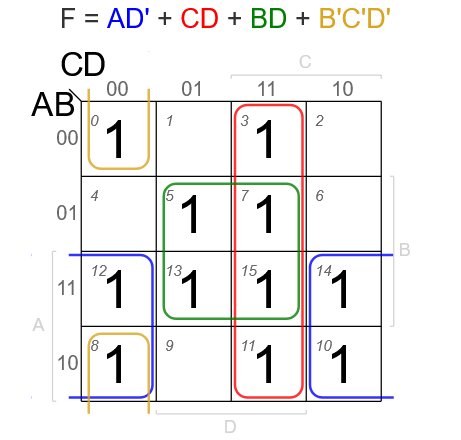
10. Simplify boolean equation using k-map: F (A,B,C,D) = ∑(0,3,5,7, 8,10,11,12,13,14,15)

Leave a Comment

Latest Post
Field Based Job Question & Solution
Bank IT Job Solution

MCQ + Written from Bangladesh Bank, Sonali, Combined Bank IT recruitment.

BPSC IT Job Solution

BPSC Computer/IT cadre & non-cadre post Question papers with full solutions.

Gas Field IT Job Solution

Gas field like TGTDCL, BGDCL, JGTDSL, KGDCL, SGCL, RPGCL, GTCL etc. question solution

Power Sector IT Job Solution

Power sector such as NESCO, DESCO, DPDC, WZPDCL, BPDB, PGCB, BREB etc

Other IT Job Solution

Other Govt. Semi govt. organization like BCC, BTCL, CAAB, NSI etc.

NTRCA IT Job Solution (upcoming)

NTRCA ICT-related posts such as Assistant Teacher, Demonstrator, Lecturer.

IT MCQ Job Solution

Collected MCQ Job solution of BANK, BPSC, POWER SECTOR, GAS Field and Others.

Topic Based Q&S
WhatsApp Telegram Messenger