Given Expression
F = y(z + w’) + x(z’ + y’)w’ + (zw)(x’y’)
Goal: Convert into Sum of Products (SOP) form.
Step-1: Expand the first term
y(z + w’) = yz + yw’
Step-2: Expand the second term
x(z’ + y’)w’ = xw'(z’ + y’) = xw’z’ + xw’y’
Step-3: Expand the third term
(zw)(x’y’) = zwx’y’
Final SOP Form
F = yz + yw’ + xw’z’ + xw’y’ + x’y’zw



(i) Make directory named PSC
(ii)Copy a directory with all its contents into a directory name /home /admin
(i)mkdir PSC
(ii)cp -r source_directory /home/admin
Message Flow between DHCP Client and DHCP Server
DHCP uses a four-step message exchange process known as DORA to assign IP addresses automatically to clients.
Steps of DHCP Message Flow
1) DHCP Discover
The client broadcasts a message to find available DHCP servers on the network.
2) DHCP Offer
The DHCP server responds with an offered IP address and configuration details.
3) DHCP Request
The client requests the offered IP address from the selected server.
4) DHCP Acknowledge (ACK)
The server confirms the assignment and leases the IP address to the client.
Timing Diagram (DHCP DORA Process)
DHCP Client এবং DHCP Server এর মধ্যে Message Flow
DHCP protocol একটি চার ধাপের message exchange ব্যবহার করে, যাকে DORA process বলা হয়। এর মাধ্যমে client স্বয়ংক্রিয়ভাবে IP address পায়।
DHCP Message Flow এর ধাপসমূহ
1) DHCP Discover
Client network এ broadcast করে DHCP server খোঁজে।
2) DHCP Offer
DHCP server একটি IP address ও configuration সহ offer পাঠায়।
3) DHCP Request
Client প্রস্তাবিত IP address গ্রহণ করার জন্য request পাঠায়।
4) DHCP Acknowledge (ACK)
Server IP address নিশ্চিত করে এবং client কে lease দেয়।
Timing Diagram (DHCP DORA Process)
Why do we need NAT?
NAT (Network Address Translation) is needed to translate private IP addresses into public IP addresses so that devices inside a private network can communicate with the internet. It mainly helps to overcome the shortage of IPv4 addresses and adds an extra layer of security.
Advantages of NAT
• IP Address Conservation: Multiple devices can share a single public IP address.
• Improved Security: Internal private IP addresses are hidden from the public network.
• Cost Effective: Reduces the need to purchase many public IP addresses.
• Easy Network Management: Internal network addressing can be changed without affecting the internet connection.
NAT Topology Diagram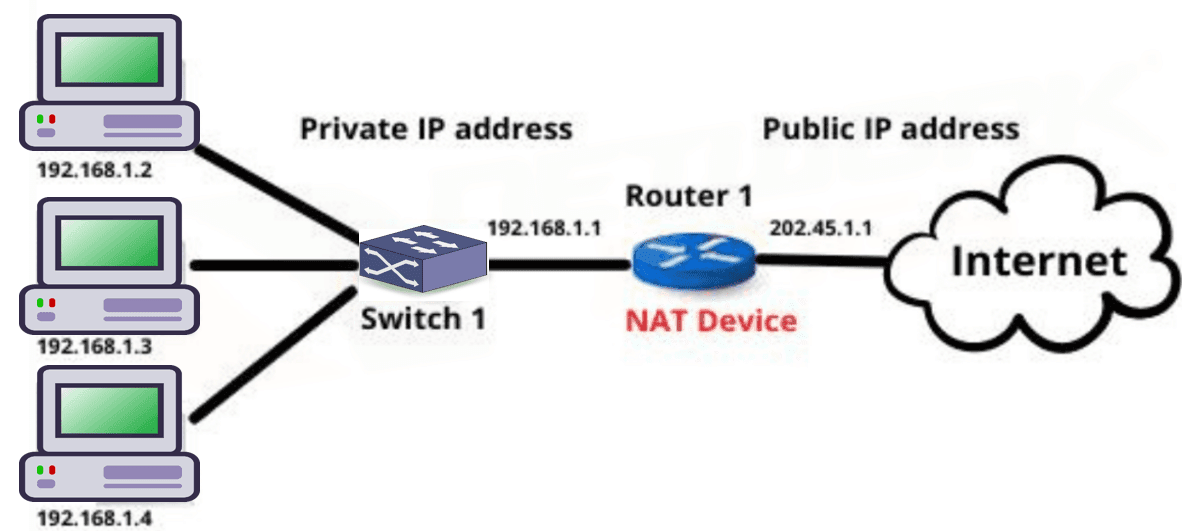
Here, multiple private IP devices access the internet using one public IP through NAT.
NAT কেন প্রয়োজন?
NAT (Network Address Translation) ব্যবহার করা হয় private IP address কে public IP address এ রূপান্তর করার জন্য, যাতে একটি private network এর ভেতরের device গুলো internet ব্যবহার করতে পারে। এটি মূলত IPv4 address এর স্বল্পতা দূর করতে এবং নিরাপত্তা বাড়াতে ব্যবহৃত হয়।
NAT এর সুবিধাসমূহ
• IP Address সাশ্রয়: একাধিক device একটি public IP ব্যবহার করতে পারে।
• নিরাপত্তা বৃদ্ধি: Internal private IP গুলো বাহিরের network থেকে লুকানো থাকে।
• খরচ কম: বেশি public IP কেনার প্রয়োজন হয় না।
• সহজ Network Management: Internal IP পরিবর্তন করলেও internet এ প্রভাব পড়ে না।
NAT Topology Diagram
এখানে একটি public IP ব্যবহার করে একাধিক private IP device internet এ সংযুক্ত হচ্ছে।
Show the truth table for F
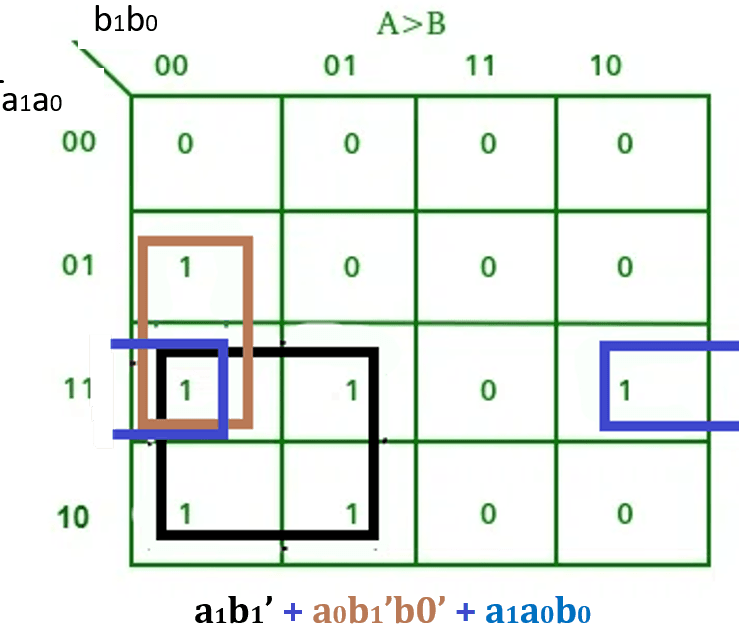
Simplify the function using K-Map.

F(a1, a0, b1, b0) = Σm(4, 8, 9, 12, 13, 14)