
Ministry of Food
Post: Database Manager
Exam Date: 29/11/2022, Subject: ICT, Exam Taker: BPSC
1(a) Name and define the component of data communication systems with necessary diagram.
Main Components of Data Communication System:
1. Sender: The device that sends the data or message (e.g., computer, mobile).
2. Message: The information or data to be communicated (text, image, audio, video).
3. Transmission Medium: The physical path through which data travels (e.g., cable, fiber optic, wireless).
4. Receiver: The device that receives the transmitted data.
5. Protocol: A set of rules that governs data communication between devices.
In conclusion, these five components work together to ensure successful and reliable data communication.Data Communication System-এর প্রধান উপাদানসমূহ:
১. Sender: যে ডিভাইস Data বা Message প্রেরণ করে (যেমন Computer, Mobile)।
২. Message: যে তথ্য বা Data আদান-প্রদান করা হয় (Text, Image, Audio, Video)।
৩. Transmission Medium: যে Physical Path দিয়ে Data পরিবাহিত হয় (যেমন Cable, Fiber Optic, Wireless)।
৪. Receiver: যে ডিভাইস প্রেরিত Data গ্রহণ করে।
৫. Protocol: Data Communication পরিচালনার জন্য নির্ধারিত Rules বা নিয়মাবলি।
Protocol (Communication নিয়ন্ত্রণ করে) সারসংক্ষেপে, এই পাঁচটি উপাদান একসাথে কাজ করে সঠিক ও নির্ভরযোগ্য Data Communication নিশ্চিত করে।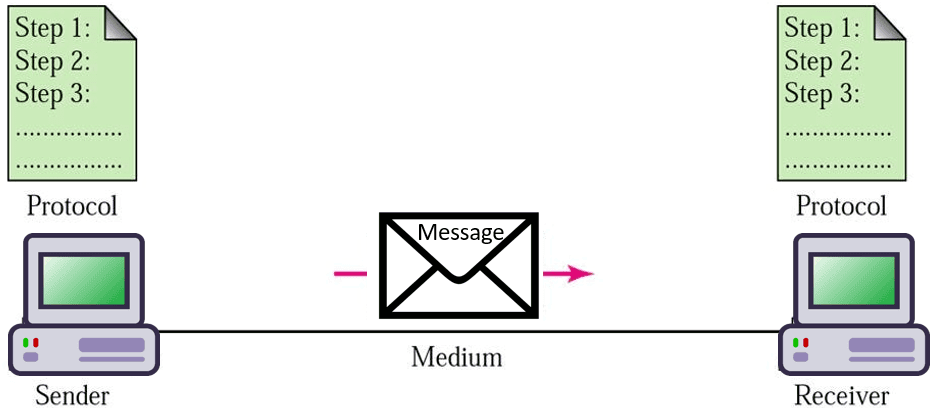
1(b) Explain five different electronic payment systems used in E-commerce.
Five Electronic Payment Systems used in E-commerce:
1. Credit Card: Customers pay using a credit card issued by a bank. The amount is paid later to the bank according to billing terms.
2. Debit Card: Payment is directly deducted from the customer’s bank account at the time of transaction.
3. Electronic Wallet (E-Wallet): A digital wallet (e.g., PayPal, bKash) that stores payment information and allows quick online transactions.
4. Net Banking: Customers transfer money directly from their bank account through online banking services.
5. Mobile Payment System: Payments are made using mobile apps or mobile financial services through smartphones.
In conclusion, electronic payment systems make online transactions fast, secure, and convenient in E-commerce.E-commerce-এ ব্যবহৃত পাঁচটি Electronic Payment System:
১. Credit Card: Bank কর্তৃক প্রদত্ত Credit Card ব্যবহার করে পেমেন্ট করা হয়, যা পরবর্তীতে নির্দিষ্ট সময়ে Bank-কে পরিশোধ করা হয়।
২. Debit Card: লেনদেনের সময় সরাসরি গ্রাহকের Bank Account থেকে অর্থ কেটে নেওয়া হয়।
৩. Electronic Wallet (E-Wallet): PayPal, bKash-এর মতো Digital Wallet যেখানে Payment তথ্য সংরক্ষণ করে দ্রুত লেনদেন করা যায়।
৪. Net Banking: Online Banking Service ব্যবহার করে সরাসরি Bank Account থেকে অর্থ স্থানান্তর করা হয়।
৫. Mobile Payment System: Smartphone-এর Mobile App বা Mobile Financial Service ব্যবহার করে পেমেন্ট করা হয়।
সারসংক্ষেপে, Electronic Payment System E-commerce-এ দ্রুত, নিরাপদ ও সুবিধাজনক লেনদেন নিশ্চিত করে।
2(a) What are the basic difference between a linear array and linked list? 3
Linear Array: An array stores elements in contiguous memory locations and all elements are of the same data type. It allows direct access using index.
Linked List: A linked list stores elements (nodes) in non-contiguous memory locations. Each node contains data and a pointer (link) to the next node.
Basic Differences: (1) Memory Allocation: Array uses contiguous memory; Linked List uses non-contiguous memory.
(2) Access: Array provides direct access by index; Linked List requires sequential traversal.
(3) Insertion/Deletion: Array insertion/deletion is costly; Linked List insertion/deletion is easier.
(4) Size: Array size is fixed; Linked List size is dynamic.
Linear Array: Array Contiguous Memory Location-এ Element সংরক্ষণ করে এবং Index ব্যবহার করে সরাসরি Access করা যায়।
Linked List: Linked List-এর Node গুলো Non-contiguous Memory-তে সংরক্ষিত থাকে এবং প্রতিটি Node-এ Data ও Pointer (Link) থাকে যা পরবর্তী Node নির্দেশ করে।
মূল পার্থক্য: (১) Memory Allocation: Array Contiguous Memory ব্যবহার করে; Linked List Non-contiguous Memory ব্যবহার করে।
(২) Access: Array Index দ্বারা সরাসরি Access দেয়; Linked List Sequential Traversal প্রয়োজন।
(৩) Insertion/Deletion: Array-এ জটিল; Linked List-এ তুলনামূলক সহজ।
(৪) Size: Array-এর Size নির্দিষ্ট; Linked List Dynamic।
2(b) Write a bubble sort algorithm to sort a given list in ascending order. 5
Algorithm:
1. Begin BubbleSort(arr)
2. Repeat for all array elements:
  - For i from 0 to n-2:
        a. If arr[i] > arr[i+1]:
             i. Swap(arr[i], arr[i+1])
3. End For
4. Return arr
5. End BubbleSort

Pseudocode:
Begin BubbleSort(arr)
    For i = 0 to n-2:
      If arr[i] > arr[i+1]:
              Swap(arr[i], arr[i+1])
        End If
     End For
     Return arr
     End BubbleSort
2(c) What is flip-fllop? What are the various kinds of register? 2
Various Kinds of Register:
1. Shift Register: Stores data and shifts it left or right on each clock pulse.
2. Serial-in Serial-out (SISO) Register: Data is entered serially and output serially.
3. Serial-in Parallel-out (SIPO) Register: Data is entered serially and output in parallel form.
4. Parallel-in Serial-out (PISO) Register: Data is entered in parallel and output serially.
5. Parallel-in Parallel-out (PIPO) Register: Data is entered and output in parallel form.
Register-এর প্রকারভেদ:
১. Shift Register: Data সংরক্ষণ করে এবং প্রতিটি Clock Pulse-এ বাম বা ডানে Shift করে।
২. Serial-in Serial-out (SISO) Register: Data Serialভাবে প্রবেশ করে এবং Serialভাবে Output হয়।
৩. Serial-in Parallel-out (SIPO) Register: Data Serialভাবে প্রবেশ করে এবং Parallelভাবে Output হয়।
৪. Parallel-in Serial-out (PISO) Register: Data Parallelভাবে প্রবেশ করে এবং Serialভাবে Output হয়।
৫. Parallel-in Parallel-out (PIPO) Register: Data Parallelভাবে প্রবেশ করে এবং Parallelভাবে Output হয়।
3. Suppose you have purchased a book from a book fair. The value of the book(i.e the amount you have to pay) will be calculated on the basis of the following criteria:
(i) 20% discount if the price of the book is above 1500.
(ii) 20% discount if the price of the book is in between 1000-1500.
(iii) 10% discount if the price of the book is in between 500-999.
(iv) No discount if the price of the book is less than 500.
Write a C/Java program to calculate the price of a given book. 10
(i) 20% discount if the price of the book is above 1500.
(ii) 20% discount if the price of the book is in between 1000-1500.
(iii) 10% discount if the price of the book is in between 500-999.
(iv) No discount if the price of the book is less than 500.
Write a C/Java program to calculate the price of a given book. 10
// Program to calculate the price of a book after discount
#include <stdio.h>

int main() {
    float book_price, discounted_price;

    // Input the price of the book
    printf("Enter the price of the book: ");
    scanf("%f", &book_price);

    // Calculate the price after applying the discount based on the criteria
    if (book_price > 1500) {
        discounted_price = book_price - (book_price * 0.20);
    } else if (book_price >= 1000 && book_price <= 1500) {
        discounted_price = book_price - (book_price * 0.20);
    } else if (book_price >= 500 && book_price <= 999) {
        discounted_price = book_price - (book_price * 0.10);
    } else {
        discounted_price = book_price; // No discount
    }

    // Display the discounted price
    printf("The final price of the book after discount is: %.2f\n", discounted_price);

    return 0;
}
4(a) What do you mean by relational database ? Why does the term "relation" used?
Why the term “Relation” is used: The term “relation” comes from Relational Model introduced by E. F. Codd. In this model, a table is mathematically represented as a relation, where data elements are related to each other in the form of rows and columns. It also represents the relationship between different tables through keys.
In summary, a relational database stores data in table format and uses relations to establish logical connections between data.
“Relation” শব্দটি ব্যবহারের কারণ: “Relation” শব্দটি Relational Model থেকে এসেছে, যা E. F. Codd প্রবর্তন করেন। এই Model-এ প্রতিটি Table-কে গাণিতিকভাবে একটি Relation হিসেবে ধরা হয়, যেখানে Row ও Column-এর মাধ্যমে Data উপাদানগুলোর মধ্যে সম্পর্ক স্থাপন করা হয়। এছাড়া বিভিন্ন Table-এর মধ্যে Key ব্যবহার করে সম্পর্ক নির্ধারণ করা হয়।
সারসংক্ষেপে, Relational Database টেবিল আকারে Data সংরক্ষণ করে এবং Relation-এর মাধ্যমে Data-এর যৌক্তিক সম্পর্ক স্থাপন করে।
4(b) What do you mean by super key, candidate key, primary key and foreign key in a database? 4
1. Super Key: A Super Key is a set of one or more attributes that can uniquely identify a record in a table. It may contain extra attributes.
2. Candidate Key: A Candidate Key is a minimal Super Key, meaning it uniquely identifies a record and contains no unnecessary attributes.
3. Primary Key: A Primary Key is a selected Candidate Key used to uniquely identify each record in a table. It cannot contain NULL values and must be unique.
4. Foreign Key: A Foreign Key is an attribute in one table that refers to the Primary Key of another table. It is used to establish a relationship between two tables.
In summary, Super Key and Candidate Key identify records, Primary Key uniquely represents a table record, and Foreign Key creates relationships between tables.
১. Super Key: Super Key হলো এক বা একাধিক Attribute-এর সমষ্টি যা একটি Record-কে Uniqueভাবে সনাক্ত করতে পারে। এতে অতিরিক্ত Attribute থাকতে পারে।
২. Candidate Key: Candidate Key হলো Minimal Super Key, অর্থাৎ এটি Record-কে Uniqueভাবে সনাক্ত করে এবং অপ্রয়োজনীয় Attribute থাকে না।
৩. Primary Key: Primary Key হলো নির্বাচিত Candidate Key যা প্রতিটি Record-কে Uniqueভাবে চিহ্নিত করে। এতে NULL Value থাকতে পারে না এবং এটি অবশ্যই Unique হতে হবে।
৪. Foreign Key: Foreign Key হলো একটি Table-এর Attribute যা অন্য Table-এর Primary Key-কে নির্দেশ করে এবং দুইটি Table-এর মধ্যে Relationship তৈরি করে।
সারসংক্ষেপে, Super Key ও Candidate Key Record সনাক্ত করে, Primary Key প্রধান Unique পরিচয় দেয় এবং Foreign Key Table-এর মধ্যে সম্পর্ক স্থাপন করে।
4(c) Explain the full meaning of "ACID" properties in database. 4
1. Atomicity: A transaction is treated as a single unit. It either completes fully or does not execute at all. If any part fails, the entire transaction is rolled back.
2. Consistency: A transaction must bring the database from one valid state to another valid state, maintaining all integrity constraints.
3. Isolation: Multiple transactions execute independently without interfering with each other. Intermediate states are not visible to other transactions.
4. Durability: Once a transaction is successfully committed, its changes are permanently stored in the database, even in case of system failure.
In summary, ACID properties ensure accuracy, reliability, and integrity of database transactions.
১. Atomicity: একটি Transaction সম্পূর্ণভাবে সফল হবে অথবা সম্পূর্ণ বাতিল (Rollback) হবে। আংশিক সম্পাদন গ্রহণযোগ্য নয়।
২. Consistency: Transaction Database-কে একটি Valid State থেকে অন্য Valid State-এ নিয়ে যায় এবং সকল Integrity Constraint বজায় রাখে।
৩. Isolation: একাধিক Transaction একসাথে চললেও তারা একে অপরের উপর প্রভাব ফেলে না এবং মধ্যবর্তী অবস্থা দৃশ্যমান হয় না।
৪. Durability: Transaction Commit হওয়ার পর তার পরিবর্তন স্থায়ীভাবে সংরক্ষিত থাকে, এমনকি System Failure হলেও।
সারসংক্ষেপে, ACID Property Database Transaction-এর সঠিকতা, নির্ভরযোগ্যতা ও অখণ্ডতা নিশ্চিত করে।