1. Explain Three-Way Handshaking in TCP Protocol.
3-Way Handshake Protocol in TCP Connection Establishment
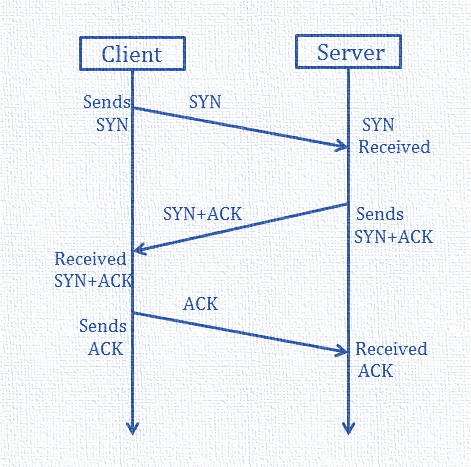
The 3-way handshake is a mechanism used by TCP to establish a reliable connection between a client and a server.
- Step 1: SYN (Synchronization)
- Client → Server: The client initiates the connection by sending a SYN packet to the server.
- The SYN packet contains a randomly generated sequence number.
- Step 2: SYN-ACK (Synchronization and Acknowledgment)
- Server → Client: The server responds with a SYN-ACK packet.
- The packet contains:
- ACK flag to acknowledge the client’s SYN.
- SYN flag with the server’s own sequence number.
- The server also advertises its window size and maximum segment size.
- Step 3: ACK (Acknowledgment)
- Client → Server: The client sends an ACK packet confirming receipt of the SYN-ACK.
- After this step, the TCP connection is established and data transmission begins.
TCP Connection Establishment-এ 3-Way Handshake Protocol
3-way handshake হলো TCP-তে ব্যবহৃত একটি process যা client এবং server-এর মধ্যে একটি reliable connection স্থাপন করে।
- Step 1: SYN (Synchronization)
- Client → Server: Client server-এর কাছে একটি SYN packet পাঠিয়ে connection শুরু করে।
- এই SYN packet-এ একটি randomly generated sequence number থাকে।
- Step 2: SYN-ACK (Synchronization and Acknowledgment)
- Server → Client: Server, client-এর SYN পাওয়ার পর একটি SYN-ACK packet পাঠায়।
- এই packet-এ থাকে:
- ACK flag, যা client-এর SYN acknowledge করে।
- SYN flag, যা server-এর sequence number নির্দেশ করে।
- Server তার window size এবং maximum segment size-ও পাঠায়।
- Step 3: ACK (Acknowledgment)
- Client → Server: Client, server-এর SYN-ACK পাওয়ার পর একটি ACK packet পাঠায়।
- এই ধাপের পর TCP connection সম্পূর্ণভাবে establish হয় এবং data transmission শুরু হয়।
2. Using the TCP/IP model, match each device and protocol to its appropriate layer and explain how they work together to enable communication between two computers on the internet.
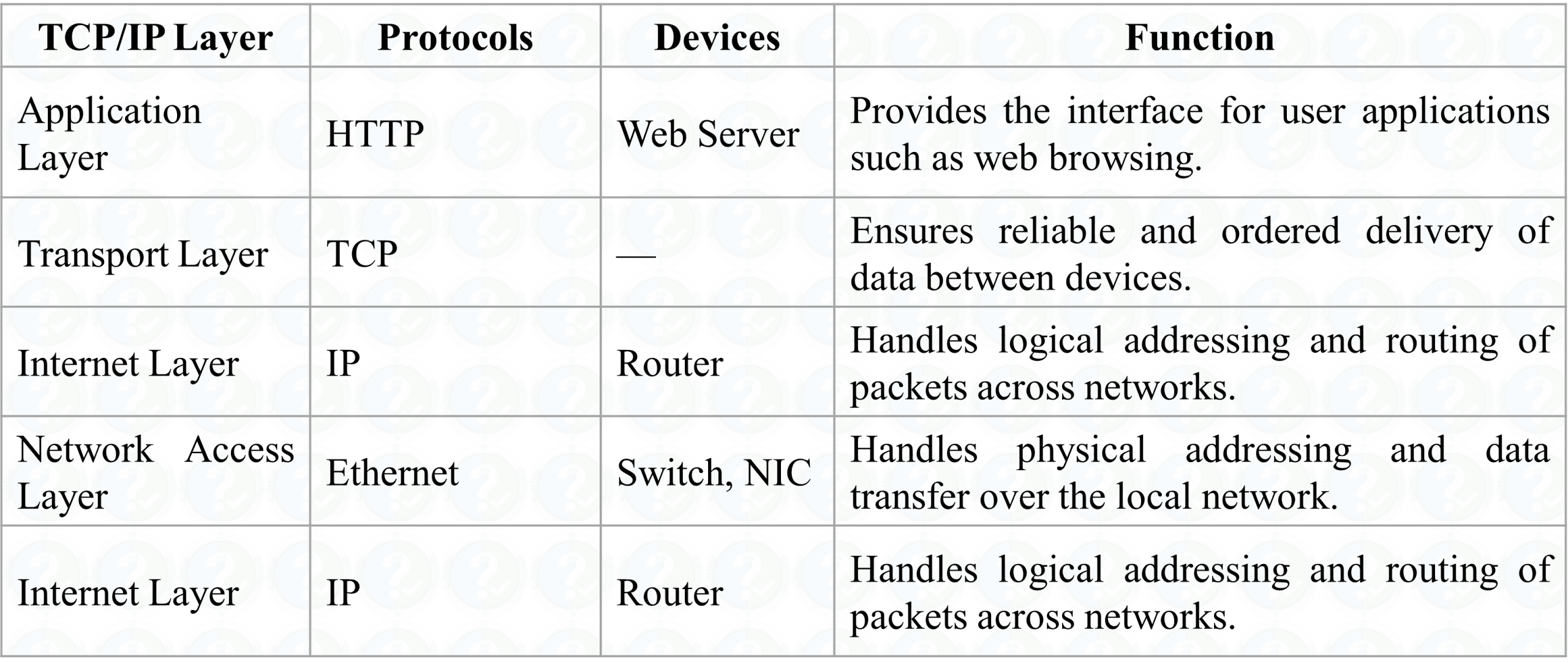
Devices: Router, Switch, Network Interface Card (NIC), Web Server.
Protocols: HTTP, TCP, IP, Ethernet.
Devices: Router, Switch, Network Interface Card (NIC), Web Server.
Protocols: HTTP, TCP, IP, Ethernet.
How They Work Together:
When a user accesses a website, the Application Layer uses HTTP to request data from a Web Server.
The Transport Layer (TCP) ensures reliable communication by managing data transmission and error checking.
The Internet Layer (IP) assigns logical addresses and routes packets through routers across networks.
Finally, the Network Access Layer (Ethernet) enables data transfer over the local network using switches and NICs.
3. Explain Functionality of OSI reference model.
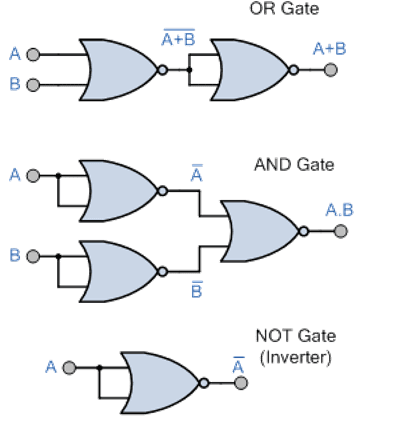
4. Design Basic gate using NOR gate or Show that NOR is gate Universal gate.
A NOR gate is called a universal gate because any Boolean function (AND, OR, NOT, NAND, XOR, etc.) can be implemented using only NOR gates.