Operating System (Suggestion)
• Year 2026
Operating System
- 1SuggestionWhat is Operating System? Needs/goals of OS and Main Two parts of OS (Shell & Kernel)
- 2SuggestionTypes of Operating System
- 3SuggestionKernel and it Types
- 4SuggestionProcess and Thread
- 5SuggestionWhat is Multithreading? Write Advantages and Disadvantages of Multithreading
- 6SuggestionWhat hyper-threading is and its uses?
- 7SuggestionExplain Process state transition diagram
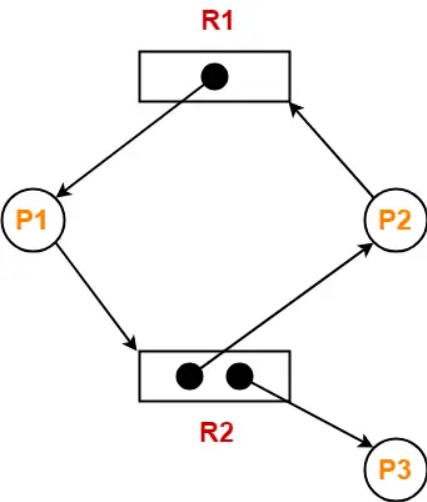
- 8SuggestionDeadlock and its condition(Coffman)
- 9SuggestionHandaling Deadlock
- 10SuggestionBanker's Algorithm : Math
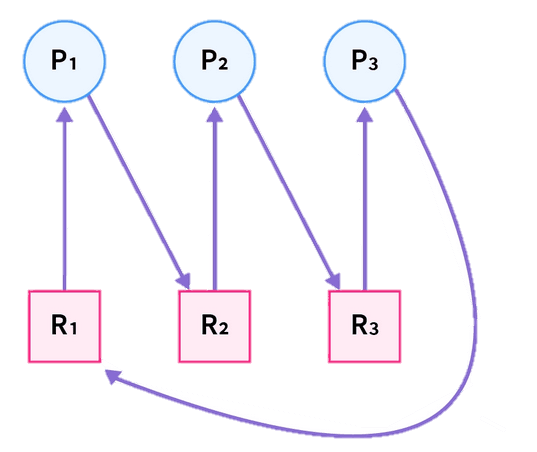
- 11SuggestionBriefly explain Circular Wait. In a Resource Allocation Graph (RAG), if a cycle exists, does it absolutely guarantee that a Deadlock has occurred? Explain briefly.
- 12SuggestionMemory Management, Logical Address, Physical Address
- 13SuggestionMemory Allocation: Contiguous, Non Contiguous
- 14SuggestionPaging, Segmentation, Swaping, Virtual Memory
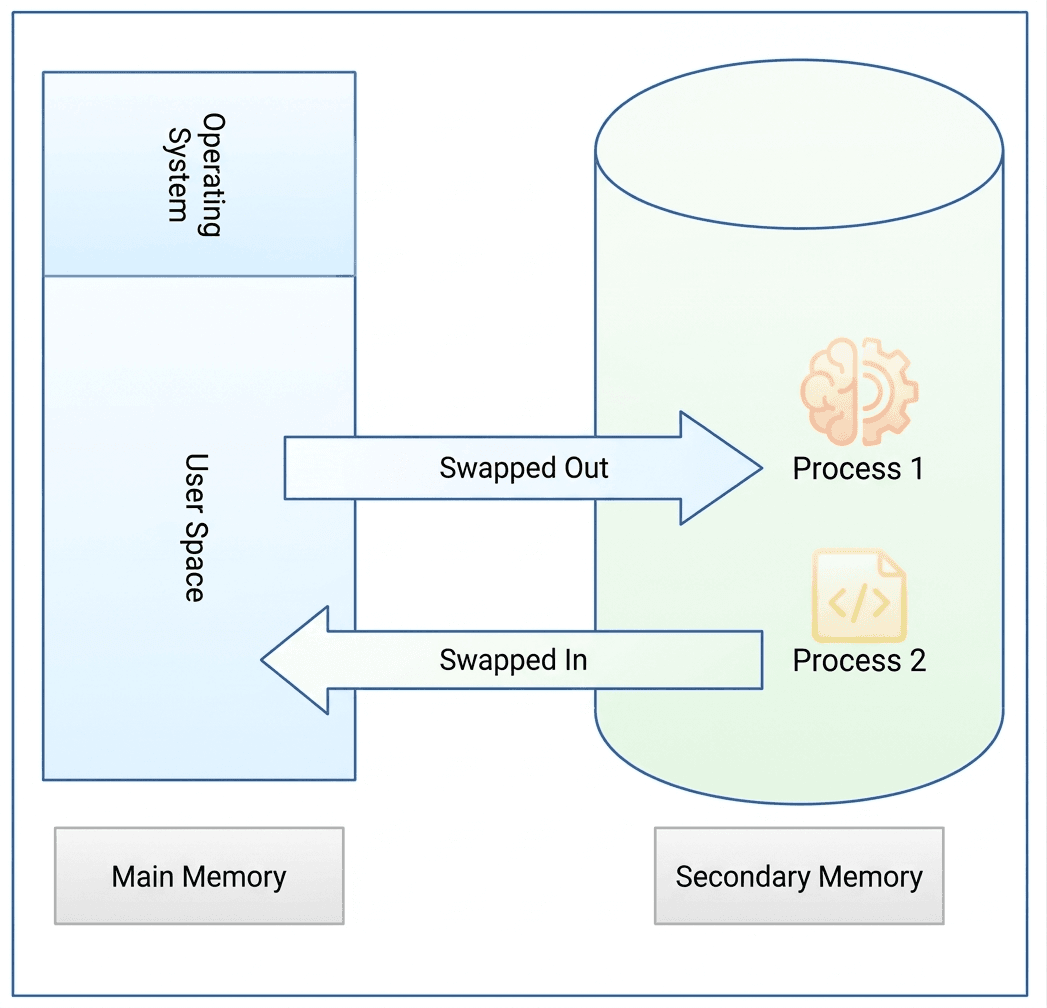
- 15SuggestionWhat is Swapping from virtual memory in the primary memory.
- 16SuggestionPaging, Page Table, page Fault in OS
- 17SuggestionPage Fault and Types
- 18SuggestionA high traffic web application suddenly begins failing with database connection timeouts under peak load. At the same time, the underlying Linux OS kernel hosting the database reports "too many open files" error and network socket exhaustion. Explain the root cause of this failure at the linux os kernel level.
- 19SuggestionA system utilizes a 32-bit logical address space and a page size of 220 bytes. If each entry (block) in the Translation Lookaside Buffer (TLB) requires 6 bytes, calculate the total memory required for the TLB to map the entire logical address space.
- 20SuggestionExplain the "Producer-Consumer" problem in operating systems. What specific synchronization issue must be solved?
- 21SuggestionYou friend device is slow performing so what should you take step in your task manager
- 22SuggestionExplain the concept of thrashing in an operating system, describing how it occurs in a demand-paged virtual memory system and how it impacts CPU utilization and overall system performance. (10 Marks)
- 23SuggestionWrite about Boot Process.
- 24SuggestionArrange the following in correct chronological order of computer boot process: OS Kernel Load, BIOS/UEFI POST, MBR/GPT Lookup, User Login, Driver initialization.
- 25SuggestionConsider a logical address space of 512 pages, each of 2-KB page size, mapped onto a physical memory containing 128 frames.
a. How many bits are required in the logical address?
b. How many bits are required in the physical address? (10 Marks) - 26SuggestionHow many total bits are required of a Direct-Mapped cache with 16 KB of data and 4-word blocks, assuming a 32-bit address (word addressable) and 32-bit words?
- 27SuggestionConsider a machine with 64 MB physical memory and a 32 bit virtual address space. If the page size is 4 KB, what is the approximate size of the page table.
- 28SuggestionDefine Socket, Kernel, Process, Program, Multiprogramming, and Context Switching. Discuss the LRU and NRU Page Replacement Algorithms. Illustrate Preemptive Priority Scheduling.
Various Times and Terms of Process
FCFS CPU Scheduling (Processes with Same Arrival Time):
Consider the following table of arrival time and burst time for three processes P1, P2 and P3
Find avg Turnaround & Waiting Time
Consider the following table of arrival time and burst time for three processes P1, P2 and P3
| Process | Arrival Time | Burst Time |
|---|---|---|
| p1 | 0 | 5 |
| p2 | 0 | 3 |
| p3 | 0 | 8 |
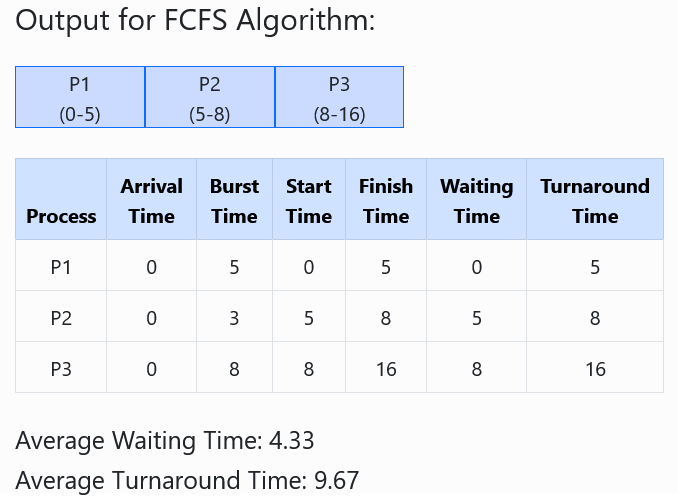
- Turnaround Time (TAT) = CT – AT
- Waiting Time (WT) = TAT – BT
- Start Time (ST) = max(AT, Previous CT)
- Finish Time (FT) / Completion Time (CT) = ST + BT
- Waiting Time (WT) = ST – AT
- Turnaround Time (TAT) = FT – AT
FCFS CPU Scheduling (Processes with different Arrival Time):
Consider the given table below and find Completion time (CT), Turn-around time (TAT), Waiting time (WT), Response time (RT), Average Turn-around time and Average Waiting time.
Consider the given table below and find Completion time (CT), Turn-around time (TAT), Waiting time (WT), Response time (RT), Average Turn-around time and Average Waiting time.
| Process ID | Arrival Time | Burst Time |
|---|---|---|
| P1 | 2 | 2 |
| P2 | 5 | 6 |
| P3 | 0 | 4 |
| P4 | 0 | 7 |
| P5 | 7 | 4 |
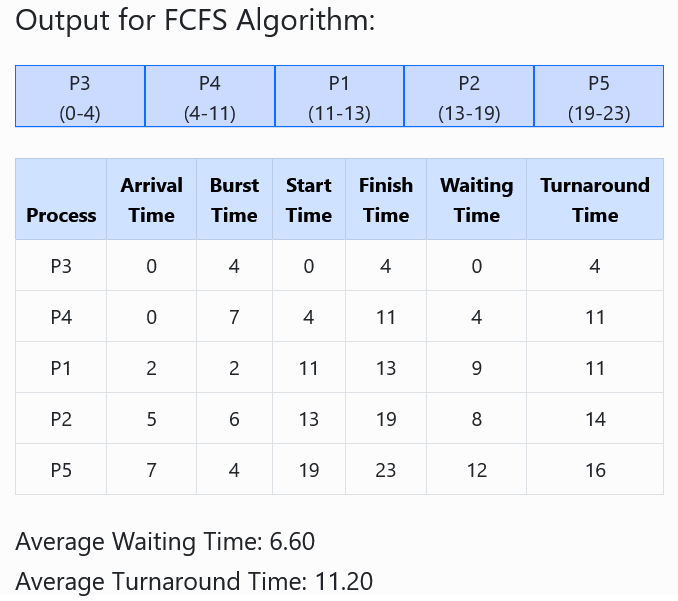
- Turnaround Time (TAT) = FinishT – ArrivalT
- Waiting Time (WT) = TAT – BT
- Start Time (ST) = max(AT, Previous CT)
- Finish Time (FT) / Completion Time (CT) = ST + BT
- Waiting Time (WT) = ST – AT
- Turnaround Time (TAT) = FT – AT
Suppose we have set of four processes whose arrival times and CPU burst times are as follows −
Let us draw the GANTT chart and find the average turnaround time and average waiting time using non-preemptive SJF algorithm.
| Process | Arrival Time | CPU Burst Time |
|---|---|---|
| P1 | 0 | 6 |
| P2 | 4 | 10 |
| P3 | 4 | 4 |
| P4 | 8 | 3 |
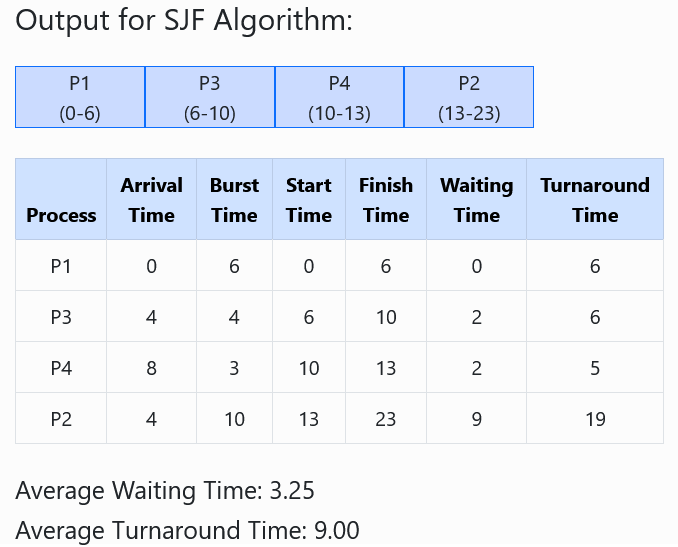
- Turnaround Time (TAT) = FinishT – ArrivalT
- Waiting Time (WT) = TAT – BT
- Start Time (ST) = max(AT, Previous CT)
- Finish Time (FT) / Completion Time (CT) = ST + BT
- Waiting Time (WT) = ST – AT
- Turnaround Time (TAT) = FT – AT
Using preemptive SJF (SRTN) scheduling on the following processes, draw GANTT chart and find the average turnaround time and average waiting time.
| Process | Arrival Time | CPU Burst Time |
|---|---|---|
| P1 | 0 | 8 |
| P2 | 4 | 10 |
| P3 | 4 | 3 |
| P4 | 10 | 4 |
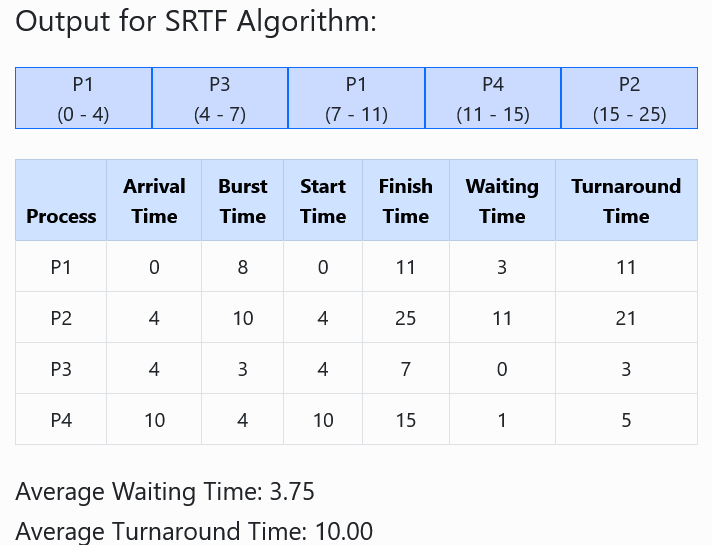
- Turnaround Time (TAT) = FinishT – ArrivalT
- Waiting Time (WT) = TAT – BT
- Start Time (ST) = max(AT, Previous CT)
- Finish Time (FT) / Completion Time (CT) = ST + BT
- Waiting Time (WT) = ST – AT
- Turnaround Time (TAT) = FT – AT
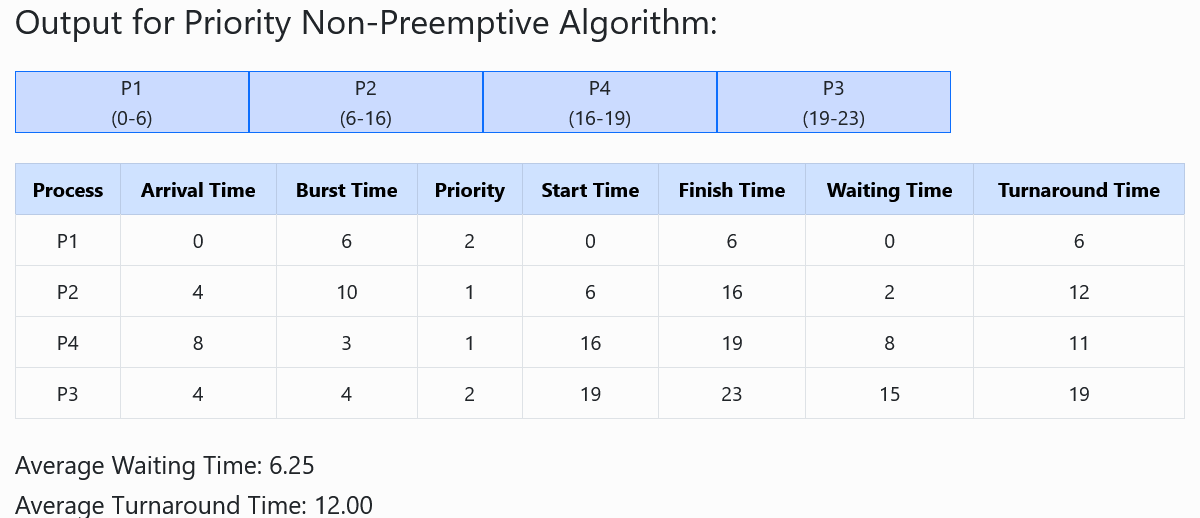
Suppose that we have a set of four processes that have arrived at the same time in the order P1, P2, P3 and P4. The burst time in milliseconds and their priorities of the processes is given by the following table −
Considering that a lower priority value means higher priority, perform non-preemptive priority scheduling on it. Draw the GANTT chart and find the average turnaround time and average waiting time.
| Process | Arrival Time | CPU Burst Time | Priority |
|---|---|---|---|
| P1 | 0 | 6 | 2 |
| P2 | 4 | 10 | 1 |
| P3 | 4 | 4 | 2 |
| P4 | 8 | 3 | 1 |
- Turnaround Time (TAT) = FinishT – ArrivalT
- Waiting Time (WT) = TAT – BT
- Start Time (ST) = max(AT, Previous CT)
- Finish Time (FT) / Completion Time (CT) = ST + BT
- Waiting Time (WT) = ST – AT
- Turnaround Time (TAT) = FT – AT
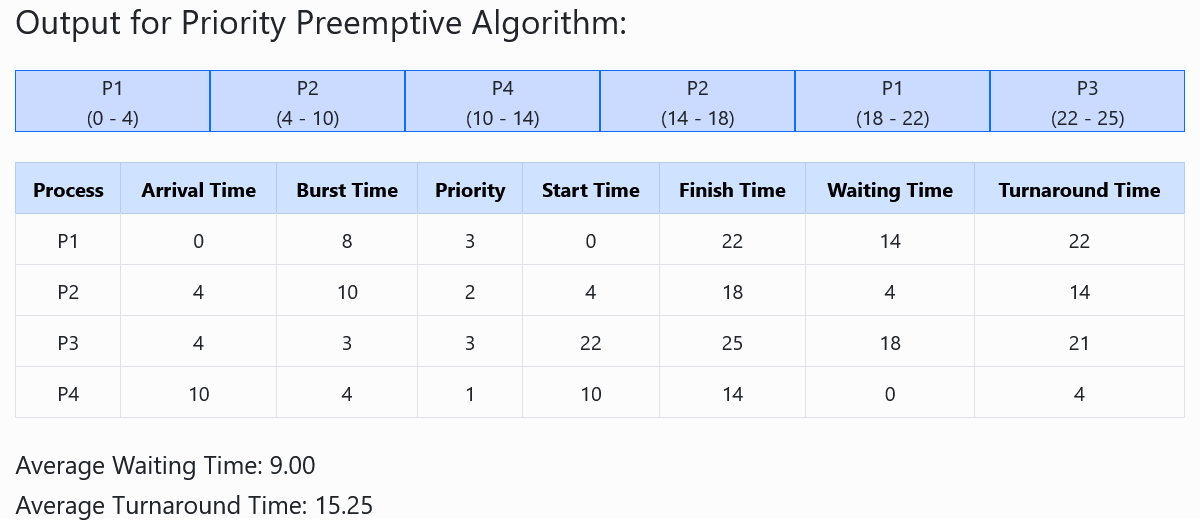
Consider the following set of processes whose arrival times, burst times and priorities are give in the following table −
Considering that a lower priority value means higher priority, perform preemptive priority scheduling on it. Draw the GANTT chart and find the average turnaround time and average waiting time.
| Process | Arrival Time | CPU Burst Time | Priority |
|---|---|---|---|
| P1 | 0 | 8 | 3 |
| P2 | 4 | 10 | 2 |
| P3 | 4 | 3 | 3 |
| P4 | 10 | 4 | 1 |
- Turnaround Time (TAT) = FinishT – ArrivalT
- Waiting Time (WT) = TAT – BT
- Start Time (ST) = max(AT, Previous CT)
- Finish Time (FT) / Completion Time (CT) = ST + BT
- Waiting Time (WT) = ST – AT
- Turnaround Time (TAT) = FT – AT
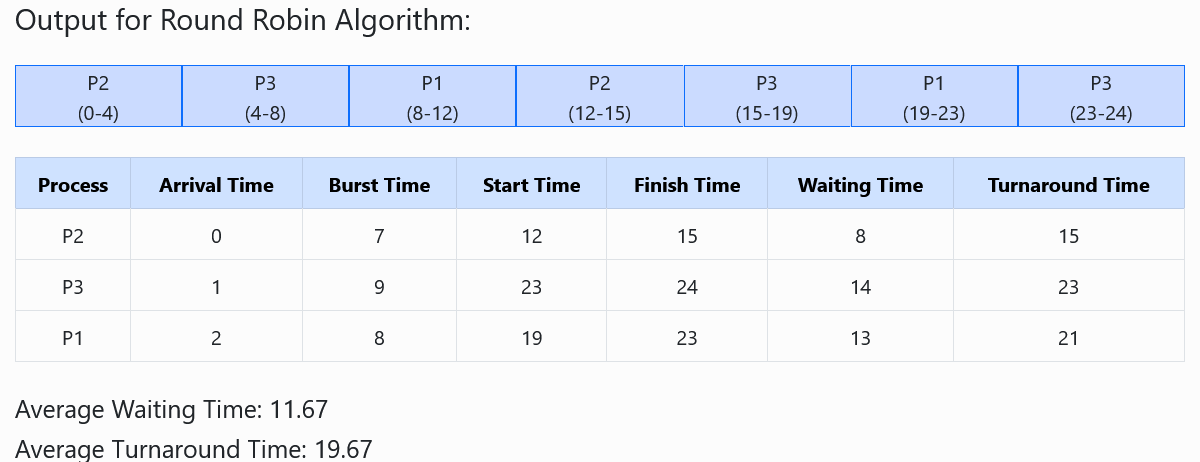
Consider the following set of processes whose arrival times, burst times are give in the following table −
Time Quantum=4 . Draw the GANTT chart and find the average turnaround time and average waiting time.
| Process | Arrival Time | Burst Time |
|---|---|---|
| P1 | 2 | 8 |
| P2 | 0 | 7 |
| P3 | 1 | 9 |
- Turnaround Time (TAT) = FinishT – ArrivalT
- Waiting Time (WT) = TAT – BT
- Start Time (ST) = max(AT, Previous CT)
- Finish Time (FT) / Completion Time (CT) = ST + BT
- Waiting Time (WT) = ST – AT
- Turnaround Time (TAT) = FT – AT
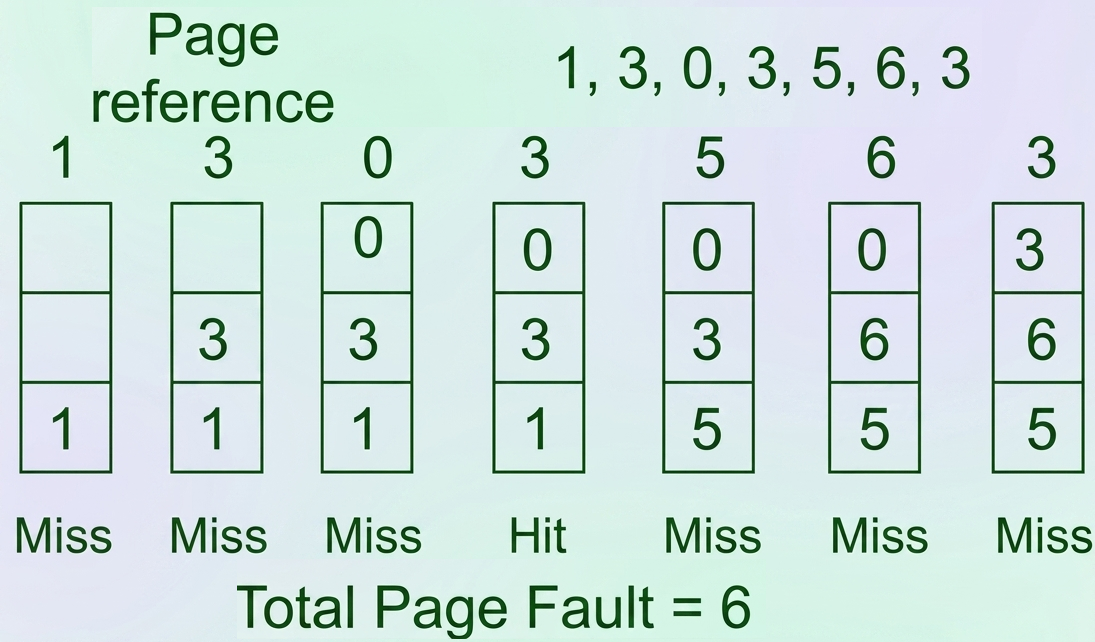
Consider page reference string 1, 3, 0, 3, 5, 6, 3 with 3-page frames. Find the number of page faults using FIFO Page Replacement Algorithm.
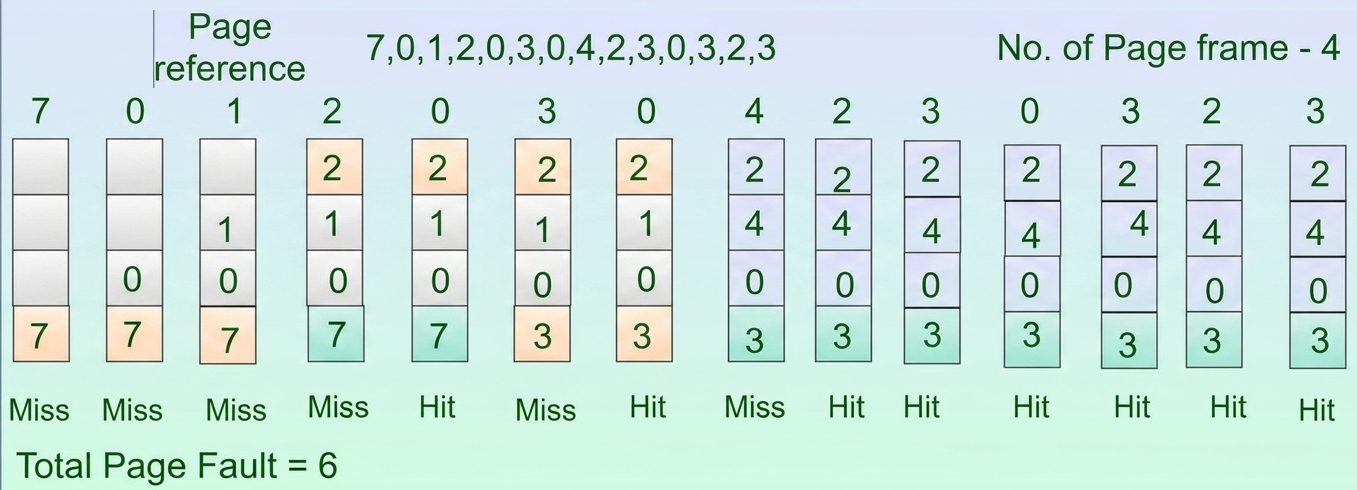
Consider the page references 7, 0, 1, 2, 0, 3, 0, 4, 2, 3, 0, 3, 2, 3 with 4-page frame. Find number of page fault using Optimal Page Replacement Algorithm.
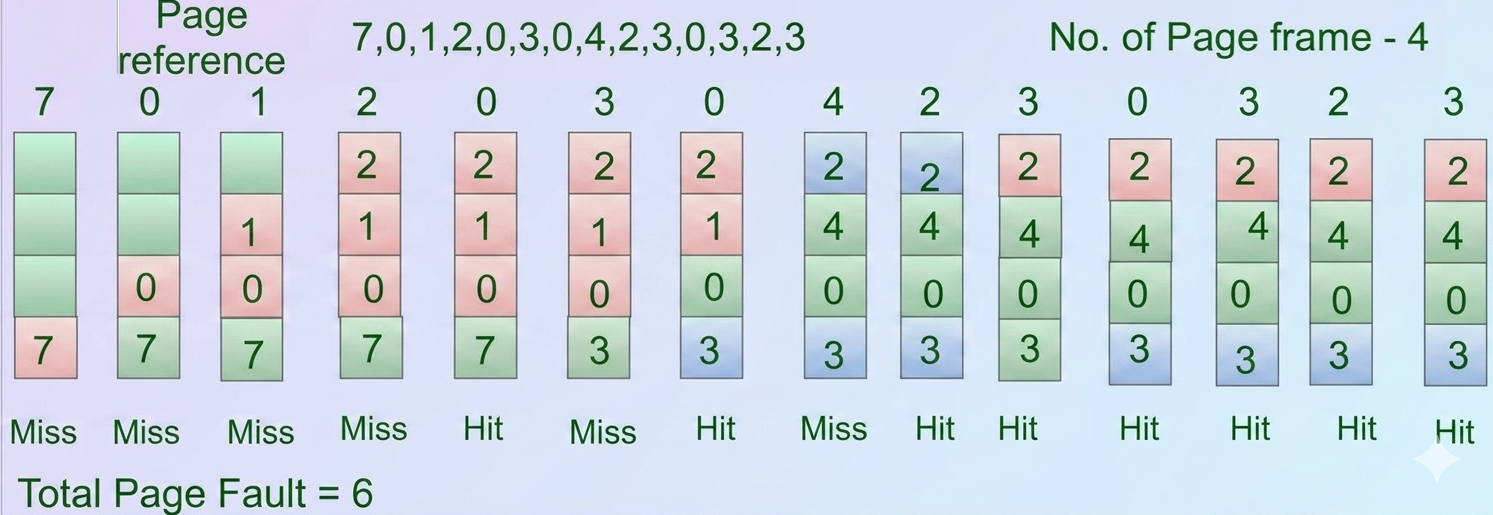
Consider the page reference string 7, 0, 1, 2, 0, 3, 0, 4, 2, 3, 0, 3, 2, 3 with 4-page frames. Find number of page faults using LRU Page Replacement Algorithm.